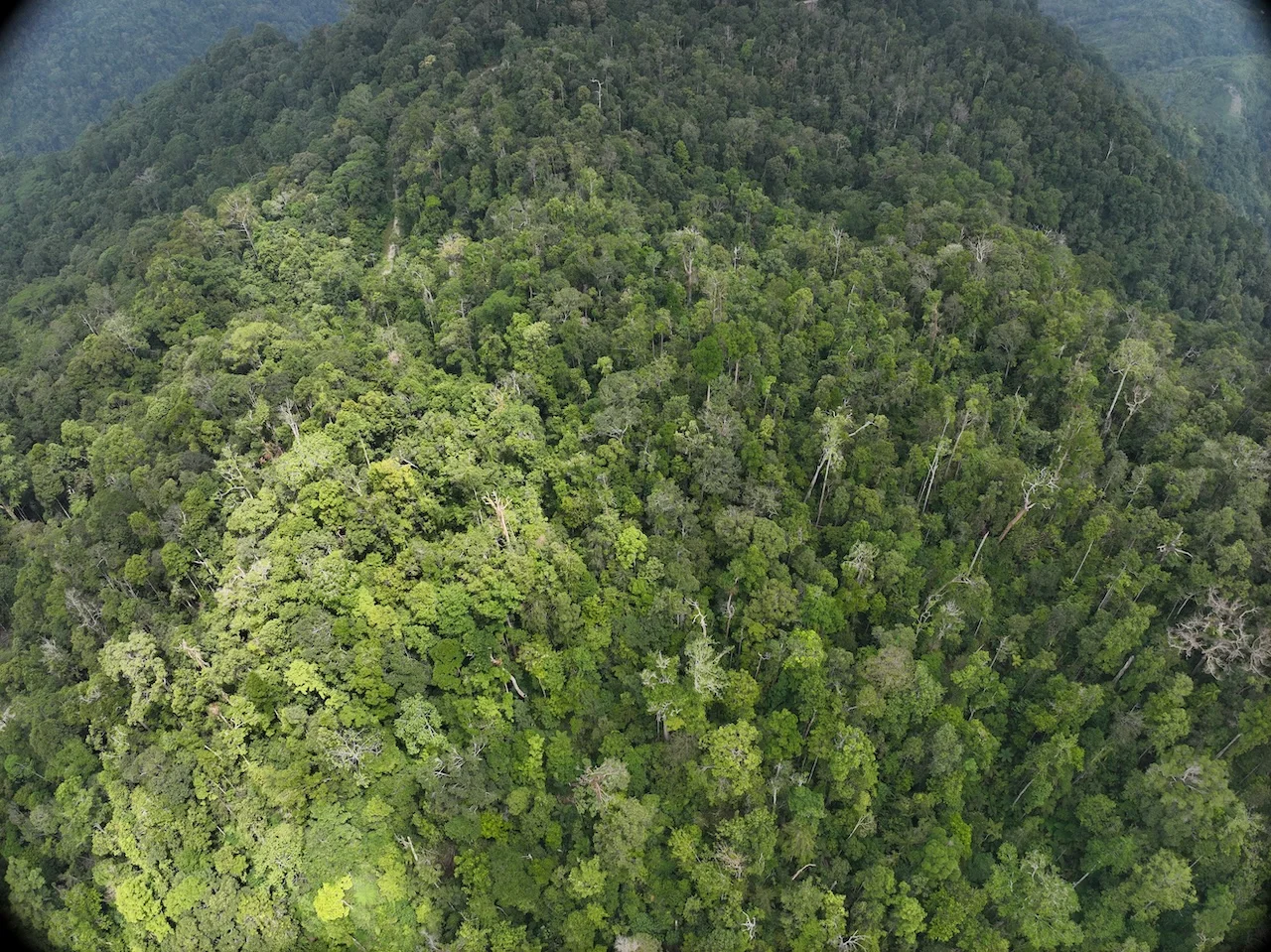

Species Diversity of Trees in Sungai BuluhPeat Forest Reserve, Mendahara UluDistrict, Tanjung Jabung Timur Regency


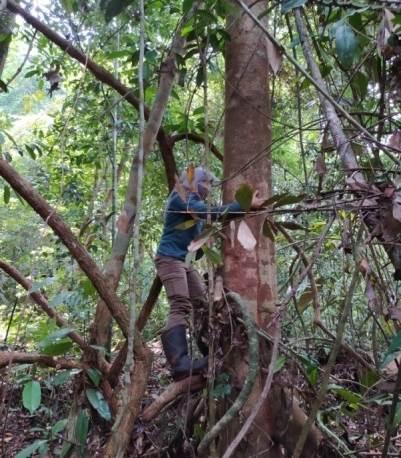
Abstract
Peat swamp forests are ecologically important ecosystems that regulate hydrology, store carbon, and support high biodiversity. The Sungai Buluh Peat Forest Reserve in Mendahara Ulu District, Tanjung Jabung Timur, Jambi Province, Indonesia, represents a relatively undisturbed tropical peat swamp forest with high potential for tree species diversity. This study assessed tree species composition, diversity, and community structure in the Sinar Wajo and Sungai Beras Village Forests to support ecological monitoring and guide sustainable forest. Species dominance was analyzed using the Importance Value Index (IVI), while community structure was evaluated using the Shannon–Wiener diversity index (H′), Pielou’s evenness (E), Margalef’s richness (Dmg), and community similarity (IS). A total of 45 species from 22 families were recorded in Sinar Wajo Village Forest, while 36 species from 21 families were documented in Sungai Beras Village Forest. Diversity and richness were higher in Sinar Wajo village forest, while both sites exhibited high evenness and low dominance, indicating stable and heterogeneous communities. Community similarity between the two forests was high, suggesting comparable ecological and environmental conditions. These results provide a comprehensive overview of tree species composition and community structure in the Sungai Buluh Peat Forest Reserve. The study emphasizes the importance of baseline ecological data to guide sustainable forest management and conservation, supporting biodiversity preservation and maintaining ecosystem functions in tropical peat swamp forests.
1. Introduction
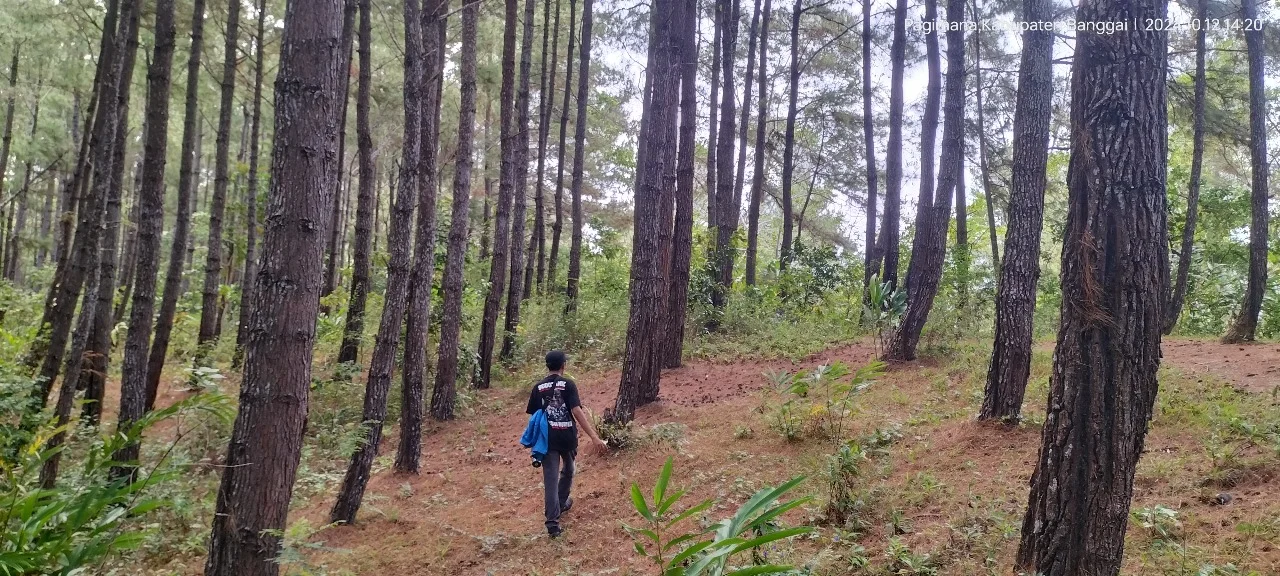
Peat swamp forests are among the most ecologically important ecosystems, playing a crucial role in maintaining hydrological balance, storing carbon, and supporting high biodiversity. These ecosystems are characterized by waterlogged, acidic, and nutrient poor soils, allowing only certain plant species that have adapted to such extreme conditions to thrive (Kalima et al., 2020). One such ecosystem is the Sungai Buluh Peat Forest Reserve, located in Mendahara Ulu District, Tanjung Jabung Timur Regency, Jambi Province. This area represents a relatively undisturbed tropical peat swamp forest that harbors significant biodiversity potential.
Despite their importance, many peat swamp forests have undergone extensive degradation over recent decades. Human driven pressures particularly drainage, logging, and land conversion have altered ecosystem functions, reduced biodiversity, and increased carbon emissions (Rahajoe et al., 2015; Okamoto et al., 2023). Land conversion is often categorized as a major component of deforestation, contributing similarly to the loss of peat swamp integrity. When peat soils are disturbed, the long-accumulated organic matter decomposes rapidly, releasing significant amounts of carbon into the atmosphere (Kalima et al., 2020; Garsetiasih et al., 2022).
Indonesia contains one of the world’s largest tropical peatland areas, estimated at approximately 13.4 million hectares (Anda et al., 2021). Although these peatlands support unique and often endemic plant and animal species, they face increasing threats from drainage networks, repeated fires, and agricultural expansion (Volkova et al., 2022). Numerous studies across Indonesian peatlands have documented high tree species diversity and species with strong ecological dominance reflected in elevated Importance Value Indices (IVI) (Retnaningsih et al., 2013).
Tropical peat swamp forests are known to host unique and diverse plant communities, many of which are endemic, rare, or endangered (Volkova et al., 2022). Several studies conducted in Indonesian peatland regions have identified numerous tree species with high Importance Value Indices (IVI), highlighting the ecological significance of these habitats (Retnaningsih et al., 2013). Research comparing natural and degraded peatlands shows that biodiversity declines significantly with degradation, but recovery is possible under improved management, such as canal blocking in degraded peatlands (Imron et al., 2025).
One of the peat swamp forests in Jambi that remains relatively well-preserved is the Sungai Buluh Peat Forest Reserve, located in the villages of Sinar Wajo, Sungai Beras, and Pematang Rahim in Tanjung Jabung Timur Regency. In this area, several ecological studies have been conducted, including assessments of the structure and composition of invasive plant species (Ihsan et al., 2022), the ecology of Punak (Nursanti et al., 2024), herpetofauna distribution (Suprayogi & Nugraha, 2021), and carbon storage estimation (Dinanty et al., 2025). However, despite these contributions, no research has specifically addressed species diversity within the reserve. This gap highlights the need for a comprehensive assessment of tree species composition and diversity in the Sungai Buluh Peat Forest Reserve.
Based on this background, the present study aims to analyze the composition and diversity of tree species in the Sungai Buluh Peat Forest Reserve as an effort to provide baseline data essential for ecological monitoring, management planning, and sustainable peat swamp forest conservation (Kalima et al., 2020; Syaufina & Hamzah, 2021; Okamoto et al., 2023).
2. Methods
1) Study Area
This study was conducted from April to May 2020 in the Sinar Maju Village Forest and Sungai Beras Village Forest. Both forests form part of the Sungai Buluh Peat Protected Forest, which is managed under the Production Forest Management Unit XIV Tanjung Jabung Timur, Jambi, Indonesia. The topographic conditions in the study area are categorized as flat, with a slope of approximately 0–8%, and an annual rainfall ranging from 2,500 to 3,000 mm (KPHP 14 Tanjung Jabung Timur, 2017). The following is the map of the research location in the Sungai Buluh Peat Protected Forest (HLG Sungai Buluh):
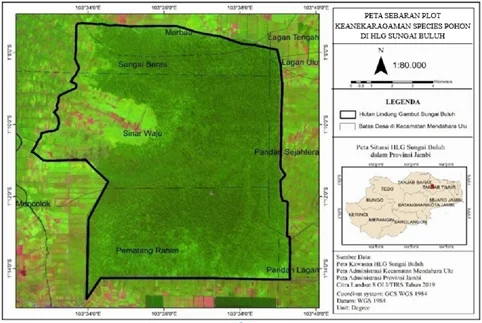
Figure 1. Map of the research location in the Sungai Buluh Peat Protected Forest
2) Tools and Materials
The equipment used in the field consisted of a GPS unit, camera, clinometer, phiband, scissors, identification manuals, plastic bags, and general writing instruments, etc. The main materials examined were tree communities with a diameter of ≥10 cm present within the two study areas.
3) Data Collection
The study collected both primary and secondary data. Primary data were obtained directly from the field and comprised vegetation information including scientific names, diameter measurements, and total tree height and environmental biophysical conditions. Secondary data consisted of administrative maps, soil maps, village monographs, and additional supporting documents obtained through literature review.
The study population was all woody vegetation found in the Sinar Maju Village Forest and Sungai Beras Village Forest. Sampling focused on trees with a diameter of ≥10 cm located within 20 m × 20 m plots. A total of 30 plots were established, covering 1.2 hectares. Plot placement followed a purposive sampling approach, taking into account accessibility and stand characteristics.
Plant species identification was conducted using standard taxonomic keys (e.g., Van Balgooy, M.M.J. 1998). Malesian Seed Plants II: Portraits of Tree Families) and verified through comparisons with reference specimens and relevant scientific publications.
4) Data Analysis
This research employed a descriptive quantitative approach to compare tree species composition between the two village forests. The analysis began with the calculation of the Importance Value Index (IVI), which integrates density, relative density, frequency, relative frequency, dominance, and relative dominance, using the following components (Soerianegara and Indrawan 1998):
Density of a Species (D)
D = Number of individuals of a species / Total sample area
Frequency of a Species (F)
F = Number of plots where species found / Total number of plots
Dominance of the Species
Do = Total basal area of a species / Total sample area
Relative Density (RD)
RD = (Density of a species / Total density) × 100%
Relative Frequency (RF)
RF = (Frequency of a species / Total frequency) × 100%
Relative Dominance (RDo)
RDo = (Dominance of a species / Total dominance) × 100%
Importance Value Index (IVI)
IVI = RD + RF + RDo
Data analysis continued by determining value of species diversity, species evenness, species richness, and species association index.
Species Diversity Index
This index refers to Mawazin and Subiakto (2013). Species diversity was assessed using the Shannon–Wiener Index (H′):
H' = -Σ(pi × ln pi)
where pi =
ni/N,
ni = number of individuals of species i,
N = total individuals of all species.
Species diversity was determined using the Shannon–Wiener Index (H′), which provides a measure of community heterogeneity. Values of H′ greater than 3 indicate high species diversity, values between 1 and 3 reflect moderate diversity, and values below 1 signify low diversity within the studied community.
Species Evenness Index
Species evenness (E) analysis was calculated using Pielou's (1966) formula in Bismark (2011) the following equation:
E = H' / ln S
where S = total number of species.
Species evenness (E) was calculated to assess how uniformly individuals are distributed among species. Evenness values were interpreted according to standard thresholds, where values below 0.3 represent low evenness, values between 0.3 and 0.6 indicate moderate evenness, and values above 0.6 reflect high evenness within the community.
Species Richness Index
Species richness was quantified using Margalef’s Index (Magurran 2004):
Dmg = (S - 1) / ln N
Species richness was quantified using Margalef’s Index (Dmg), which describes the number of species relative to the total number of individuals. Richness values below 3.5 were categorized as low, values between 3.5 and 5 as moderate, and values exceeding 5 as high species richness.
Community Similarity
The community similarity coefficient is a metric used to determine the relative similarity of species composition and structural attributes between two communities being compared. According to Soerianegara and Indrawan (1988), the similarity index (IS) is calculated using the following formula:
IS = 2W / (a + b) × 100%
where:
W : Shared or lowest quantitative value of species present in both communities
a : Total quantitative value of all species in the first community
b : Total quantitative value of all species in the second community
3. Results and Discussion
1) Species Composition
The results of the study show that a total of 45 plant species from 22 families were recorded in the Sungai Buluh Peat Protected Forest. This level of species richness is comparable to findings from other peat swamp forest in Sumatra. Rosalina, et al., (2014) for instance documented 49 species from 30 families in peat swamp forest Selat Panjang, Djufri, et al., (2016) documented 24-41 species in peat swamp forest Tripa, Aceh. Prayoto, et al., (2018) documented 59 tree species belong to 31 families in peat swamp forest Riau. Species composition varied between sites, with Sinar Wajo Village recording 45 species from 22 families, while Sungai Beras Village recorded 36 species from 21 families. Anacardiaceae was the dominant family in Sinar Wajo, represented by Campnosperma coriaceum, Gluta aptera, Mangifera parvifolia, Samecarpus glaucaeus, and Stemonurus scorpioides. In contrast, Fabaceae dominated in Sungai Beras, with species such as Archidendron clypearia, Callerya sp., Koompassia malaccensis, and Neoscortechinia kingii.
The observed dominance patterns align with peat dome zonation models described by Page et al. (1999). The research highlight compositional differences between peat dome centers often dominated by Campnosperma and peat margins, where Fabaceae and Euphorbiaceae are more prevalent. Consequently, the contrasting dominance of Anacardiaceae in Sinar Wajo and Fabaceae in Sungai Beras likely reflects variations in peat depth, hydrological gradients, and microhabitat conditions, consistent with previous observations in Indonesian peat swamp forests (Kalima, 2019; Fhirgiawan, 2022).
The number of species at the pole and tree growth stages is presented in Table 1. Table 1 shows no significant difference, indicating a relatively stable stand structure and effective regeneration. Similar structural stability has been reported in Kalimantan peat swamp forests, where Posa et al. (2011) found 30–60 species per site with consistent composition between sapling and tree layers. Tata & Pradjadinata (2013) further noted that regeneration in peat swamp forests tends to remain stable under low disturbance pressure. Taken together, these findings suggest that natural regeneration processes in the Sungai Buluh Peat Protected Forest are functioning well, allowing species diversity at the pole stage to be maintained into the mature tree stage and indicating a relatively intact peat forest ecosystem.
Table 1. Number of species recorded in the Sungai Buluh Peat Protected Forest in Sinar Wajo and Sungai Beras Villages

Table 1 shows that Sinar Wajo Village has a higher number of tree and pole species compared to Sungai Beras Village. Differences in species richness between the two locations may result from various factors such as site suitability or environmental conditions that influence vegetation adaptation (Saputri et al., 2024), levels of human disturbance, and other ecological factors. However, when looking at tree density per hectare, Sungai Beras Village has a value nearly equal to that of Sinar Wajo (443 and 437 trees/ha, respectively). In contrast, pole density in Sinar Wajo is higher (2,113 poles/ha compared to 1,800 poles/ha in Sungai Beras). This indicates that although Sinar Wajo Village has a greater number of species, the tree densities in both locations are almost identical, but the number of individuals is higher at the pole stage in Sinar Wajo. Forest ecological studies suggest that tree diversity and density are strongly influenced by local environmental factors and forest management practices. Higher density can support forest productivity but may also lead to more intense competition among plants (ter Steege et al., 2023; Siregar et al., 2019).
2) Importance Value Index
The Importance Value Index (IVI) is a key parameter used to assess the level of dominance of a species within a vegetation community, incorporating density, frequency, and canopy cover. A high IVI indicates an important ecological role, either as a major structural component of the stand or as an indicator of a species’ successful adaptation to environmental conditions. The IVI also reflects the structural role of vegetation within a forest stand (Bachry et al., 2020). Table 2 presents the IVI of dominant species recorded at the two locations in the Sungai Buluh Peat Protected Forest.
Based on Table 2, the highest Importance Value Index (IVI) was recorded for Tetramerista glabra, reaching 34.25% in Sungai Beras Village and 39.74% in Sinar Wajo Village. This finding contrasts with a study conducted in Riau (Prayoto, 2018), where Syzygium acutifolium exhibited the highest IVI (35.28%), while Tetramerista glabra showed a lower IVI value of 15.58%. The composition of dominant species at the pole and tree stages in the Sungai Buluh Peat Protected Forest varies between locations, indicating differences in peat forest vegetation structure influenced by regeneration processes, interspecific competition, and hydro-edaphic conditions. In Sungai Beras Village, Madhuca modleyana, Dacryodes rostrata, and Tetramerista glabra dominate the pole stage, whereas Tetramerista glabra is the most dominant species at the tree stage. A similar pattern is observed in Sinar Wajo Village, where Diospyros confertiflora dominates the pole stage, while Tetramerista glabra consistently remains the dominant species at the tree stage in both locations. The strong dominance of Tetramerista glabra indicates its high competitive ability and its role as a key species in shaping the structure of peat forest stands in the Sungai Buluh Protected Forest. Meanwhile, the diversity of dominant species at the pole stage suggests that natural regeneration processes are still occurring effectively. These dominant species differ from those reported in the peat swamp forest of Sanggar Pulau Muda Village, Pelalawan District, Riau, Indonesia, where Calophyllum insularum and Shorea platycarpa were identified as dominant species (Irma et al., 2023). Furthermore, Saputri (2024) noted that species with high IVI values are generally widely distributed across research locations.
Table 2. IVI of dominant species found in the Sungai Buluh Peat Protected Forest
3) Diversity, Evenness, Richness, and Dominance
Diversity, evenness, richness, and dominance are important parameters for assessing the stability and ecological condition of a plant community. These values are calculated to evaluate the quality and stability of an ecosystem (Istomo & Fardian, 2021). Such indices are commonly used to describe vegetation structure, levels of ecological pressure, and an ecosystem’s ability to maintain balance. High diversity generally indicates a stable ecosystem with greater resilience to disturbances, while low dominance suggests a stable community due to a relatively even distribution of competitive strength among species. In the context of peat ecosystems, these indices also reflect vegetation dynamics influenced by the distinctive hydro-edaphic conditions (Page et al., 1999). The values of diversity, evenness, richness, and dominance for each growth stage at both locations are presented in Table 3.
Table 3. Values of Diversity, Evenness, Richness, and Dominance
Based on the analysis of community structure indices, the vegetation in the Sungai Buluh Peat Protected Forest exhibits a relatively stable ecosystem with fairly good levels of diversity at both locations. Species diversity (H’) in Sinar Wajo Village falls into the high category (3.26–3.29), while in Sungai Beras Village it is in the medium-to-high category (2.98), indicating that the vegetation community in Sinar Wajo is more heterogeneous and ecologically more stable. Higher diversity values (H’) indicate greater species richness, productivity, stability, and ecological resilience of the ecosystem (Nahlunnisa et al., 2016). These diversity values differ from those reported in peat ecosystem restoration areas in Riau, where diversity was moderate in secondary forest types and low in shrublands (Fhirgiawan, 2022). In addition, this species diversity value is higher than the plant diversity recorded in the Londerang Peat Forest, Jambi, which was 1.77 (Khairil, 2022), and is in line with diversity values reported in Central Kalimantan peat forests, ranging from 1.75 to 3.30 (Tata & Pradjadinata, 2013).
Evenness (E) at both locations is high (>1), indicating an even distribution of individuals among species with no extreme dominance. The species richness index (Dmg) is also higher in Sinar Wajo (6.34–6.63) compared to Sungai Beras (4.76–5.19), reflecting a larger number of species and a more complex community composition. This condition is further supported by the very low dominance values (C) at both locations (0.05–0.06), indicating that no single species dominates the community, and the vegetation structure remains stable. Overall, both locations have healthy vegetation characteristics, but Sinar Wajo shows higher diversity and richness, which may reflect a habitat condition more supportive of the development of various plant species.
The higher number of species and pole density in Sinar Wajo Village compared to Sungai Beras Village suggests that species composition strongly influences dominance structure and subsequent community indices. Although Sinar Wajo supports more species, tree density in both locations is nearly identical, indicating that dominance is not driven by stem abundance alone but by the ecological performance of certain species under peat conditions. Higher pole density in Sinar Wajo indicates active recruitment, which contributes to higher species richness and diversity values observed at this site. Forest ecological theory suggests that in peat ecosystems, species composition shaped by hydro-edaphic conditions determines dominance patterns, which in turn influence diversity and evenness indices. In this study, sites with more heterogeneous species composition (Sinar Wajo) exhibit higher diversity (H’) and richness (Dmg), while low dominance values (C) indicate that no single species monopolizes resources. This pattern reflects a relatively balanced competitive environment, where dominance by key species such as Tetramerista glabra does not suppress overall diversity.
The Importance Value Index (IVI) analysis further supports the relationship between species composition and dominance structure. Across both locations and growth stages, Tetramerista glabra consistently exhibits the highest IVI values, highlighting its role as a keystone structural species in peat swamp forests. Its dominance reflects strong adaptation to acidic, waterlogged, and nutrient-poor peat soils, allowing it to persist from the pole stage into the mature tree stage. Despite the high IVI of Tetramerista glabra, dominance values at the community level remain low, indicating that dominance by this species does not lead to competitive exclusion. Instead, it coexists with a diverse assemblage of species, particularly at the pole stage, where IVI values are more evenly distributed. This pattern suggests that regeneration is not monopolized by a single species, but rather reflects a dynamic balance between dominant and subordinate species under peat forest conditions.
The diversity, evenness, richness, and dominance indices collectively demonstrate that vegetation structure in the Sungai Buluh Peat Protected Forest is ecologically stable. Higher diversity (H’) and richness (Dmg) values in Sinar Wajo Village correspond with more complex species composition and higher regeneration intensity, while high evenness (E) and low dominance (C) at both sites indicate equitable resource sharing among species. Importantly, the low dominance values are consistent with the IVI structure, where dominance is expressed at the species level (Tetramerista glabra) but does not translate into community-level dominance. This consistency suggests that high similarity in community composition between growth stages is supported by stable IVI patterns and balanced diversity evenness relationships. Overall, these results confirm that species composition, dominance structure, and diversity indices are tightly interconnected and jointly shaped by peat hydro edaphic conditions, reinforcing the conclusion that the Sungai Buluh Peat Protected Forest remains a relatively intact and resilient peat ecosystem.
4) Species Similarity Between Two Communities
The community similarity between Sinar Wajo Village and Sungai Beras Village is high, with values of 66.67% at the pole stage and 76.92% at the tree stage. Previous studies on the similarity values between two communities in peat forests in West Kalimantan also reported a value of 75% (Istomo & Fardian, 2021). This indicates that both villages have similar species compositions, reflecting nearly identical ecological and environmental conditions as well as aligned management practices. The higher similarity at the mature tree stage compared to the pole stage suggests stability in the adult tree community, while the younger pole community is more influenced by regeneration dynamics and competition.
These findings are important in the context of sustainable forest management and conservation, as they indicate that management strategies can be applied uniformly across both villages. Community similarity demonstrates that similar environments tend to form vegetation communities with comparable species compositions. Previous studies have highlighted that the degree of community similarity reflects significant species overlap and provides a critical basis for ecosystem modeling and sustainable conservation (Santhyami, 2024; Stamin, 2025).
4. Conclusion
The tree communities in the Sungai Buluh Peat Forest Reserve exhibit relatively stable and healthy vegetation structures, with Sinar Wajo Village showing higher species diversity and richness than Sungai Beras Village. Tetramerista glabra serves as a key species in maintaining forest structure at the tree stage, while variations in pole-stage dominance indicate ongoing natural regeneration. The high evenness and low dominance values suggest that no single species overwhelmingly dominates the community, contributing to ecosystem stability. The strong similarity in species composition between the two villages indicates that similar management strategies can be applied effectively across both sites. Compared with other peat swamp forests in Sumatra, species richness and dominance patterns in Sungai Buluh are within a similar range, indicating that these forests share comparable ecological characteristics. Similarly, studies in West Kalimantan peatlands report stable species composition and regeneration under low disturbance pressure which is consistent with the regeneration stability observed in this study. These comparisons support peat ecological theory, confirming that species composition, dominance, and diversity in well-managed peat swamp forests contribute to resilient and sustainable forest ecosystems. Overall, these findings provide essential baseline data for ecological monitoring, sustainable forest management, and peatland conservation efforts in Indonesia.
5. Author Contributions
The experimental design was developed by the first and second authors. The experiments were conducted by the second author. Data interpretation was carried out by the first and third authors. Materials and analytical tools were provided by the fourth author. The manuscript was written by the first author.
6. Conflicts of Interest
The authors are free of conflict of interest
7. Acknowledgments
Thanks are extended to all parties involved in this research, including both the students and the team of lecturers.
8. References
Balgooy, Van. M. M. J. 1998. Flora Malesiana Series II Vol. 3. Netherland: Back Buys Publisher
Magurran, A.E. (2004). Ecological Diversity and Its Measurement 6th. London (GB): Croom Helm Ltd.
Hak Cipta (c) 2025 Jurnal Wasian

This work is licensed under a Creative Commons Attribution 4.0 International License.
Artikel ini berlisensi Creative Commons Attribution 4.0 International License.
Copyright and License
All articles published in Wasian Journal are the property of the authors. By submitting an article to Wasian Journal, authors agree to the following terms:
-
Copyright Ownership: The author(s) retain copyright and full publishing rights without restrictions. Authors grant the journal the right to publish the work first and to distribute it as open access under a Creative Commons Attribution 4.0 International License (CC BY 4.0).
-
Licensing: Articles published in Wasian Journal are licensed under a Creative Commons Attribution 4.0 International License (CC BY 4.0). This license allows others to share, copy, and redistribute the material in any medium or format, and adapt, remix, transform, and build upon the material for any purpose, even commercially, provided that proper credit is given to the original author(s) and the source of the material

This work is licensed under a Creative Commons Attribution 4.0 International License. -
Author's Rights: Authors are permitted and encouraged to post their work online (e.g., in institutional repositories or on their website) prior to and during the submission process, as it can lead to productive exchanges and greater citation of published work.
-
Third-Party Content: If your article contains material (e.g., images, tables, or figures) for which you do not hold copyright, you must obtain permission from the copyright holder to use the material in your article. This permission must include the right for you to grant the journal the rights described above.
-
Reprints and Distribution: Authors have the right to distribute the final published version of their work (e.g., post it to an institutional repository or publish it in a book), provided that the original publication in Wasian Journal is acknowledged.
For the reader you are free to:
- Share — copy and redistribute the material in any medium or format for any purpose, even commercially.
- Adapt — remix, transform, and build upon the material for any purpose, even commercially.
- The licensor cannot revoke these freedoms as long as you follow the license terms.
Under the following terms:
- Attribution — You must give appropriate credit , provide a link to the license, and indicate if changes were made . You may do so in any reasonable manner, but not in any way that suggests the licensor endorses you or your use.
- No additional restrictions — You may not apply legal terms or technological measures that legally restrict others from doing anything the license permits.
Notices:
You do not have to comply with the license for elements of the material in the public domain or where your use is permitted by an applicable exception or limitation .
No warranties are given. The license may not give you all of the permissions necessary for your intended use. For example, other rights such as publicity, privacy, or moral rightsmay limit how you use the material.