

Synergy of Ecotourism Strategy, Conservation Awareness, and Social Participation in Supporting Forest Conservation and Ecological Stability


Abstract
The Battang forest area in Palopo City faces ecological sustainability challenges due to pressure from human activities and low conservation awareness. Therefore, an integrated management approach combining ecotourism strategies, conservation awareness, and social participation is required to support forest conservation and ecological stability. This study aims to analyze the integrated role of ecotourism strategies, conservation awareness, and social participation in supporting forest conservation and ecological stability in the Battang area. The study used a quantitative approach with a survey method of 280 respondents consisting of members of forest farmer groups, local tourism actors, traditional leaders, and communities around the forest area. Data were analyzed using Structural Equation Modeling (SEM) to examine the relationships among variables. The results showed that conservation awareness (p = 0.000) and social participation (p = 0.000) significantly influenced forest conservation, while ecotourism strategies did not significantly influence (p = 0.193). However, all three independent variables significantly influenced ecological stability, with social participation as the most dominant factor (p = 0.000). The R² values of 0.779 for forest conservation and 0.810 for ecological stability indicate strong model predictive power. The findings indicate that conservation awareness and community participation are key drivers of forest conservation and ecological stability. Furthermore, the effectiveness of ecotourism initiatives depends strongly on social support and the presence of conservation-oriented values that encourage sustainable and non-exploitative resource use.
1. Introduction
Indonesia is one of the countries with the highest levels of biodiversity in the world, with approximately 17,500 islands and more than 30,000 species of flora and 1,600 endemic fauna (Putra & Waluyo, 2020). Indonesia's forest area is recorded at 95.5 million hectares, or 51.1% of the total land area, consisting of protected forests and production forests with strategic ecological and economic functions (Kementerian Lingkungan Hidup dan Kehutanan, 2021). However, pressure on forests continues, marked by net deforestation of 175,400 hectares in 2024, most of which occurred in secondary forests.
This situation indicates that although conservation policies are beginning to show results, significant challenges to forest sustainability remain. Forest degradation in Indonesia is generally caused by unsustainable human activities, such as encroachment, forest fires, illegal logging, and pest infestation (Maulana et al., 2019). In this context, social forestry has emerged as a strategic approach that positions communities as key actors in forest resource management to improve ecosystem quality while ensuring long-term sustainability (Biancone V et al., 2022). This approach emphasizes the importance of social engagement and conservation awareness as the foundation of sustainable forest management
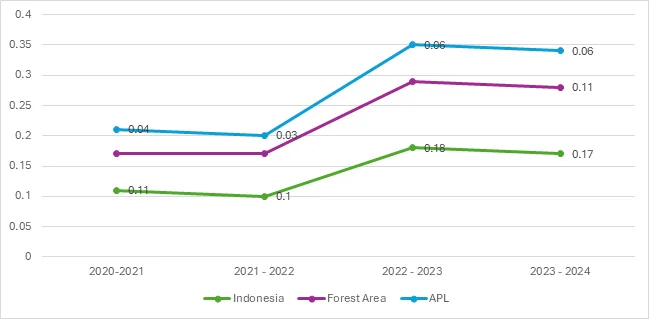
Figure 1. Indonesia's Forests and Deforestation in 2024
In South Sulawesi, particularly in Palopo City, conservation areas such as the Nanggala III Nature Tourism Park (TWA) are important ecological and economic assets, serving as carbon sinks, erosion control, and wildlife habitat (Abidin, 2016). The Battang Forest area in West Battang Village holds high ecological and cultural value and serves as a source of livelihood for the Ba'tan indigenous community, which numbers approximately 220–230 families (Witno et al., 2020). However, since its designation as a National Park (TWA) through Ministerial Decree 663/Kpts-II/92, this area has faced tenurial conflicts, resulting in reduced access for indigenous communities to land and forest resources.
Pressure on the Battang area has increased due to land conversion, illegal logging, and unplanned development, triggering erosion, landslides, and flooding in surrounding areas such as Marobo, as well as reducing community agricultural productivity (Wawan, 2020). In response to these conditions, the ecotourism paradigm was developed as an approach expected to integrate ecological conservation and economic benefits. The Palopo City Government, together with the South Sulawesi Natural Resources Conservation Agency (BBKSDA), is promoting the development of nature tourism in the Nanggala III TWA with the aim of maintaining ecosystem sustainability while improving community welfare (BBKSDA Sulsel, 2024).
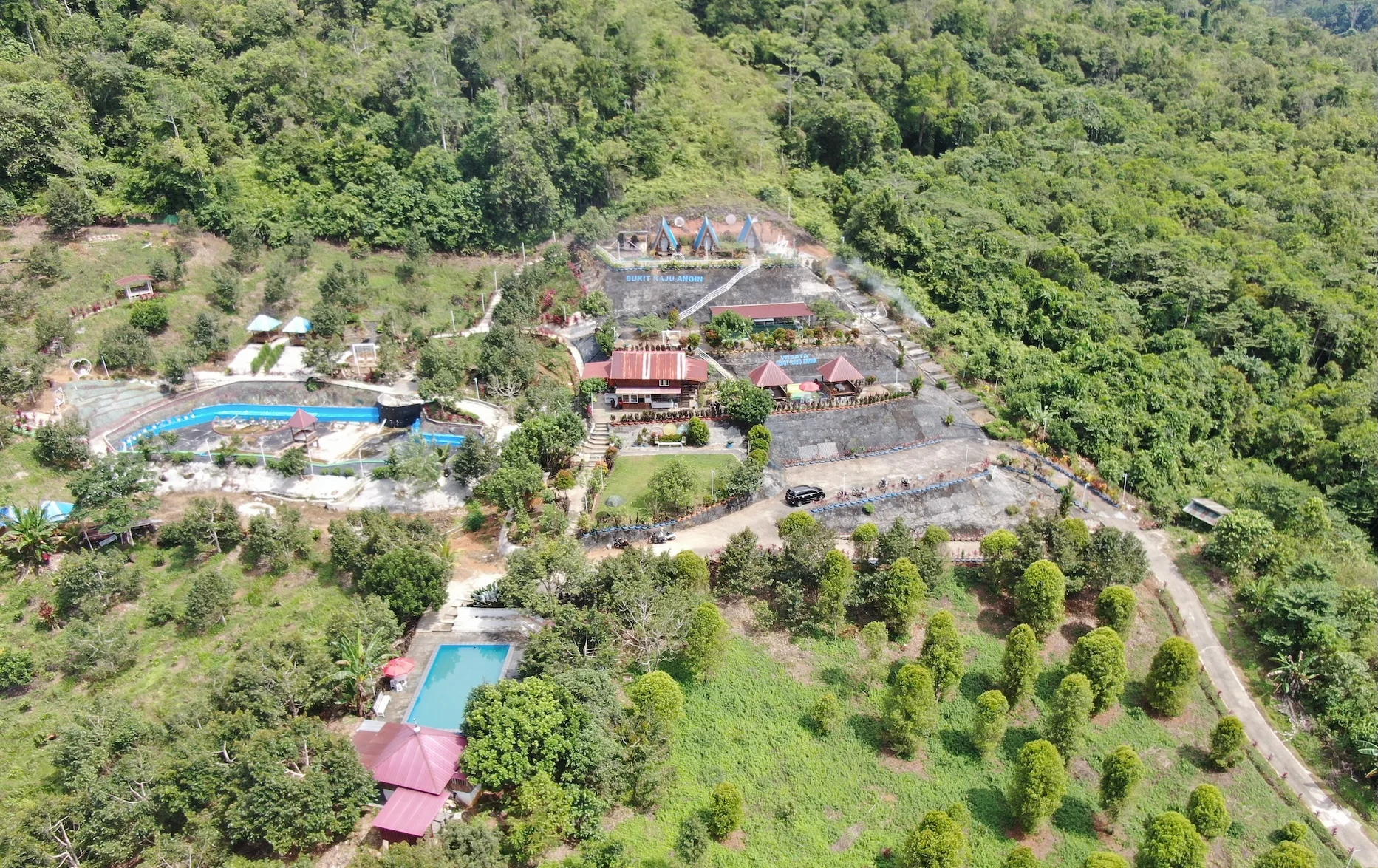
Ecotourism is viewed as a green economy instrument capable of providing socio-economic benefits without sacrificing environmental sustainability. A study in the Banua Pangka mangrove area, East Luwu Regency, showed that ecotourism contributes to increased community income through MSMEs and local economic activities (Candra, 2024). However, various studies have also revealed the risks of poorly managed ecotourism, such as poor waste management and environmental pressures. This confirms that the success of ecotourism is highly dependent on conservation awareness and strong social participation. The Battang area has significant ecotourism potential, such as Kaju Angin Hill and Kallo Dewata Cave, and has been designated as the Battang Sipatuo Tourism Village since 2021. This potential is supported by its mountainous geography, humid tropical climate, biodiversity, and the local knowledge of the Ba'tan indigenous people, including the use of medicinal plants (Kamaruddin, 2022). However, ecotourism development in this area still faces institutional limitations and low active community participation.
Ecotourism development in this area still faces institutional limitations and relatively low levels of community participation. Only about 25% of members are consistently involved in management activities (Witno et al., 2020) Similar conditions are also found in various Community Forestry (HKm) programs, where conservation success is heavily influenced by community involvement in forest planning and economic utilization. This low participation is closely related to socioeconomic factors, such as poverty, regional isolation, and limited access to social services (Yumantoko et al., 2024).
Various studies emphasize that community-based ecotourism strategies, coupled with increased conservation literacy and strengthening local institutions, can simultaneously promote forest conservation and economic empowerment (Ren et al., 2021; Sobhani et al., 2023). However, most studies examine these factors separately, and few empirically examine the relationship between ecotourism strategies, conservation awareness, and social participation in supporting forest conservation and ecological stability (Chatterjee & Datta, 2024; Akbar et al., 2022), particularly in the local context of forest areas with tenure conflicts such as Battang. Based on this research gap, the primary question in this study is how integrated ecotourism strategies, conservation awareness, and social participation play a role in supporting forest conservation and maintaining ecological stability in the Battang area, Palopo City. Therefore, this study aims to analyze the relationship between these three factors on forest conservation and ecological stability. This study proposes the following hypotheses:
H1: Ecotourism strategies have a significant effect on
forest conservation.
H2: Conservation awareness has a significant effect on forest conservation.
H3: Social participation has a significant effect on forest conservation.
H4: Ecotourism strategies have a significant impact on ecological stability.
H5: Conservation awareness has a significant impact on ecological stability.
H6: Social participation has a significant impact on ecological stability
2. Materials and Method
1) Research Design and Location
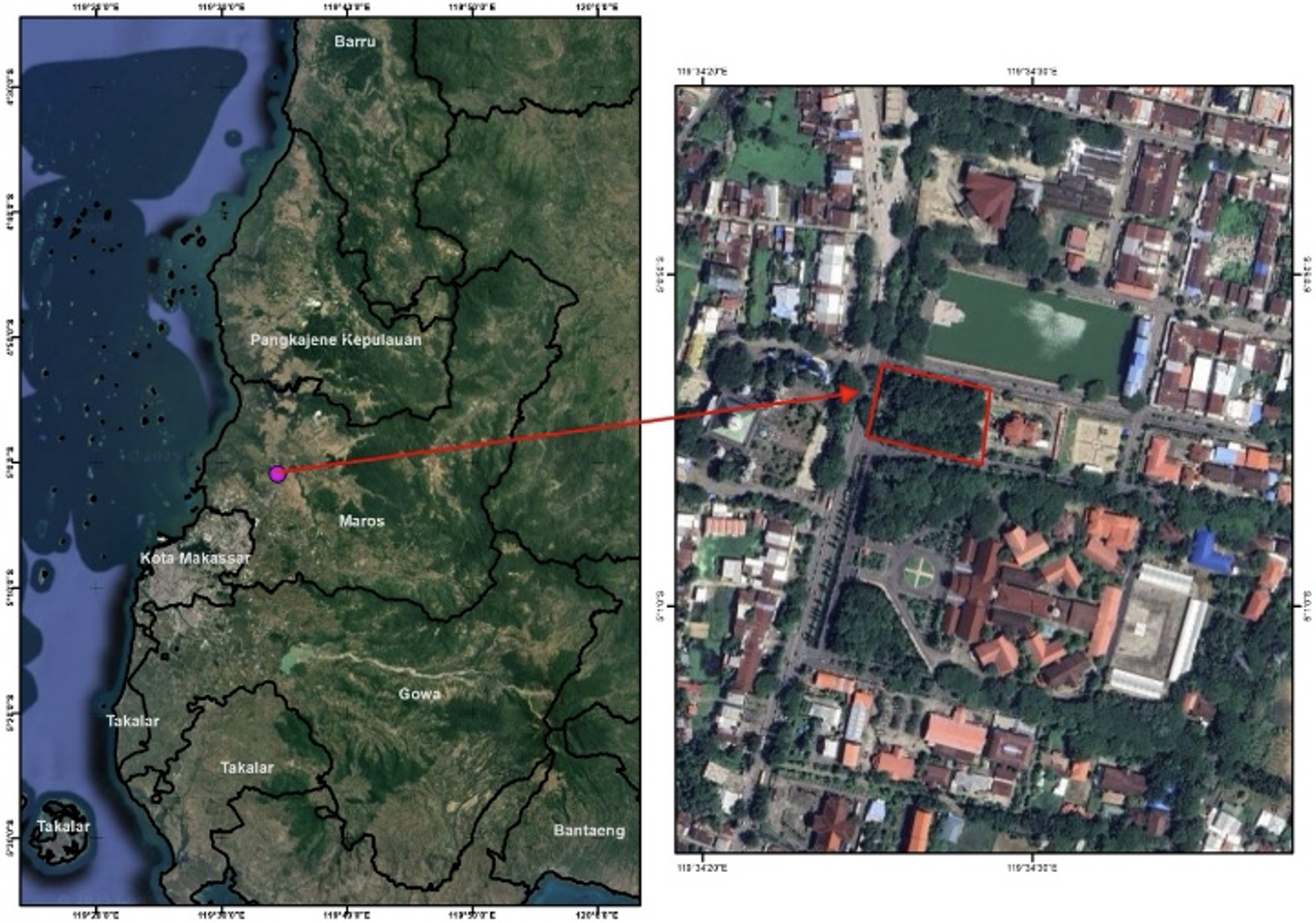
This study used a quantitative approach with a survey method to analyze the relationship between ecotourism strategies, conservation awareness, and social participation in supporting forest conservation and ecological stability. The research was conducted in the Battang Forest area, Battang Barat Village, Wara Barat District, Palopo City, South Sulawesi Province. Field data collection was conducted from May to July 2025, covering residential areas surrounding the forest, Community Forest (HKm) management areas, and ecotourism activity locations.
2) Population and Sampling Technique
The study population included people directly or indirectly involved in forest management and ecotourism activities in the Battang area. This population included members of forest farmer groups (Gapoktan), Battang HKm managers, local tourism operators, traditional leaders, and communities living around the forest area. The sampling technique used purposive sampling, with the following criteria for respondents: (1) experience or involvement in forest conservation or ecotourism activities, and (2) residing in the area surrounding the Battang Forest area. A total of 280 respondents were included in this study. This number meets the rule of thumb in PLS-SEM analysis, which is at least 10 times the number of the largest structural paths leading to an endogenous construct, and is therefore considered adequate for structural model analysis.
3) Indicators of Variables
The measurement model in this study consists of five latent constructs, each represented by several reflective indicators. The number of indicators for each construct is adjusted to the complexity of the concept being measured and refers to literature-based development instruments.
· Ecotourism Strategy (X1)
The ecotourism strategy construct is measured using six indicators (ES01–ES06) that represent the dimensions of sustainable ecotourism planning and management. These indicators cover aspects of natural tourism attraction development, environmental impact management, local community involvement in tourism activities, and ecotourism support for forest conservation.
· Conservation Awareness (X2)
Conservation awareness is measured through five indicators (CA01–CA05) that reflect the level of community understanding, attitudes, and concern regarding the importance of forest protection. These indicators reflect knowledge of the ecological functions of forests, awareness of the impacts of environmental damage, and individual commitment to preserving natural resources.
· Social Participation (X3)
The social participation construct is represented by six indicators (SP01–SP06) that measure community involvement in forest conservation and management activities. Indicators include participation in planning, implementing conservation activities, forest monitoring, and collaboration with forest farmer groups and related institutions.
· Forest Conservation (Y1)
Forest measurement variables are measured using five indicators (FC01–FC05) that describe the physical and functional condition and efforts to protect forests. These indicators include the desire to close forests, reforestation efforts, preventing illegal logging, and maintaining the forest's function as a life support system.
· Ecological Stability (Y2)
Ecological stability is measured using six indicators (EcS01–EcS06) that reflect the balance of forest ecosystems. These indicators include soil and air stability, erosion control, biodiversity sustainability, and the ecosystem's ability to support long-term ecological functions.
4) Research Instrument and Data Collection
The research instrument was a structured questionnaire developed based on a literature review and adaptations of previous research related to sustainable ecotourism, conservation awareness, and social participation (Akbar et al., 2022; Ren et al., 2021; Sobhani et al., 2023). The questionnaire consisted of four main constructs: ecotourism strategy, conservation awareness, social participation, forest conservation, and ecological stability. All items were measured using a five-point Likert scale, ranging from 1 (strongly disagree) to 5 (strongly agree), to capture respondents' perceptions, attitudes, and level of involvement. Prior to the main data collection, the questionnaire was pilot tested on a limited number of respondents to ensure language clarity and suitability for the local context.
5) Data Analysis Techniques
Data were analyzed using the Partial Least Squares–Structural Equation Modeling (PLS-SEM) method with the assistance of SmartPLS software. The analysis stages included testing the measurement model (outer model) and the structural model (inner model). Outer model testing was conducted to assess the validity and reliability of the instrument, including convergent validity testing using outer loading and Average Variance Extracted (AVE) values, discriminant validity testing, and reliability testing using Cronbach's alpha and composite reliability values. Next, inner model testing was conducted to evaluate the relationships between constructs using R-square, F-square, and Q-square values, and hypothesis testing using path analysis with bootstrapping techniques. The level of significance was determined based on the p-value (<0.05).
6) Research Ethical Considerations
This research was conducted in accordance with ethical principles of social research. All respondents were given an explanation of the research objectives and participated voluntarily with informed consent. Respondents' identities will be kept confidential, and the data collected will be used solely for academic and research purposes. This study involved no physical intervention or risk to respondents.
3. Result and Discussion
1) Respondent Description
The communities surrounding the Battang forest in Palopo are predominantly forest farmers and small business owners who depend on forest products for their livelihoods and are beginning to engage in locally-based ecotourism. They uphold traditional values and maintain a strong connection to nature, reflected in their traditional forest conservation practices.
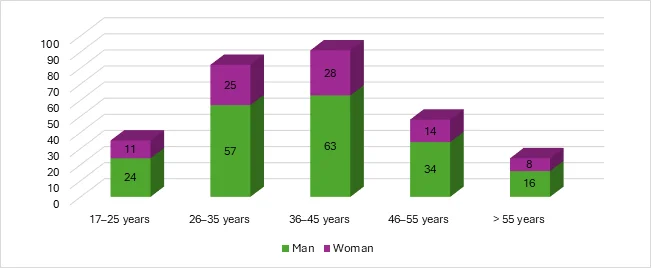
Figure 2. Gender and Age of Respondents
Based on the gender and age distribution table, the majority of respondents were men in the productive age range, specifically between 26 and 45 years old, comprising more than half of the total respondents. This indicates that involvement in forest management and ecotourism activities in Battang is dominated by the physically and socially active working-age group. Meanwhile, women's participation remains present across all age groups, although in smaller numbers than men.
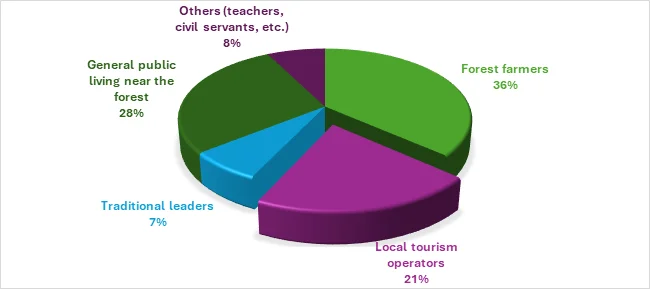
Figure 3. Type of Job Respondents
The majority of respondents worked as forest farmers (102), followed by the general public living around the forest area (79) and local tourism operators (58), reflecting direct involvement in natural resource-based activities. The presence of traditional leaders and other professionals, such as teachers and civil servants, indicates that Battang forest conservation also involves diverse social elements.
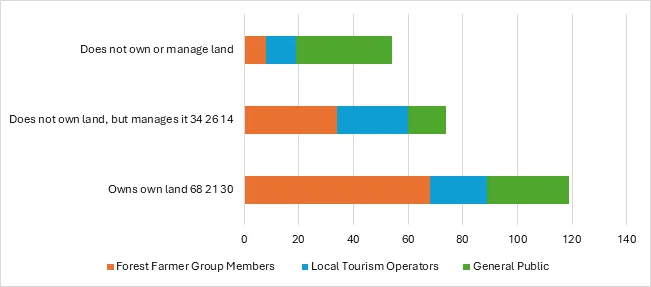
Figure 4. Land Ownership Status and Respondent Participation
Figure 4 shows that most forest farmer group members own their own land (68 respondents) or at least manage it (34 respondents), indicating their direct involvement in forestry practices. In contrast, most residents do not own or manage land (35 respondents), indicating limited access to forest resources. Local tourism actors tend to be evenly distributed among those who own, manage, or do not own land, reflecting the diversity of their roles in Battang's ecotourism development.
1) Outer Model
The outer model is part of Partial Least Squares Structural Equation Modeling (PLS-SEM) analysis that measures the relationship between indicators (questionnaire items) and constructs or latent variables. Its purpose is to test the validity and reliability of the indicators in representing the measured variables, through outer loadings, composite reliability, and average variance extracted (AVE). The outer loading results showed that most indicators had values above the threshold of 0.70, indicating adequate convergent validity. However, two indicators in the Ecological Stability construct (EcS01 and EcS02) had loading values below the recommended limit (0.426 and 0.399). Therefore, these indicators were removed and the measurement model was re-estimated to improve construct validity and overall model reliability.
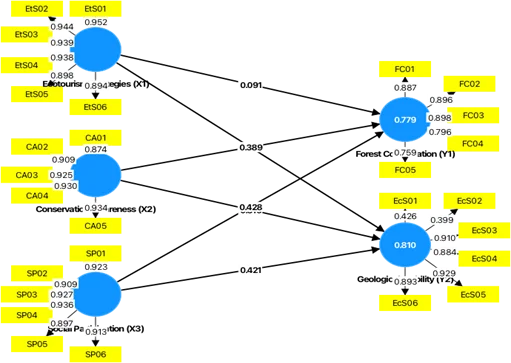
Figure 5. Outer Loadings
Table 1. Reliability Cronbach Alpha and Average Variance Extracted (AVE)

Table 1 shows that all constructs have Cronbach's alpha and composite reliability values above 0.70, indicating excellent internal reliability. Furthermore, the Average Variance Extracted (AVE) values for all variables also exceed the 0.50 threshold, thus concluding that all constructs have adequate convergent validity.
Table 2. Heterotrait–Monotrait Ratio (HTMT)
Table 2 shows that all Heterotrait–Monotrait Ratio (HTMT) values between constructs are below the threshold of 0.90, thus meeting the discriminant validity requirement in this research model. This indicates that each construct has clear conceptual distinctions and is capable of adequately measuring different variables.
2) Inner Model
The inner model is a part of PLS-SEM analysis that evaluates the structural relationships between latent variables (constructs) in a research model. This analysis is used to test the strength of the influence between variables through path coefficients, R² values, and statistical significance (e.g., t-statistics and p-values).
Table 3. R-Square
The R-square and adjusted R-square values in this model indicate high predictive power of the independent variables on the two main dependent variables, namely Forest Conservation (Y1) and Geological Stability (Y2). For Forest Conservation, the R-square value of 0.779 means that approximately 77.9% of the variability in forest conservation efforts can be explained by a combination of ecotourism strategies, conservation awareness, and social participation, while the remaining 22.1% is influenced by other factors outside the model. Meanwhile, the Geological Stability variable has an R-square value of 0.810, which means 81% of its variability can be explained by the variables in the model, indicating a strong and significant influence. The adjusted R-square value is very close to the R-square value (0.777 for Y1 and 0.808 for Y2) indicating that this model is not overfitted and has consistency in explaining the relationship between constructs. Overall, these results indicate that the structural model built has excellent explanatory power and is relevant to explain the synergy between ecotourism strategies, conservation awareness, and social participation towards forest conservation and ecological stability in the Battang area, Palopo.
Table 4. F-Square
The results of the f-square analysis show that the Conservation Awareness (X2) variable has a large contribution to Forest Conservation (Y1) with a value of 0.807 and a moderate contribution to Ecological Stability (Y2) of 0.267, which indicates that public awareness of conservation is very influential in maintaining forest sustainability and is quite strong in supporting ecological stability. Social Participation (X3) also has a large influence on Forest Conservation (0.607) and a moderate influence on Geological Stability (0.320), indicating that community involvement is very important in the process of preserving forests and surrounding ecosystems. Meanwhile, Ecotourism Strategies (X1) shows a small influence on Forest Conservation (0.099) but has a moderate influence on Ecological Stability (0.245), which shows that although the role of ecotourism is not yet optimal in forest conservation, it is quite significant in maintaining environmental balance in the Battang area, Palopo.
Table 5. Path Coefficients
Based on the results of the path coefficients, it is known that Conservation Awareness (X2) has a significant effect on Forest Conservation (Y1) (t = 3.581; p = 0.000) and Ecological Stability (Y2) (t = 2.471; p = 0.014), which shows that the higher the community's awareness of conservation, the greater their contribution in maintaining forests and environmental stability. Social Participation (X3) also shows a significant influence on both dependent variables, namely Forest Conservation (t = 3.872; p = 0.000) and Geological Stability (t = 3.694; p = 0.000), confirming the importance of social involvement in the preservation and sustainability of ecosystems. On the other hand, Ecotourism Strategies (X1) only has a significant effect on Ecological Stability (t = 2.174; p = 0.030), but not significantly on Forest Conservation (t = 1.302; p = 0.193), which indicates that ecotourism strategies in the Battang area have not directly contributed to forest conservation, but have a role in supporting ecological stability indirectly. The results of the inner model through bootstrapping can be seen in Figure 6 as follows.
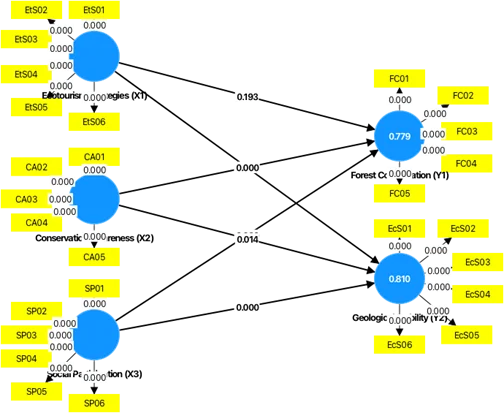
Figure 6. Results of the model analysis
2) Discussion
The findings of this study reveal differentiated roles among ecotourism strategies, conservation awareness, and social participation in supporting forest conservation and ecological stability in the Battang area of Palopo. Most notably, the relationship between Ecotourism Strategies and Forest Conservation is found to be statistically insignificant (p = 0.193). This result must be clearly acknowledged, as it challenges the commonly held assumption that the development of ecotourism will automatically translate into direct forest conservation outcomes. Rather than indicating a failure of ecotourism as a concept, this finding highlights important contextual and institutional limitations in its current implementation in Battang.
A plausible explanation for this insignificant relationship lies in the early-stage and fragmented nature of ecotourism development in the Battang area. Ecotourism activities remain largely focused on showcasing natural attractions and generating supplementary income, while mechanisms that explicitly link tourism revenues to concrete conservation actions such as reforestation, forest patrols, habitat restoration, or biodiversity monitoring are still weak or absent. As a result, the economic benefits derived from tourism are not yet systematically reinvested into forest conservation programs. This condition reflects the findings of Zhou et al. (2021) who argue that Community-Based Ecotourism (CBET) can successfully enhance ecological awareness without necessarily producing immediate or measurable impacts on reforestation or forest protection activities.
This interpretation is further supported by national-level evidence (Sisriany & Furuya, 2025) demonstrate that although a majority of ecotourism sites in Indonesia did not exhibit significant deforestation trends between 2014 and 2023, approximately 30.92% of sites showed dynamic changes in forest cover loss, including both improvements and deterioration. This variation underscores that ecotourism is not inherently conservation-oriented; its effectiveness depends heavily on governance quality, enforcement capacity, and the extent to which conservation objectives are embedded within tourism operations. In the case of Battang, ecotourism appears to function more as a contextual driver of environmental awareness rather than as a direct operational tool for forest conservation.
Interestingly, while ecotourism strategies do not significantly influence forest conservation, they do show a significant effect on ecological stability. This suggests that the ecological benefits of ecotourism in Battang may be indirect and systemic rather than direct and intervention-based. Improved ecological stability may stem from reduced destructive activities, spatial regulation of land use, increased environmental consciousness, and the symbolic value of conservation-oriented tourism. Such outcomes align with theoretical perspectives that view ecotourism as a soft conservation instrument one that reshapes norms, behaviours, and land-use priorities over time rather than producing immediate physical conservation outputs.
The significant effect of conservation awareness on forest conservation and ecological stability highlights the central role of cognitive and normative dimensions in shaping pro-environmental behavior. In the Battang context, conservation awareness reflects not only knowledge of forest functions but also moral responsibility rooted in local values and lived experiences with environmental degradation. This finding supports behavioral-environmental theories suggesting that awareness serves as a precursor to voluntary conservation actions, such as compliance with forest regulations, participation in reforestation, and avoidance of extractive practices. However, awareness alone does not automatically translate into effective conservation outcomes unless it is reinforced through institutional support, continuous environmental education, and opportunities for community engagement, as observed in Battang where awareness has increased but structured conservation actions remain uneven.
The strong and consistent influence of social participation underscores its role as the primary operational mechanism translating conservation values into tangible actions. In Battang, participation involves direct engagement in forest monitoring, reforestation activities, and collaborative decision-making with local authorities and customary institutions. Unlike ecotourism strategies, which remain programmatic and externally driven, social participation is embedded in daily practices and local governance structures, allowing conservation initiatives to be sustained beyond project cycles. This finding reinforces participatory governance theory, which emphasizes that conservation effectiveness depends on the degree to which local communities possess decision-making power, a sense of ownership, and equitable access to benefits (Rogelja et al., 2025)
However, despite the presence of community-based organizations such as the Tandung Billa Farmers Group, participation levels in Battang remain uneven. Previous studies indicate that only around 25% of registered members are actively involved in conservation-related activities (Witno et al., 2020; Wawan, 2020). This suggests that awareness alone is insufficient unless supported by institutional incentives, equitable benefit-sharing mechanisms, and clearly defined roles within conservation and ecotourism programs. Without these structural supports, participation risks becoming symbolic rather than transformative.
Comparative insights from other conservation contexts further illuminate this issue. Adaptive management strategies implemented in Komodo National Park such as visitor quotas, reservation systems, and community integration into tourism operations have proven effective in balancing conservation and tourism pressures Sianipar et al. (2025) These strategies are particularly relevant for Battang, where unregulated tourism expansion could potentially increase ecological pressure. Similarly, Habibulloev et al. (2024) emphasize that ecotourism sustainability is contingent upon strong environmental awareness, supportive local regulations, and deeply rooted cultural values conditions that partially exist in Battang but require further institutional strengthening.
In a study in Nepal using an ecological-economic approach, forest cover increased from 340.46 ha to 375.54 ha between 1996–2021 in areas implementing community-based ecotourism and conservation management, while shrub and sand areas decreased drastically from 79.25 ha to 6.52 ha (Brandt & Buckley, 2018). The annual economic value of biodiversity services was recorded at USD 18,803, and provisioning services at USD 7,182, with the largest share being timber (USD 4,800), demonstrating that ecotourism and conservation can contribute to ecosystem restoration while simultaneously benefiting the local economy. Another study on ecotourism sustainability in Bukit Tiga Puluh National Park (Riau) using the MDS-RAP method showed a sustainability index for the ecological dimension of 91.68 (highly sustainable), while the economic dimension was only 49.88 and the socio-cultural dimension 67.38 (Sadad et al., 2022). Moreover, the study conducted in Wolong Nature Reserve illustrates that ecotourism-driven livelihood improvements can inadvertently generate new ecological pressures if not carefully regulated (Shi et al., 2022). These mixed results strengthen the argument that ecotourism should not be viewed as a stand-alone conservation solution, but rather as a complementary strategy that must be embedded within a broader framework of governance and participation.
These findings suggest that the insignificant effect of ecotourism strategies on forest conservation in Battang reflects a structural disconnect between tourism development and conservation implementation. Strengthening this linkage requires the establishment of transparent monitoring systems, conservation-oriented tourism zoning, mandatory reinvestment of tourism revenues into forest management, and continuous capacity building for local communities (De Zoysa, 2022). Without such measures, ecotourism risks remaining an economic activity with limited ecological impact. Therefore, the results of this study underscore the need for a reorientation of ecotourism from a revenue-driven model toward a conservation-integrated governance model. Enhancing conservation literacy, empowering local institutions, and enforcing regulations on tourist behaviours and resource utilization are essential steps toward achieving genuine sustainability (Pineda et al., 2023; Sethy & Senapati, 2023). In this sense, the Battang case illustrates that ecological stability and forest conservation are ultimately driven not by tourism activities alone, but by the depth of social participation and conservation values embedded within local governance systems.
3) Conclusion
This study provides empirical evidence that forest conservation and ecological stability in the Battang region are primarily driven by conservation awareness and social participation, while ecotourism strategies alone have no direct impact on forest conservation. These findings contribute to the ecotourism and conservation literature by demonstrating that ecotourism effectiveness is highly context-dependent and mediated by social and institutional factors, rather than by tourism activities themselves. From a practical perspective, the results suggest that ecotourism programs should be explicitly integrated with conservation mechanisms through mandatory reinvestment of tourism revenues into forest protection, strengthening community-based governance, and establishing clear monitoring and zoning systems to control environmental impacts. Furthermore, capacity-building initiatives and transparent benefit-sharing arrangements are crucial for maintaining active community participation. Future research should explore longitudinal and mixed-methods approaches to examine the long-term ecological impacts of ecotourism, investigate the mediating or moderating role of institutional quality and governance, and expand comparative analysis across different forest regions to enhance the generalizability of community-based conservation models.
4) Author Contributions
Research articles that have several authors should include a concise paragraph that outlines the specific contributions made by each contributor. The experimental design was devised by first author (AA) and Second author (HH). The execution of the experiments was carried out by second author (HH). The data was interpreted by third author (DMS) and first author (AA). Reagents, materials, and analysis tools were provided by fourth author (PA). The text was produced by first author (AA). Ensure that authorship is limited to persons who have made significant contributions to the study presented.
5) Competing Interests
Authors are required to identify any conflicts of interest or clearly assert "The authors are free of conflicts of interest." It is crucial to acknowledge and disclose any personal circumstances or interests that could potentially bias the presentation or understanding of the research findings in an unethical manner. In addition, any participation of the funding sponsors in the study's design, data collection, analysis, interpretation, article preparation, or publication decision must be revealed in this area. If the sponsors did not have any input, please include that "The funding sponsors had no role in the study's design, data collection, analysis, interpretation, manuscript writing, or decision to publish the results."
6) Acknowledgements
Recognize those who helped in the research, especially funding supporters of your research. Include individuals who have assisted you in your study: Advisors, Financial supporters, or perhaps other supporters AI, Proofreaders, Typists, and Suppliers who may have given materials.
7) References
الحقوق الفكرية (c) 2026 Jurnal Wasian

هذا العمل مرخص بموجب Creative Commons Attribution 4.0 International License.
Copyright and License
All articles published in Wasian Journal are the property of the authors. By submitting an article to Wasian Journal, authors agree to the following terms:
-
Copyright Ownership: The author(s) retain copyright and full publishing rights without restrictions. Authors grant the journal the right to publish the work first and to distribute it as open access under a Creative Commons Attribution 4.0 International License (CC BY 4.0).
-
Licensing: Articles published in Wasian Journal are licensed under a Creative Commons Attribution 4.0 International License (CC BY 4.0). This license allows others to share, copy, and redistribute the material in any medium or format, and adapt, remix, transform, and build upon the material for any purpose, even commercially, provided that proper credit is given to the original author(s) and the source of the material

This work is licensed under a Creative Commons Attribution 4.0 International License. -
Author's Rights: Authors are permitted and encouraged to post their work online (e.g., in institutional repositories or on their website) prior to and during the submission process, as it can lead to productive exchanges and greater citation of published work.
-
Third-Party Content: If your article contains material (e.g., images, tables, or figures) for which you do not hold copyright, you must obtain permission from the copyright holder to use the material in your article. This permission must include the right for you to grant the journal the rights described above.
-
Reprints and Distribution: Authors have the right to distribute the final published version of their work (e.g., post it to an institutional repository or publish it in a book), provided that the original publication in Wasian Journal is acknowledged.
For the reader you are free to:
- Share — copy and redistribute the material in any medium or format for any purpose, even commercially.
- Adapt — remix, transform, and build upon the material for any purpose, even commercially.
- The licensor cannot revoke these freedoms as long as you follow the license terms.
Under the following terms:
- Attribution — You must give appropriate credit , provide a link to the license, and indicate if changes were made . You may do so in any reasonable manner, but not in any way that suggests the licensor endorses you or your use.
- No additional restrictions — You may not apply legal terms or technological measures that legally restrict others from doing anything the license permits.
Notices:
You do not have to comply with the license for elements of the material in the public domain or where your use is permitted by an applicable exception or limitation .
No warranties are given. The license may not give you all of the permissions necessary for your intended use. For example, other rights such as publicity, privacy, or moral rightsmay limit how you use the material.

الأعمال الأكثر قراءة لنفس المؤلف/المؤلفين
- Anugrahandini Nasir, Herawaty Herawaty, Ismail Ismail, Muh Izzul Muslimin Syah, Revealing Carbon Patterns Across Mangrove Density Variations Using Sentinel-2 NDVI , Jurnal Wasian: مجلد 12 عدد 02 (2025): December