Development Strategy of Masoi (Cryptocarya massoia (Oken) Kosterm.) as Non-Timber Forest Products in Teluk Bintuni, West Papua With SWOT Analysis

Abstract
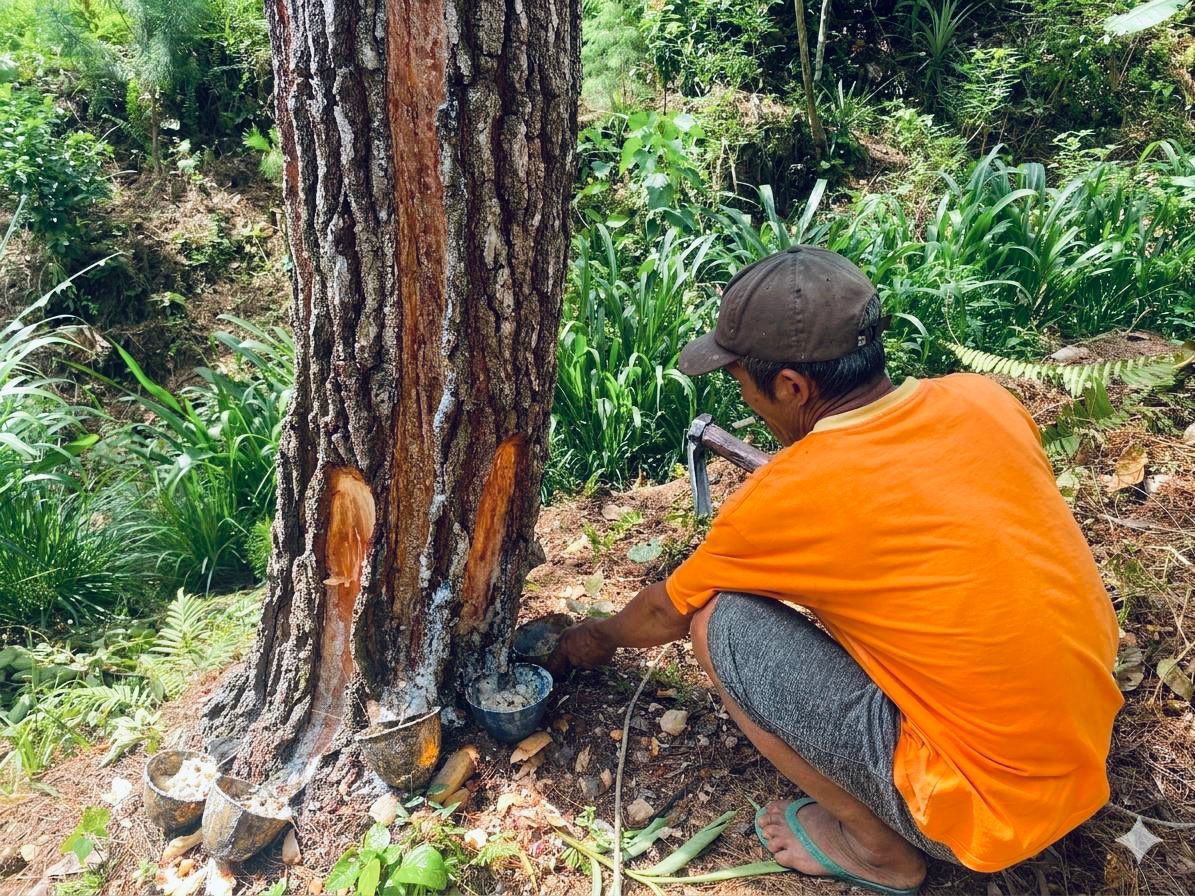
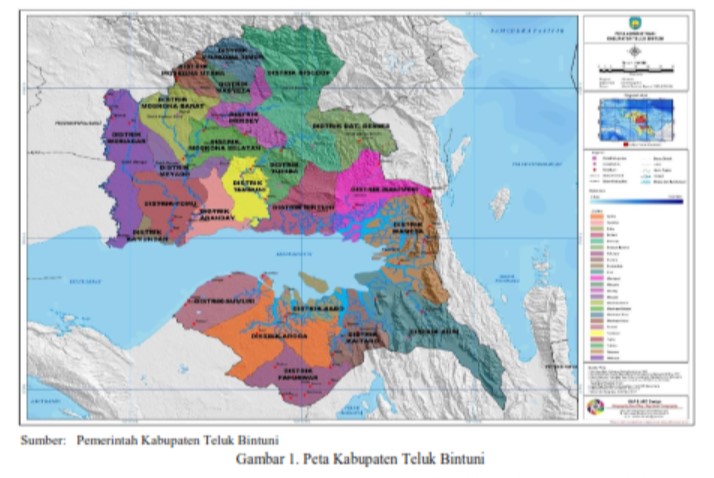
Non-timber forest products (NTFPs) are forest resources which have comparative advantage and in direct contact with the community. Masoi (Cryptocarya masoia) is one of mainstay Papua NTFPs. This essential oil that produced through bark distillation, used as aromatic raw materials for food, medicines, perfume,s and aromatherapy. The demands of masoi oil are high for domestic and foreign market. This study aimed to formulate development strategy of masoi as non-timber forest products in Teluk Bintuni regency, Papua Barat Province, by identifying external factors (Opportunities, threats) and internal factors (strengths, weaknesses). The research applied SWOT analysis methods by identifying external factors (EFAS) and internal factors (IFAS) as strength, weaknesses, opportunities, and threats. Based on SWOT analysis which conducted by calculate score of external factors and internal factors, the suitable strategy was WO strategy which utilized opportunities to suppress the weaknesses at third quadrant. The third quadrant tended turn around by 1). Socialization and training of masoi cultivation on indigenous people, 2). Legal Counseling to increase legal awareness of the community to overcome land disputes.
Copyright (c) 2018 Jurnal Wasian

This work is licensed under a Creative Commons Attribution-NonCommercial 4.0 International License.
Copyright and License
All articles published in Wasian Journal are the property of the authors. By submitting an article to Wasian Journal, authors agree to the following terms:
-
Copyright Ownership: The author(s) retain copyright and full publishing rights without restrictions. Authors grant the journal the right to publish the work first and to distribute it as open access under a Creative Commons Attribution 4.0 International License (CC BY 4.0).
-
Licensing: Articles published in Wasian Journal are licensed under a Creative Commons Attribution 4.0 International License (CC BY 4.0). This license allows others to share, copy, and redistribute the material in any medium or format, and adapt, remix, transform, and build upon the material for any purpose, even commercially, provided that proper credit is given to the original author(s) and the source of the material

This work is licensed under a Creative Commons Attribution 4.0 International License. -
Author's Rights: Authors are permitted and encouraged to post their work online (e.g., in institutional repositories or on their website) prior to and during the submission process, as it can lead to productive exchanges and greater citation of published work.
-
Third-Party Content: If your article contains material (e.g., images, tables, or figures) for which you do not hold copyright, you must obtain permission from the copyright holder to use the material in your article. This permission must include the right for you to grant the journal the rights described above.
-
Reprints and Distribution: Authors have the right to distribute the final published version of their work (e.g., post it to an institutional repository or publish it in a book), provided that the original publication in Wasian Journal is acknowledged.
For the reader you are free to:
- Share — copy and redistribute the material in any medium or format for any purpose, even commercially.
- Adapt — remix, transform, and build upon the material for any purpose, even commercially.
- The licensor cannot revoke these freedoms as long as you follow the license terms.
Under the following terms:
- Attribution — You must give appropriate credit , provide a link to the license, and indicate if changes were made . You may do so in any reasonable manner, but not in any way that suggests the licensor endorses you or your use.
- No additional restrictions — You may not apply legal terms or technological measures that legally restrict others from doing anything the license permits.
Notices:
You do not have to comply with the license for elements of the material in the public domain or where your use is permitted by an applicable exception or limitation .
No warranties are given. The license may not give you all of the permissions necessary for your intended use. For example, other rights such as publicity, privacy, or moral rightsmay limit how you use the material.
Similar Articles
- Freddy Jontara Hutapea, Relawan Kuswandi, Timber Volume Estimation Model for Commercial Tree Species in the Logging Area Concession of PT. Tunas Timber Lestari in Boven Digul, Papua , Jurnal Wasian: Vol. 6 No. 1 (2019): June
- Isdomo Yuliantoro, Nurlita Indah Wahyuni, Perception and Adaptation of Coastal Community Toward Climate Change at Sarawet Village of North Minahasa Regency , Jurnal Wasian: Vol. 6 No. 2 (2019): December
- Baharinawati Wilhan Hastanti, S. Agung Sri Raharjo, Stakeholder Analysis of Implementation of Social Forestry Program at KPH Telawa, Central Java , Jurnal Wasian: Vol. 8 No. 1 (2021): June
- Arif Irawan, Kristian Mairi, Sulistya Ekawati, Analysis Of Tenurial Conflict In Production Forest Management Unit (Pfmu) Model Poiga , Jurnal Wasian: Vol. 3 No. 2 (2016): December
- Diah Irawati Dwi Arini, Julianus Kinho, Melkianus S Diwi, Margareta Christita, Jafred E Halawane, Muhammad F Fahmi, Yermias Kafiar, Wildlife Diversity for Ecotourism at Aqua Lestari Forest Park, North Minahasa , Jurnal Wasian: Vol. 5 No. 1 (2018): June
- Bertila Avila Delvion, Dwiko Budi Permadi, Hero Marhaento, Fostering Sustainabel Livelihood of the Saga Indigenous Community through Conservation Partnership in Kelimutu National Park, Nusa Tenggara Timur , Jurnal Wasian: Vol. 10 No. 02 (2023): December
- Muhammad Iqbal Nur Madjid, Dwiko Budi Permadi, Wahyu Wardhana, Ratih Madya Septiana, Locals’ Claims of Rights and Access to Forest Resources in Three Forest Management Regimes in Gunungkidul Regency, Yogyakarta , Jurnal Wasian: Vol. 9 No. 1 (2022): June
- Sahindomi Bana, Wa Ode Nur Hasanah, Laode Sabaruddin, Hasbullah Syaf, Lies Indriyani, Junartin Teke, La Gandri, The Analyses of Forest Fire Vulnerability at Taman Hutan Raya (Tahura) Nipa-Nipa Kendari City , Jurnal Wasian: Vol. 9 No. 1 (2022): June
- Nurlita Indah Wahyuni , Hendra Susanto Mokodompit, Structure, Composition and Diversity of Tree Species at Inobonto Poigar I Production Forest, Forest Management Unit of Poigar, North Sulawesi , Jurnal Wasian: Vol. 3 No. 1 (2016): June
- Nurlita Indah Wahyuni, Yermias Kafiar, Species Composition and Structure of Secondary Forest at Nunuka, North Bolaang Mongondow , Jurnal Wasian: Vol. 4 No. 1 (2017): June
You may also start an advanced similarity search for this article.
Most read articles by the same author(s)
- Baharinawati Wilhan Hastanti, Freddy Jontara Hutapea, Analysis of Vulnerability Levels to the Flash Flood Based on Social Economic and Institutional Factors in Wasior, Teluk Wondama, West Papua , Jurnal Wasian: Vol. 7 No. 1 (2020): June
- Baharinawati Wilhan Hastanti, S. Agung Sri Raharjo, Stakeholder Analysis of Implementation of Social Forestry Program at KPH Telawa, Central Java , Jurnal Wasian: Vol. 8 No. 1 (2021): June
- relawan kuswandi, Julius Dwi Nugroho, Diameter Increment of Remnant Stands in Logged-Over Forest in Papua , Jurnal Wasian: Vol. 6 No. 2 (2019): December