Species Composition and Structure of Secondary Forest at Nunuka, North Bolaang Mongondow

Abstract
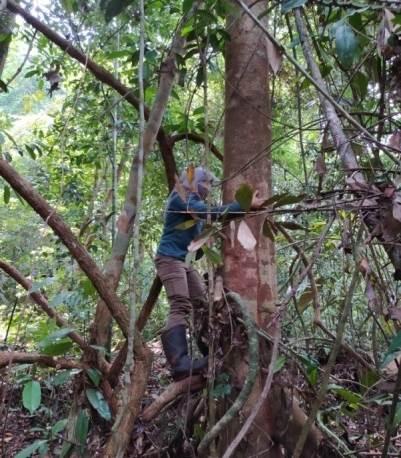
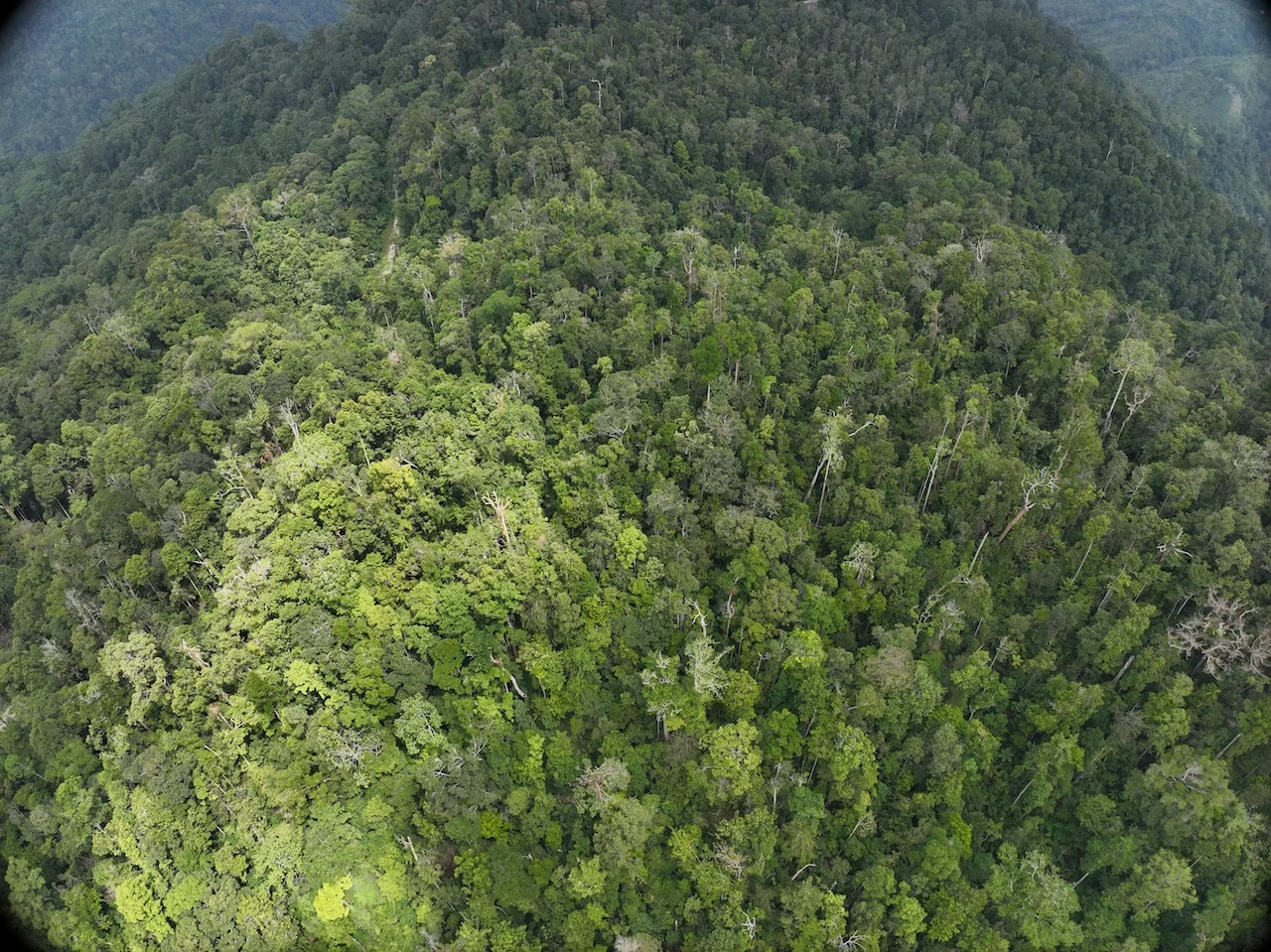
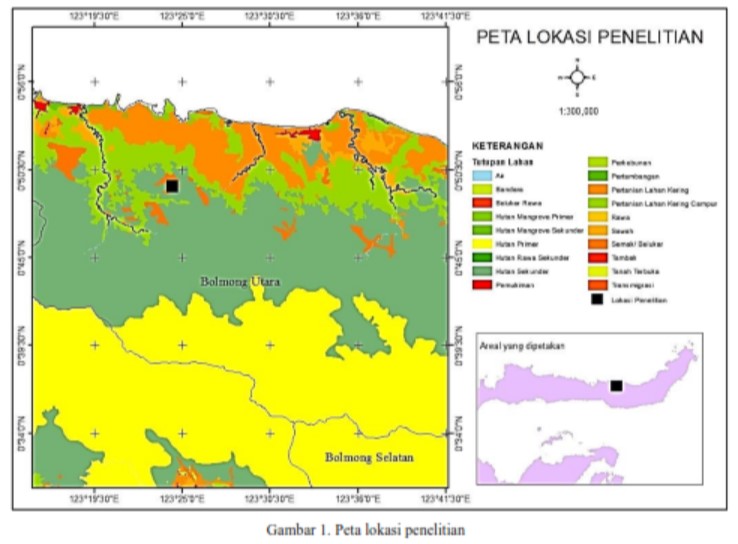
Secondary forest of Indonesia covered about 24.2 % of total land area and dominated by post logging forest. The discourse to manage all forest area into Forest Management Unit (FMU) as the smallest management unit has been established, including post logging secondary forest. Therefore, understanding the diversity of secondary forest vegetation will help to decide its future management. This research aims to analyze composition, diversity and structure of post logging secondary forest at Nunuka, North Bolaang Mongondow of North Sulawesi. In order to accomplish the proposed objectives 30 plots of 20 m x 20 m were established in research area where number and name of tree species were identified and counted. The research was conducted on November 2014. The result recorded 84 tree species in research area. Anthocephalus macrophyllus dominated tree phase, whereas Eugenia sp. dominated both of poles and sapling. Shannon-Wiener index indicated low and medium diversity, whereas species abundance of tree, ploes and sapling were almost spread evenly. Vegetation density over all vegetation phases was 485.83 tree/ha, the average basal area of the forest was 35.15 m2/ha and the size class distribution did not resembled a reserved J-shaped pattern as found in primary forest. However J-shaped pattern showed in graphs of ten dominant species in both of tree and sapling level.
Copyright (c) 2017 Jurnal Wasian

This work is licensed under a Creative Commons Attribution-NonCommercial 4.0 International License.
Copyright and License
All articles published in Wasian Journal are the property of the authors. By submitting an article to Wasian Journal, authors agree to the following terms:
-
Copyright Ownership: The author(s) retain copyright and full publishing rights without restrictions. Authors grant the journal the right to publish the work first and to distribute it as open access under a Creative Commons Attribution 4.0 International License (CC BY 4.0).
-
Licensing: Articles published in Wasian Journal are licensed under a Creative Commons Attribution 4.0 International License (CC BY 4.0). This license allows others to share, copy, and redistribute the material in any medium or format, and adapt, remix, transform, and build upon the material for any purpose, even commercially, provided that proper credit is given to the original author(s) and the source of the material

This work is licensed under a Creative Commons Attribution 4.0 International License. -
Author's Rights: Authors are permitted and encouraged to post their work online (e.g., in institutional repositories or on their website) prior to and during the submission process, as it can lead to productive exchanges and greater citation of published work.
-
Third-Party Content: If your article contains material (e.g., images, tables, or figures) for which you do not hold copyright, you must obtain permission from the copyright holder to use the material in your article. This permission must include the right for you to grant the journal the rights described above.
-
Reprints and Distribution: Authors have the right to distribute the final published version of their work (e.g., post it to an institutional repository or publish it in a book), provided that the original publication in Wasian Journal is acknowledged.
For the reader you are free to:
- Share — copy and redistribute the material in any medium or format for any purpose, even commercially.
- Adapt — remix, transform, and build upon the material for any purpose, even commercially.
- The licensor cannot revoke these freedoms as long as you follow the license terms.
Under the following terms:
- Attribution — You must give appropriate credit , provide a link to the license, and indicate if changes were made . You may do so in any reasonable manner, but not in any way that suggests the licensor endorses you or your use.
- No additional restrictions — You may not apply legal terms or technological measures that legally restrict others from doing anything the license permits.
Notices:
You do not have to comply with the license for elements of the material in the public domain or where your use is permitted by an applicable exception or limitation .
No warranties are given. The license may not give you all of the permissions necessary for your intended use. For example, other rights such as publicity, privacy, or moral rightsmay limit how you use the material.
Similar Articles
- Potential of Nickel (Ni) Phytoremediation of Adaptive Species on Revegetation Land, PT. Vale Indonesia (Tbk). Pomalaa Site Kolaka Regency View PDF
- Macroscopic Fungi Species in Kelimutu National Park, East Nusa Tenggara View PDF
- The Variability of Seed Viability and Seed Vigour of Mindi (Melia azedarachlinn.) from Several Populations in The Community Forest of West Java View PDF
- Weed Density and Dominant Weed Species in Malapari (Pongamia pinnata (L.) Pierre) Agroforestry View PDF
- Evaluating the Success of Watershed Rehabilitation Efforts in Gowa Regency: A Case Study on Forest and Land Restoration View PDF
- Habitat Characteristics and Diet of Bear Cuscus (Ailurops ursinus) in Tanjung Peropa Wildlife Reserve, Southeast Sulawesi View PDF
You may also start an advanced similarity search for this article.
Most read articles by the same author(s)
- Perception and Adaptation of Coastal Community Toward Climate Change at Sarawet Village of North Minahasa Regency View PDF
- Dynamic of the Land Use and Land Cover Change in Banyuwangi Regency From 1995-2019 View PDF
- Wildlife Diversity for Ecotourism at Aqua Lestari Forest Park, North Minahasa View PDF
- Identification of Water Bacteria from Nickel Post Mining in East Halmahera View PDF
- Prefered Feed of Anoa (Bubalus sp.) at Manado Forestry Research Institute Captivity View PDF
- Composition and Structure of Tiwoho Mangrove Vegetation at Bunaken National Parkional Park (Komposisi Dan Struktur Vegetasi Mangrove Tiwoho di Kawasan Taman Nasional Bunaken) View PDF