Composition, Distribution, and Diet of Malayan Tapir (Tapirus indicus) in Way Kambas National Park


Abstract
Malayan tapir (Tapirus indicus) is a protected species whose survival depends heavily on the availability and distribution of forage within its habitat. This research aims to identify the types and distribution of Malayan tapir forage in Way Kambas National Park (WKNP) while also examine its diet. Data collection included types of Malayan tapir forage and vegetation structure through vegetation analysis. Distribution patterns were analyzed using the morisita index, while diet was analyzed using proximate analysis. The total of Malayan tapir forage successfully identified was 30 from 24 families, a stable community condition shown by the diversity and richness indices are categorized as the moderate category, while the evenness index is categorized as the high category. A predominantly clumped distribution pattern was 12 species. Based on feeding signs, the most frequently consumed were senggani (Melastoma malabathricum) and berasan (Symplocos stenosepala), with frequencies of 38.10% and 28.57% respectively. Proximate analysis results indicate that these species are complementary, senggani providing the highest crude protein (13.82%) and berasan supplying the lowest crude fiber (21.99%) that ideal for the digestion of hindgut fermenters. The presence of seeds in the feces confirms the vital role of Malayan tapir as a seed dispersal agent in WKNP.
1. Introduction
Way Kambas National Park (WKNP) was designated as the Way Kambas National Park Office pursuant to Decree of the Minister of Forestry No. 185/Kpts-II/1997 dated March 13, 1997. Previously, the region had suffered damage due to timber exploitation, which converted large portions of the forest into cogon grass, shrubs, and secondary forest. Despite these conditions, this region has a diversity of habitat types that support the existence of various wildlife species (Yunus et al. 2019), and makes this area an important location for the protection of mandated species that have high conservation value, including the Malayan tapir (Tapirus indicus). Currently, Malayan tapirs are classified as Endangered by the International Union for Conservation of Nature (IUCN), listed in Appendix I of the Convention on International Trade in Endangered Species of Wild Fauna and Flora (CITES), and legally protected under the Ministry of Environment and Forestry Regulation No. P.106/MENLHK/SETJEN/KUM.1/12/2018 on Protected Plant and Animal Species. Regulation of the Minister of Forestry Number P.57/Menhut-II/2008 concerning the Strategic National Species Conservation 2008-2018 stipulates that the Malayan tapir are priority animals for conservation (Anwar et al. 2023). According to the Malayan Tapir Conservation Strategy and Action Plan for the period 2013–2022, their density is estimated to range from 0.3 to 0.8 individuals per km² (Laia 2021). Various anthropogenic pressures, including habitat degradation, illegal hunting, and the wildlife trade, continue to drive the decline in Malayan tapir populations, which has the potential to disrupt ecosystem balance due to the Malayan tapir’s ecological role as a seed disperser (Maharani 2019).
Active conservation efforts for Malayan tapirs are necessary to mitigate their dwindling populations and have already been implemented both in situ and ex situ. The availability of natural food for Malayan tapirs is one of the factors in determining its habitat (Samantha et al. 2020). As herbivores, the Malayan tapir is an animal that is highly dependent on the diversity of forest vegetation to meet its nutritional needs. This indicates that the quality of Malayan tapir habitats is determined not only by the area’s size but also by the availability and distribution of forage within their habitats. Distribution patterns are quantitative parameters that describe the presence of a species in horizontal space and reflect the relative spatial arrangement of a species in relation to other species, which are influenced by environmental factors and biological characteristics. The distribution patterns of Malayan tapir forage typically follow random, uniform, and clumped patterns (Setiarno et al. 2025). This study aims to identify Malayan tapir forage in WKNP, assess distribution patterns of Malayan tapir forage in WKNP, and analyze the diet of Malayan tapir within WKNP. This study differs from previous studies in that it provides the latest information on composition and distribution of Malayan tapir forage in WKNP, while also conducting proximate analysis to determine the nutritional content of Malayan tapir diet. Ultimately, this study can provide an empirical basis for WKNP to design targeted habitat restoration strategies for nutrient management for Malayan tapir conservation.
2. Method
1) Time and Location
The research was conducted at the Rawa Bunder Resort in Way Kambas National Park from February to March 2026. Rawa Bunder Resort is a land restoration area with three types of habitats, which include swamp forest, tropical lowland forest, and grassland. The geographical location of WKNP is between 4˚37’S and 5˚16’S and between 105˚33’E and 105˚54’E. Administratively, WKNP spans across East Lampung Regency and Central Lampung Regency. This area has a flat to slightly undulating topography with an elevation ranging from 0 to 50 meters above sea level and a tropical climate with an average rainfall of 3000 mm/year (Yunus et al. 2019). Data collection was conducted from 8:00 AM to 3:00 PM. The detailed map of study site is presented in Figure 1.
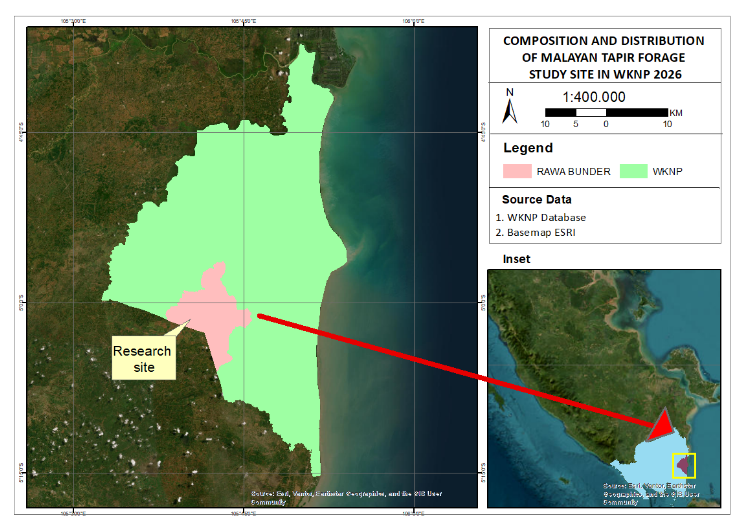
Figure 1. Detailed map of study site
The tools used in this research included field maps, smartphone, laptop, Avenza Maps, rope, measuring tape, ruler, ArcGIS, phi band, Microsoft Excel, PlantNet, plastic bags, and writing materials. The subject of this observation was Malayan tapir forage.
2) Data Collection and Analysis Used
Data collected in this study include primary and secondary data. Primary data were obtained through vegetation observation and analysis. Secondary data were obtained through literature reviews, satellite imagery, and data from the WKNP office. Vegetation analysis was conducted to determine the species composition and distribution of Malayan tapir forage using a grid method with 20 m × 20 m plots spaced 100 m apart, comprising a total of 50 plots divided into 5 transects by determining the plot using the purposive sampling method with looking at signs of the presence of tapirs such as feeding traces, footprints, and feces. The vegetation inventory was categorized into four growth stages, namely trees (20 m × 20 m), poles (10 m × 10 m), saplings (5 m × 5 m), and undergrowth (2 m × 2 m). For each type of Malayan tapir forage, leaf samples weighing 0.5 kg were collected to determine the diet. The diet was analyzed using the proximate analysis method at the Feed Science and Technology Laboratory, Department of Nutrition and Feed Technology, Faculty of Animal Science, IPB University. The design of the line transects with grid method sampling plot by Kusmana (1997) used for vegetation analysis is illustrated in figure 2.
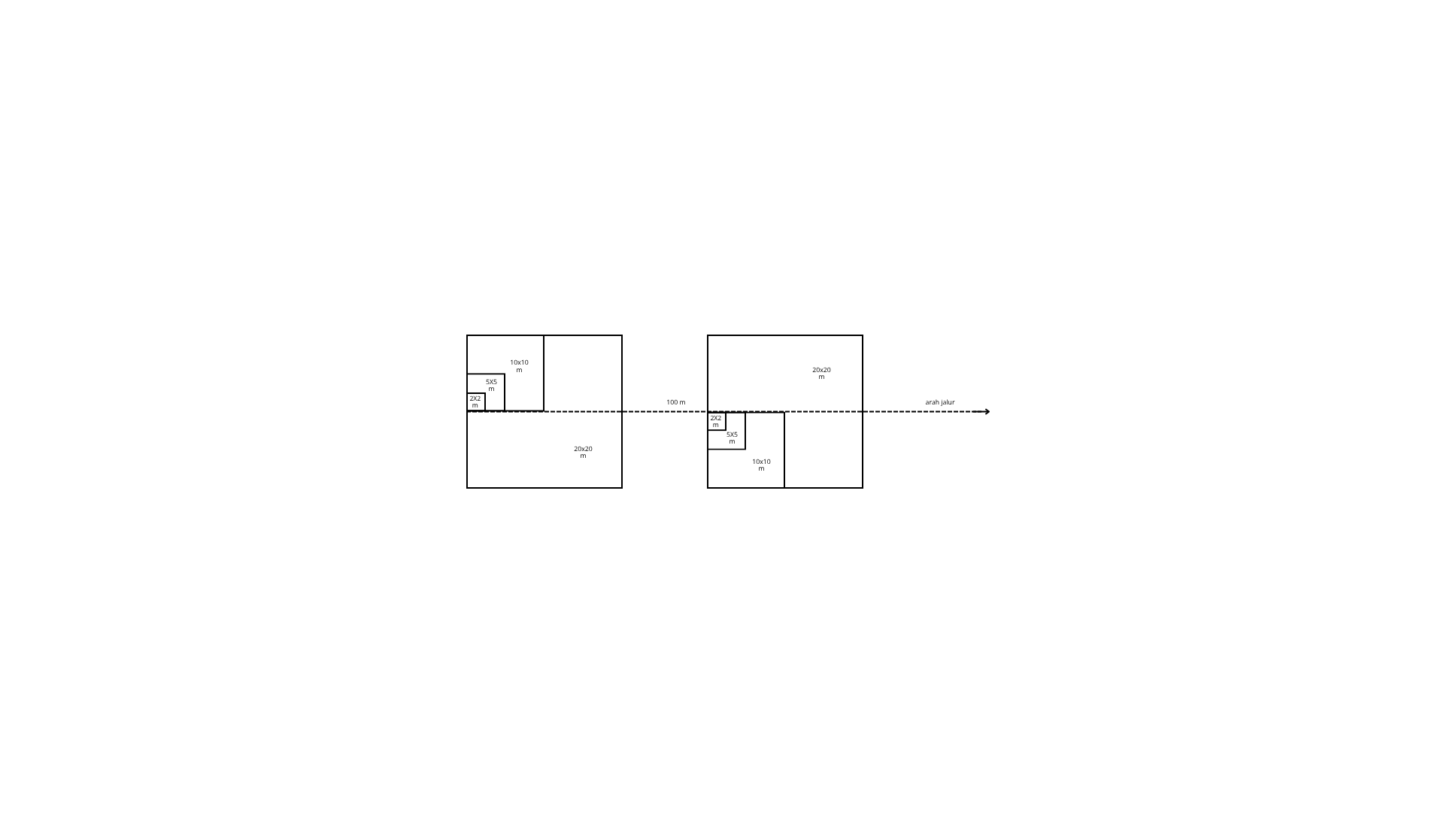
Figure 2. The design of the line transects with grid method sampling plot used for vegetation analysis
3) Analysis of the Composition of Malayan Tapir Forage
Analysis of Malayan tapir forage was conducted to describe the composition categorized by plant growth forms, including herbs, shrubs, tall herbs, and trees. The calculation of the Importance Value Index (IVI) was performed using the formula by Kusmana (1997), as follows:
De ( = (1)
RDe ( = x 100 % (2)
F (%) = (3)
RF (%) = x 100% (4)
(5)
RD (%) = x 100% (6)
The IVI for saplings and undergrowth is calculated using the formula
IVI (%) = Relative density + Relative dominance (7)
The IVI for poles and trees is calculated using the formula:
IVI (%) = Relative density + Relative dominance + Relative frequency (8)
Information:
De = Density
RDe = Relative Density
F = Frequency
RF = Relative Frequency
D = Dominance
RD = Relative Dominance
The diversity index is determined using the Shannon-Wiener formula (Magurran 2004), as follows:
(9)
Remarks: ni = number of individual species; N = total number of individuals of all species; H’= Shannon-Wiener index formula; Pi = proportion of individual species.
The evenness index is determined using the Pielou evenness index formula (Magurran 2004), as follows:
(10)
Remarks: E = Pielou evenness index formula; H’= Shannon-Wiener index formula; S = total number of species found
The richness index is calculated using Margalef’s formula (Magurran 2004) as follows:
(11)
Remarks: S = total number of species found; N = total number of individuals of all species; R = Margalef richness index.
4) Research Instrument and Data Collection
The index used to describe the distribution pattern is the Morisita index. The distribution pattern of Malayan tapir forage was analyzed using the formula by Krebs (1989), as follows:
(12)
Remarks: n = Number of plots; N = Total number of individuals of all species; ∑x = Total number of individuals in the plots.
3. Result and Discussion
1) Habitat Characteristics of Malayan Tapir
Way Kambas National Park is one of Indonesia’s conservation areas located in East Lampung Regency, Lampung and covering an area of 125,621.30 hectares. WKNP was established as the Way Kambas National Park Office pursuant to Decree of the Minister of Forestry No. 185/Kpts-II/1997 dated March 13, 1997. The region is drained by several watershed (DAS) and sub-DAS such as Rawa Kambas, Rawa Penet, Seputih, Way Jepara, Way Kambas, Way Kapuk, and Way Sekopong. The presence of lowland forest and swamp forest ecosystems in WKNP serves as a key factor in supporting the habitat carrying capacity for endangered species, including the Malayan tapir, particularly by providing food sources and shelter.
Evidence of Malayan tapir habitat at the Rawa Bunder resort includes feeding traces, footprints, feces, and wallows. All footprints found were located in the secondary forest, specifically at the forest edge in close proximity to areas with high human activity. Although abundant tapir tracks are found on the forest edges, these findings cannot confirm that tapirs are undisturbed by human activities. Anwar et al. (2023) explained that tapirs are crepuscular animals that actively forage from sunset and rest during the day. This indicates that tapirs cross the forest edge area during their active period, specifically from afternoon through the night. This species is recorded as having a high level of adaptation to various types of habitats with a large home range, but it tends to choose areas far from disturbance if given the choice (Samantha et al. 2020). The observations were conducted in February–March, when rainfall is still frequent. During this time, the observation areas where abundant tapir traces were recorded maintained an average temperature of 31.7°C. Malayan tapir feces were discovered only at the forest edge in clumped patterns. Other traces, such as footprints and foraging Remains, were distributed at the forest edge and near swamps. Inactive Malayan tapir wallow was found in swampy areas adjacent to permanent water sources.
2) Composition of Malayan Tapir Forage
The composition of Malayan tapir forage identified during the observations include 33 species from 25 families. These forage plants comprised growth forms, such as shrubs, herbs, and trees, the tree heavily dominates with a percentage of 55%. Detailed data detailing on vernacular name, scientific name, families, growth forms, and specific plant part consumed are presented in Table 1. One of the habitat characteristics required by Malayan tapirs is the availability of forage. Forage refers to any substances that have the potential to be consumed by Malayan tapirs and provide benefits to them (Datta 2023). This species consumes 4-5% of its body weight in food to meet its daily nutritional needs (Sjahfirdi & Ananda 2023).
Table 1. Detailed data detailing on vernacular name, scientific name, families, growth forms, and specific plant part consumed

The most commonly consumed forage parts are leaves, particularly young leaves. The determination of these forages was based on the identification of feeding signs in the field, which were then validated through interviews and literature reviews for species that did not show direct physical signs during observation. The determination of the plant parts consumed was based on field findings and literature studies. Malayan tapirs typically consume foliage, shoots, small twigs, and branches, and very rarely chew on bark. Additionally, Malayan tapirs also consume fallen fruits found on the forest floor (Simpson et al. 2013). Field observations revealed Malayan tapir feeding signs consisting of leaves, stems, and fruits. Fruit consumption was indicated by fruit remains in Malayan tapir feces, which consisted only of intact seeds, as shown in Figure 3. Malayan tapir feces containing seeds were found in only 1 out of 8 fecal boluses, indicating that Malayan tapirs consume significantly more leaves and twigs than fruit. The presence of seeds in the feces confirms the role of the Malayan tapir as a seed disperser. This aligns with Sjahfirdi and Ananda (2023), who stated that the Malayan tapir serves as an effective seed disperser in forests, with its feces containing seeds from consumed fruits. The data collection conducted in February–March may have influenced the lower observed consumption levels of fruits, relatives to leaves, and stems.
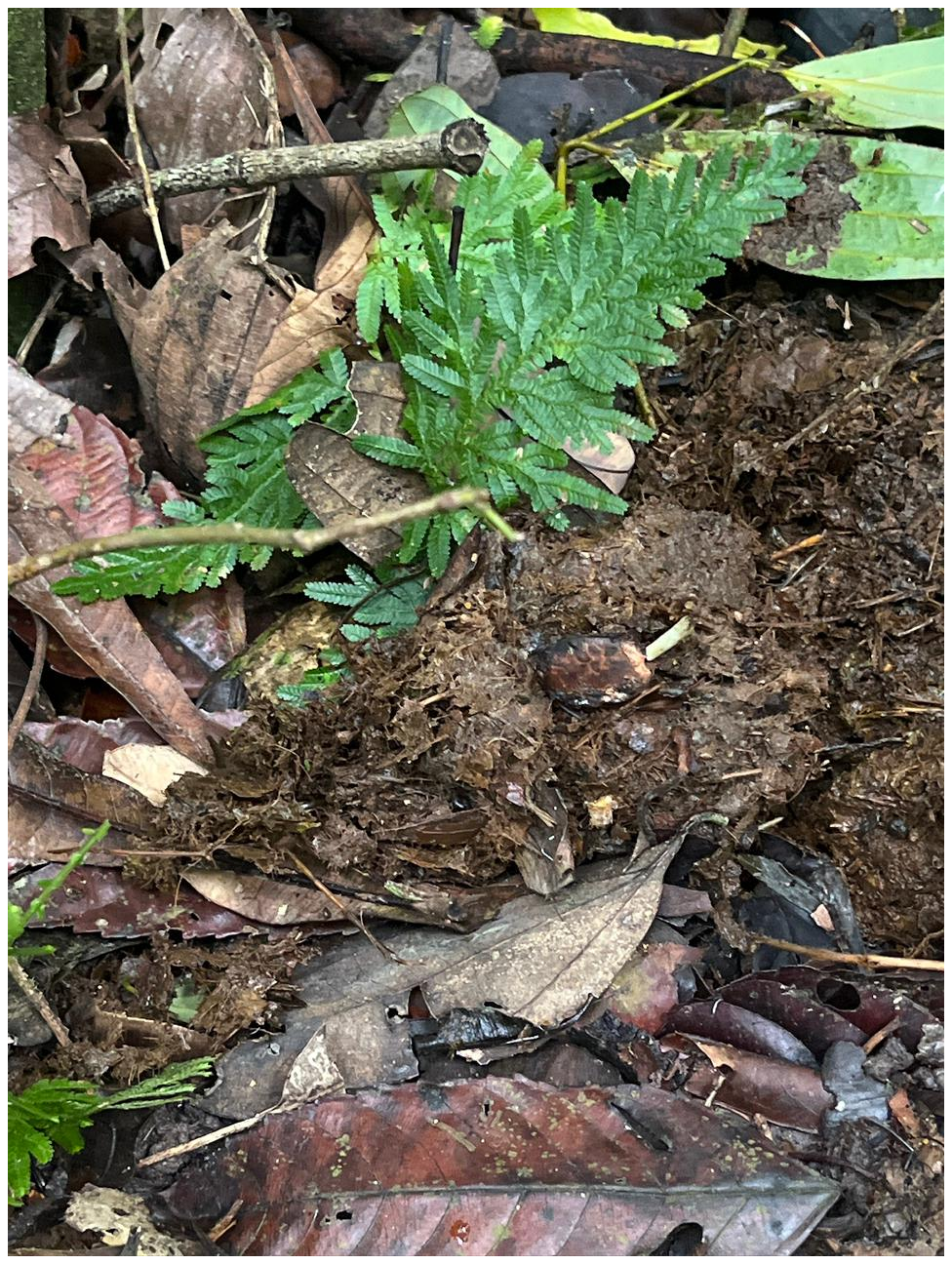
Figure 3. Intact seed documented within Malayan tapir feces.
The Malayan tapir is the herbivore with a digestive system similar to that of a horse, classifying it as a hindgut fermenter. Malayan tapirs are not ruminants, and they have food-processing microbes located in the rear section of their digestive tract. Consequently, Malayan tapirs are known to be quite selective in their forage (Simpson et al. 2013). During the observation, many saplings were found to have been uprooted by Malayan tapirs to access the shoots, as shown in Figure 4. This aligns with Simpson (2013), who noted that Malayan tapirs occasionally uproot and break small trees to obtain leaves and branches, with feeding traces often discovered at heights of 0.8–1.2 m. Scratch marks were observed on the lower part of the trunk of these felled trees. Broken branches with the marks, indicate the physical effort made by the Malayan tapir access its forage. This behavior is consistent with Williams and Petrides (1980), who found that Malayan tapirs topple small trees by placing their feet on the trunk and stepping on it to lower the canopy.
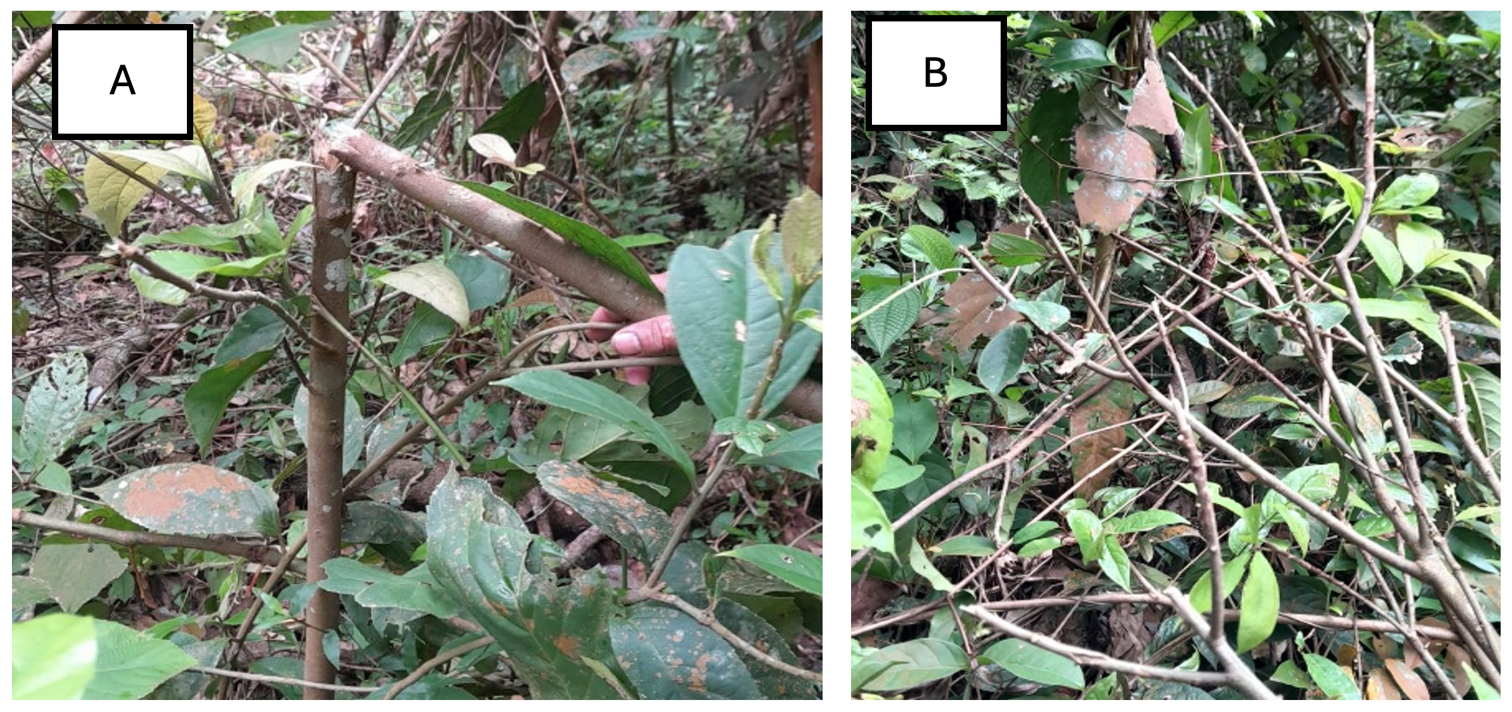
Figure 4. Forage plants knocked down by Malayan tapir: (a) sapling, (b) branch
Malayan tapirs inhabit various types of lowland vegetation and particularly near water sources. Malayan tapirs generally correlate with water bodies, where most of their active time occurs, such as for foraging. Malayan tapirs may reduce their home range during the dry season to remain close to water sources (Samantha et al. 2020). This finding is consistent with Anwar et al. (2023), who classified Malayan tapirs as water-dependent species because water is essential for digestion. This observation was conducted across two types of vegetation, which include scrubland and secondary forest. Data of Distribution of Malayan tapir forage species across different vegetation types are presented at table 2.
Table 2. Distribution of Malayan tapir forage species across different vegetation types.
The Malayan tapir forage species were commonly found in secondary forests, namely 23 species, followed by 7 species found in shrubbery, and 3 species found across both type of vegetation. Feeding sign of Malayan tapir remains and activity traces were strictly observed in the secondary forests, with not found in the shrubbery areas. Malayan tapirs frequently go to the forest edge to eat and returning to the forest to rest. One of the highly consumed plant species with abundance feeding remains discovered during the observation is senggani. Although, Malayan tapir feeding traces are predominantly concentrated in secondary forest, open grasslands also provide sufficient forage. Malayan tapirs have a wide home range, allowing them to forage as far as grasslands if forage in the forest becomes scarce. Malayan tapirs generally prefer secondary forests, especially for foraging because there are many young stems due to the availability of light (Setiarno et al. 2025). Cogon grass that has very little shade can be a factor in less Malayan tapir activity compared to secondary forests. Continuous availability of spesies at various growth stages, indicates that the Rawa Bunder Resort provides forage availability and habitat carrying capacity for the Malayan tapir population.
The Importance Value Index (IVI) for Malayan tapir forage indicates the diversity of plant growth stage that contribute to meeting their dietary needs. The density of Malayan tapir forage resources also indicates the abundance of each species. High density values in the forage are highly beneficial for Malayan tapirs because this vegetation is easily accessible. Data on The Importance Value Index for the forage species are presented in Table 3.
Table 3. The Importance Value Index for the Malayan tapir forage across various growth stages
Based on Table 3 above, alang-alang is the Malayan tapir forage with the highest IVI of 66.96%. Soka ranks second with an IVI of 19.55%. The high forage density at the lower vegetation level increases the foraging efficiency of Malayan tapirs in meeting their daily nutritional needs. The absence of feeding residues indicate that Malayan tapir consumed the undergrowth vegetation entirely. In accordance with Simpson (2013), which shows that megaherbivores such as Malayan tapirs tend to consume on ground-level vegetation without leaving any residue. High density is beneficial for Malayan tapirs to forage efficiently without traveling long distances. As the lowest plant stratum, the functions and roles of undergrowth vegetation include acting as ground cover to enrich soil organic matter, as well as retaining rainwater and reducing surface runoff to minimize erosion (Putri et al. 2024). Undergrowth vegetation is highly dependent on light and thus tends to grow more in open areas. This aligns with Rahawarin et al. (2025), who noted that light and shade are among the most influential environmental conditions affecting the growth of understory vegetation.
At the sapling stage, berasan exhibited the highest value with an IVI of 41.22%. Other dominant Malayan tapirs forage followed by jambon and soka, each with an IVI of 36.06%. Consistent with the study by Damayanti et al. (2016), who previously noted berasan as the dominant species at the sapling stage with an IVI of 38.97%. Berasan is an endemic species and dominates lowland rainforests in WKNP. At the pole stage, the dominant food source for Malayan tapirs is berasan, with an IVI of 107.69%. This high value confirms that berasan is the most abundant forage at Rawa Bunder Resort. The pole stage refers to the phase with a diameter of 10–19.9 cm. During observations, the trunk level was not frequently encountered due to the dense tree canopy and the abundance of seedlings and understory vegetation, resulting in lower productivity. According to Damayanti et al. (2016), the dominance of a species is attributed to its ability to utilize a larger share of available resources compared to other species. At the tree level presented in Table 3, the berasan species dominates with an IVI of 77,16%. Other dominant forage species include rambutan with an IVI of 34.06% and laban with an IVI of 29.80%. The presence of these species at the tree level is crucial as providers of fruit-based forage during the fruiting season and plays a significant role in seed dispersal with a dense stand of forage trees, Malayan tapirs will find it easier to forage.
The consistent dominance of berasan at the level of saplings, poles, and trees indicates that this species can be the main supply whose stability is maintained. The existence of a tree with a large diameter can provide a canopy that Malayan tapirs can use as a resting place. The availability of abundant trees with a DBH of 5-45 cm and a DBH of more than 45 cm is one of the important factors that affect the existence of Malayan tapir. This can be due to large trees that have an important role in providing habitat and food sources for Malayan tapirs (Samantha et al. 2020).
Species diversity, species evenness, and species richness indices illustrate the abundance of Malayan tapir forage in the vegetation of WKNP. The highest species diversity and evenness indices were observed in the sapling layer, while the highest species richness index was observed in the undergrowth layer. The diversity, evenness, and richness indices are presented in Table 4.
Table 4. The diversity, evenness, and richness indices in every growth stage of the Malayan tapir forage in rawa bunder resort
Remarks: H = Species diversity index; E = Species evenness index; R = Species richness index
According to the established criteria, the diversity values across all vegetation levels fall into the moderate category. The higher diversity index reflects the greater number of species, indicating that the Malayan tapir’s diet remains highly diverse and ensure a steady forage supply. High species diversity indicates that the ecological function of an ecosystem is still stable (Setiarno et al. 2025). The evenness index shown in Table 4 indicates that all vegetation levels fall into the high category except undergrowth layer. The species evenness index shows the degree of equality of individual abundance in each species. The small value of equality can be caused by the presence of dominant species in a community (Baderan et al. 2021). Based on Table 4, the species richness index values for all vegetation levels are classified in the moderate category. This species richness index for Malayan tapir forage indicates that forage is still widely distributed and accessible, making it easy for Malayan tapirs to fulfill their dietary needs. Species richness can be determined by the quantity of species in the community. The division of the number of species by the natural logarithmic function of the Margalef richness index shows that the increase in the quantity of species is inversely proportional to the quantity of individuals (Baderan et al. 2021).
3) Distribution of Malayan tapir forage
There are three distribution patterns, which include clumped, uniform, and random. Among the identified Malayan tapir forage, fourteen species exhibited a random category, twelve exhibited a clumped category, and seven exhibited an undefined value. The distribution patterns of Malayan tapir forage species are presented in Table 5.
Table 5. The distribution patterns of Malayan tapir forage species
Clumped distribution patterns are often driven by the reproductive mechanisms of plants spreading in the surrounding area. Clumped distribution occurs due to habitat traits that have similarities and factors that support the development of plants. In addition, an organism's response to habitat differences and weather changes due to the regeneration process can lead to individual groupings (Setiarno et al. 2025). Competition among individuals or species resulting from clumped patterns may intensify in the acquisition of food resources such as nutrients, space, and light. A factor that plays a significant role in determining distribution patterns is the physical condition of the environment (Abdullah 2023). Random distribution can occur as a result of homogeneous environments or behaviors that do not require special resources or can be referred to as generalist species (Setiarno et al. 2025). There are undefined values for some plant species, such as pulai, karetan, and medang, because these plant species were encountered as single individuals only a single sampling plot. The predominantly clumped distribution of forage makes it easier for Malayan tapirs to find forage.
4) Dietary Nutritional Content
The first step in determining the nutritional content of Malayan tapir forage is to collect samples. The nutritional content of the forage is tested using proximate analysis. The frequency of Malayan tapir forage based on feeding traces on transect in rawa bunder resort are shown in table 6.
Table 6. The frequency of Malayan tapir forage based on feeding traces on transect in rawa bunder resort
The results of the proximate analysis of Malayan tapir forage, namely berasan (Symlocos stenosipala), pulai (Alstonia scholaris), krakas (Helicia sp.), gaharu (Aquilaria malaccensis), and senggani (Melastoma malabathricum), are shown in Table 7. Samples of 5 types of plants were taken as much as 0.5 kg for proxy analysis. The results of this proximate analysis are sufficient to describe the nutritional content and do not need further tests because tests are carried out by experts.
Table 7. Nutritional content of selected Malayan tapir forage
Remarks: DM = dry matter; WC = Water Content; CFi = Crude Fiber; CF = Crude fat; CP = Crude Protein; NFE = Nitrogen Free Extract
The results of the analysis in Table 7 show that the percentage values of the nutrient content in the five species of Malayan tapir forage plants vary greatly. The dry matter content of the forage samples ranged from 80.02% to 86.69%. The moisture content ranged from 13.31% to 19.98%. The ash content ranged from 7.50% to 22.15%. The crude protein percentage ranges from 8.38% to 13.82%. Crude fiber ranges from 21.99% to 33.86%. Crude fat ranges from 1.27% to 3.33%. The Nitrogen Free Extract (NFE) content ranges from 18.98% to 33.83%. Dry matter has an average of 83.6% with the lowest percentage being in krakas with a value of 80.02%. Meanwhile, krakas has the lowest percentage of crude fat at 1.27%.
The dry matter in plants is influenced by the organic content and the moisture content in the forage material. This is in line with the statement of Dzulhidayat (2022) that the dry matter produced by forage materials is influenced by the water content in the forage materials and the addition of water during forage material processing. The fresher the forage ingredients used, the higher the moisture content, and if the forage ingredients are first wilted, the moisture content will be lower (Hediawan et al. 2024). Ash content is a mixture of minerals contained in a material so that it can indicate the total minerals in a material (Haq et al. 2018). Minerals have an important role as tissue growth and repair, bone and tooth formation, hair, nails, and horn formation needed by wildlife. The amount of ash in animal forage can determine the calculation of Nitrogen-Free Extract (Hombing et al. 2018). The highest ash content in Malayan tapir forage is found in pulai, which is 22.15%. However, pulai has a fairly low crude protein content of 9.15%. In contrast, senggani has the highest protein content with a percentage of 13.82%. Crude protein has a nitrogen content that generally ranges from 10%. Protein has an important role in determining diet quality for non-ruminant animals (Putri et al. 2025). The difference in crude protein content can be attributed to the age of the plant and the dry matter of the forage (Ismul & Mustari 2020).
The crude fiber content in berasan, krakas, and senggani has a lower percentage compared to gaharu and pulai, which are 21.99%, 23.69%, and 24.02%. The crude fiber content can be determined by the age of the forage. Inversely proportional to the others. The smaller the fiber, the more preferred it is by Malayan tapirs. According to Datta (2023), the characteristics of the fiber in crude fiber make most of it difficult for animals to digest, especially monogastric animals. Forage with lower crude fiber content can accelerate the rate of forage passage and Malayan tapirs do not need to expend a lot of energy to digest food (Simpson et al. 2013). The crude fat content has an average of 2.448%, with the highest percentage being found in pulai at 3.33%. Crude fat affects the body fat of Malayan tapirs. This is in line with the statement of Lapui et al. (2021) that the consumption of forage with low fat causes higher-fat forage increases adipose storage. Conversely, if the consumption of forage with high fat causes the fat in the body of livestock to also be high, this affects livestock products. Fat is very important to maintain the stability of the body's condition so that it remains healthy during unfavorable seasons. Berasan has the highest Nitrogen-Free Extract (NFE), which is 33.83% and pulai has the lowest NFE, which is 18.98%. NFE is a component of forage ingredients that contains carbohydrates, sugars, and starch. NFE can determine the level of ease of digestibility of diet by animals. The higher the NFE value, the higher the digestibility rate of a type of forage (Hombing et al. 2018).
5) Aspects of Conservation
The abundance of forage is beneficial for the Malayan tapir’s habitat. However, proper management is also needed to preserve this forage supply. Numerous threats, such as forest fires, can destroy their food sources. Changes in land use or zoning within WKNP also affect Malayan tapir habitat conditions. The extensive areas of cogon grass and shrub still found in WKNP need to be restored to expand the Malayan tapir foraging areas. It is necessary to strengthen in carrying out conservation activities such as habitat restoration that prioritizes the enrichment of planting in shrub areas using types of tapir feed and types of trees that can be used by tapirs as a resting place. Planting of fruit trees also needs to be done to increase the availability of feed while supporting the ecological role of tapir as a seed transmitter.
Malayan tapirs effectively discovered at forest edges, probably need to require monitoring to ensure their continued presence. Forest edges with high levels of human activity certainly pose a threat to the Malayan tapirs’ survival. Monitoring strategies that can be carried out are in the form of public patrols or the installation of camera traps on paths indicated as tapir habitats, especially those adjacent to places of human activity.
4. Conclusion
The composition of the Malayan tapir forage at Rawa Bunder Resort, Way Kambas National Park, was successfully identified as 33 species from 25 families, with a dominance of growth form is tree. The IVI shows that alang-alang (Imperata cylindrica) dominates at the level of undergrowth, and berasan (Symplocos stenosepala) dominates at the level of saplings, poles, and trees. The results of diversity and richness indices are moderate and an evenness index is high indicate except undergrowth layer that the availability of Malayan tapir forage is fairly well maintained. The distribution pattern of Malayan tapir forage was dominated by random, also supports the capability of forage availability. Senggani and berasan are the forages most frequently consumed by Malayan tapirs in the field, with the frequency of finding forage remains being 30.77% and 46.15%. The proximate test results show that the nutritional content of the forage varies greatly, with senggani providing the highest protein at 13.82% and berasan having the lowest crude fiber at 21.99%, which is ideal for the single-stomach digestive system (hindgut fermenter) of the Malayan tapir.
5. Author Contributions
Experimental design was designed by first author (JIN) and Second author (AHM). The implementation of the experiment was carried out by the first author (JIN). The data is interpreted by the first author (JIN) and assisted by the Second author (AHM) in refining it. The preparation of the article is carried out by first author (JIN) with the guidance of the Second author (AHM).
6. Competing Interests
The author conducted this research as an interest in the thesis
7. Acknowledgements
Thanks to my parents who support the author about finance and mentality. This research was supported by Way Kambas National Park. We are most grateful to pak Heri Susanto, pak Amrodi, forest police, SPRB staff, who has helped us for assisting in the field. We also thank the staff of the Way Kambas National Park, pak Saepul, and pak Willy for giving us the data. Thanks to staff of feed science and technology laboratory, mba ratih and pak dadang, for helping the Malayan tapir diet nutrition testing.
8. References
Abdullah, S., Tolangara, A. R., & Ahmad, H. (2023). Studi Jenis dan Pola Sebaran Tumbuhan Lamun di Perairan Desa Teluk Buli Kecamatan Maba. Jurnal Bioedukasi, 6(1), 197-204. https://doi.org/10.33387/bioedu.v6i1.4402
Anwar, M. K., Yoza, D., & Darlis, V. V. (2023). Characteristics of the Asian Tapir (Tapirus indicus) Habitat in the Working Area of the Lahai Resort SPTN II Belilas Bukit Tiga Puluh National Park and Surroundings in Riau Province. Jurnal Ilmu Ilmu Kehutanan, 7(1), 30-38. https://doi.org/10.31258/jiik.7.1.30-38
Baderan, D. W. K., Rahim, S., Angio, M., & Salim, A. I. B. (2021). Keanekaragaman, Kemerataan, dan Kekayaan Spesies Tumbuhan dari Geosite Potensial Benteng Otanaha sebagai Rintisan Pengembangan Geopark Provinsi Gorontalo. Al-Kauniyah: Jurnal Biologi, 14(2), 264-274. https://doi.org/10.15408/kauniyah.v14i2.16746
Damayanti, D. R. (2016). Permudaan Alami Hutan di Satuan Pengelolaan Taman Nasional (SPTN) Wilayah III Kuala Penet Taman Nasional Way Kambas. http://digilib.unila.ac.id/id/eprint/23543
Datta, F. U. (2023). Dasar Ilmu Nutrisi dan Pakan Hewan. Deepublish., Yogyakarta.
Dzulhidayat, D. (2022). Characteristics Of Elephant Grass Silage (Pennisetum purpureum) using Lactic Acid Bacteria Inoculator from Rumen Fluids (Doctoral dissertation, Universitas Hasanuddin). http://repository.unhas.ac.id:443/id/eprint/19186
Hediawan, F., Cakra, I. G. L. O., & Trisnadewi, A. A. A. S. (2024). Kandungan Nutrien Silase Rumput Gajah (Pennisetum purpureum) dengan Penambahan Tepung Daun Gamal (Gliricidia sepium) pada Level Berbeda. Pastura: Jurnal Ilmu Tumbuhan Pakan Ternak, 14(1), 45-51. https://garuda.kemdiktisaintek.go.id/documents/detail/5972239
Hombing, J. B., Dewi, B. S., Tantalo, S., & Harianto, S. P. (2018). Study of Nutrition Content Food Drop in Deer in PT. Gunung Madu Plantations. Jurnal Sylva Lestari, 6(1), 32-38. https://doi.org/10.23960/jsl1633-39
Ismul, M., & Mustari, A. H. (2020). Jenis, Penyebaran, dan Kandungan Nutrisi Pakan Anoa (Bubalus sp.) di Taman Nasional Gandang Dewata, Sulawesi Barat. https://agris.fao.org/search/en/providers/122323/records/65a9450e48e16287cfb9df17
Krebs, C. J. (1989). Ecological methodology. Harper Collins Publishers, Inc., New York.
Kusmana, C. (1997). Metode survey vegetasi. Pt. Penerbit Insitut Pertanian., Bogor.
Laia F. 2021 Mei 14. Data ilmiah tapir di indonesia minim, konservasinya bagaimana?. Belahita. Konservasi. [diakses 2026 Jan 10]. https://betahita.id/news/detail/6190/data-ilmiah-tapir-di-indonesia-minim-konservasinya-bagaimana-.html?v=1621268313
Lapui, A. R., Nopriani, U., & Mongi, H. (2021). Analisis Kandungan Nutrisi Tepung Jagung (Zea mays Lam) dari Desa Uedele Kecamatan Tojo Kabupaten Tojo Una-Una untuk pakan Ternak. Agropet, 18(2), 42-46.
Magurran, A.F. (2004). Measuring biological diversity. Blackwell Publishing Company., United Kingdom.
Maharani, N. D., Harianto, S. P., Iswandaru, D., & Winarno, G. D. (2019). Sebaran jenis pakan tapir (Tapirus indicus, desmarest, 1819) di taman nasional way kambas (tnwk). http://repository.lppm.unila.ac.id/id/eprint/11771
Putri, D. K., Murnisari, Y., Madalena, D. K., Setiarini, N., Diputri, R. L. D., Suryanda, A., & Azrai, E. P. (2024). Keanekaragaman Tumbuhan Bawah di Kawasan Universitas Negeri Jakarta. Panthera: Jurnal Ilmiah Pendidikan Sains dan Terapan, 4(1), 10-17. https://doi.org/10.36312/panthera.v4i1.228
Putri, S. E., Abdullah, F. M., Septiyaningsih, R., Aulia, F., & Rahayu, T. P. (2025). Nutrisi Seimbang untuk Unggas: Memahami Pentingnya Protein dan Serat: Balanced Nutrition for Poultry: Understanding the Importance of Protein and Fiber. Jurnal Ilmiah Ilmu-Ilmu Peternakan, 28(1), 1-11. https://doi.org/10.22437/jiiip.v28i1.35982
Samantha, L. D., Tee, S. L., Kamarudin, N., Lechner, A. M., & Azhar, B. (2020). Assessing Habitat Requirements of Asian Tapir in Forestry Landscapes: Implications for Conservation. Global Ecology and Conservation, 23. https://doi.org/10.1016/j.gecco.2020.e01137
Setiarno, S., Nababan, S. R. T., Hidayat, N., Rotinsulu, J.M., & Junaedi, A. (2025). Komposisi Vegetasi, Keanekaragaman Jenis, dan Pola Dispersi Tumbuhan Langka pada Kawasan Laboratorium Alam Lahan Gambut Universitas Palangka Raya. Hutan Tropika, 20(1), 165-174. https://doi.org/10.36873/jht.v20i1.20219
Simpson, B. K., Shukor, M. N., & Magintan, D. (2013, Nov). Food selection of the Malayan tapir (Tapirus indicus) under semi-wild conditions. In AIP conference proceedings (Vol. 1571, No. 1, pp. 317-324). American Institute of Physics. https://pubs.aip.org/aip/acp/article-abstract/1571/1/317/880344
Sjahfirdi, L., & Ananda, S. D. (2023). Perilaku Maternal dan Kesejahteraan Tapir Asia (Tapirus Indicus) Di Taman Margasatwa Ragunan. Jurnal Al-Azhar Indonesia Seri Sains dan Teknologi, 8(2), 154-161. http://dx.doi.org/10.36722/sst.v8i2.1655
Williams, K. D., & Petrides, G. A. (1980). Browse Use, Feeding Behavior, and Management of the Malayan Tapir. The Journal of Wildlife Management, 44(2), 489-494. https://doi.org/10.2307/3807985
Yunus, M., Alim, N., Sumianto, A. S., & Subagyo, A. (2019, May). Keragaman dan distribusi mammalia di Taman Nasional Way Kambas, Sumatra Indonesia. In Prosiding Seminar Nasional Sains, Matematika, Informatika dan Aplikasinya (Vol. 4, No. 2, pp. 31-42). Fakultas MIPA Universitas Lampung. https://rhinoresourcecenter.com/wp-content/uploads/2019/07/1562852255.pdf
Copyright (c) 2026 Jurnal Wasian

This work is licensed under a Creative Commons Attribution 4.0 International License.
Copyright and License
All articles published in Wasian Journal are the property of the authors. By submitting an article to Wasian Journal, authors agree to the following terms:
-
Copyright Ownership: The author(s) retain copyright and full publishing rights without restrictions. Authors grant the journal the right to publish the work first and to distribute it as open access under a Creative Commons Attribution 4.0 International License (CC BY 4.0).
-
Licensing: Articles published in Wasian Journal are licensed under a Creative Commons Attribution 4.0 International License (CC BY 4.0). This license allows others to share, copy, and redistribute the material in any medium or format, and adapt, remix, transform, and build upon the material for any purpose, even commercially, provided that proper credit is given to the original author(s) and the source of the material

This work is licensed under a Creative Commons Attribution 4.0 International License. -
Author's Rights: Authors are permitted and encouraged to post their work online (e.g., in institutional repositories or on their website) prior to and during the submission process, as it can lead to productive exchanges and greater citation of published work.
-
Third-Party Content: If your article contains material (e.g., images, tables, or figures) for which you do not hold copyright, you must obtain permission from the copyright holder to use the material in your article. This permission must include the right for you to grant the journal the rights described above.
-
Reprints and Distribution: Authors have the right to distribute the final published version of their work (e.g., post it to an institutional repository or publish it in a book), provided that the original publication in Wasian Journal is acknowledged.
For the reader you are free to:
- Share — copy and redistribute the material in any medium or format for any purpose, even commercially.
- Adapt — remix, transform, and build upon the material for any purpose, even commercially.
- The licensor cannot revoke these freedoms as long as you follow the license terms.
Under the following terms:
- Attribution — You must give appropriate credit , provide a link to the license, and indicate if changes were made . You may do so in any reasonable manner, but not in any way that suggests the licensor endorses you or your use.
- No additional restrictions — You may not apply legal terms or technological measures that legally restrict others from doing anything the license permits.
Notices:
You do not have to comply with the license for elements of the material in the public domain or where your use is permitted by an applicable exception or limitation .
No warranties are given. The license may not give you all of the permissions necessary for your intended use. For example, other rights such as publicity, privacy, or moral rightsmay limit how you use the material.
Similar Articles
- Anugrahandini Nasir, Herawaty Herawaty, Ismail Ismail, Muh Izzul Muslimin Syah, Revealing Carbon Patterns Across Mangrove Density Variations Using Sentinel-2 NDVI , Jurnal Wasian: Vol. 12 No. 02 (2025): December
- I Wayan Sudiyanto, Wahyudi Wahyudi, Assessment and Spatial Mapping of Soil Degradation Status in Bontoharu District, Selayar Islands Regency: A Framework for Sustainable Land Management , Jurnal Wasian: Vol. 12 No. 01 (2025): June
- Hafizah Nahlunnisa, Nursanti Nursanti, Fawwaz Dinanty, Wahyu Nazri Yandi, Species Diversity of Trees in Sungai BuluhPeat Forest Reserve, Mendahara UluDistrict, Tanjung Jabung Timur Regency , Jurnal Wasian: Vol. 12 No. 02 (2025): December
- Lusiana Pardede, Dian Iswandaru, Yulia Rahma Fitriana, Arief Darmawan, Hari Kaskoyo, Christine Wulandari, Rahmat Safe'I, Susni Herwanti, Novriyanti, Indra Gumay Febryano, Insectivorous Birds Dominate Across Land-Use Gradient Revealing Unexpected Ecological Resilience in Tropical Forest-Coffee Landscapes , Jurnal Wasian: Vol. 12 No. 01 (2025): June
- Irlan Irlan, Ulfa Adzkia, Suhartono Suhartono, Meliani Meliani, Alpri Sri Jenos, Teguh Bimantara, Chairil A, Individual Tree Segmentation in TropicalNatural Forest Based on Point CloudGenerated from UAV RGB Image , Jurnal Wasian: Vol. 12 No. 02 (2025): December
- Muh Faisal Mappiasse, Andi Nurul Mukhlisa , Recognition and Analysis of Pest-Induced Damage in Mangrove Ecosystems: A Case Study in Maros Coastal Region , Jurnal Wasian: Vol. 11 No. 2 (2024): December
- Nurlita Indah Wahyuni , Hendra Susanto Mokodompit, Structure, Composition and Diversity of Tree Species at Inobonto Poigar I Production Forest, Forest Management Unit of Poigar, North Sulawesi , Jurnal Wasian: Vol. 3 No. 1 (2016): June
- Nurlita Indah Wahyuni, Yermias Kafiar, Species Composition and Structure of Secondary Forest at Nunuka, North Bolaang Mongondow , Jurnal Wasian: Vol. 4 No. 1 (2017): June
- Abdul Haris Mustari, Achmad Fajar Pasaribu, Habitat Characteristics and Population of Javan Langur (Trachypithecus Auratus E. Geoffroy Saint-Hilaire, 1812) In Leuweung Sancang Nature Reserve, Garut, West Java , Jurnal Wasian: Vol. 6 No. 2 (2019): December
- Andika Lalu, Sitti Ramlah, Reinaldi Reinaldi, When Strong Institutions Meet Weak Economies: Lessons from Ecotourism Sustainability in Lombuyan Wildlife Sanctuary, Central Sulawesi , Jurnal Wasian: Vol. 12 No. 02 (2025): December
You may also start an advanced similarity search for this article.