Perception and Motivation of Farmers in the Development of Natural Silk Business in Soppeng Regency Sulawesi Selatan

Abstract
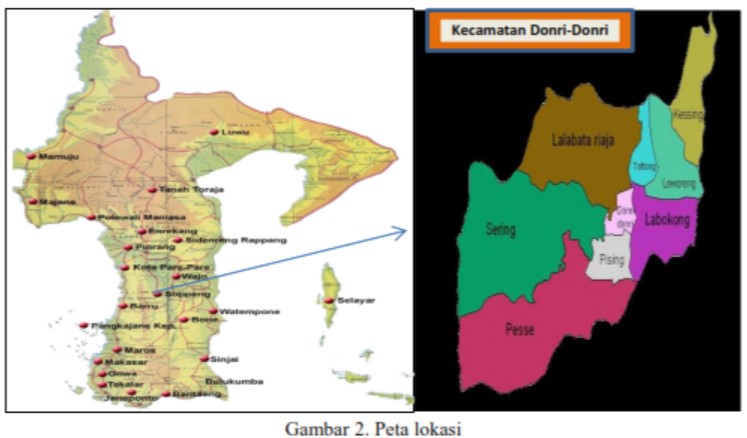
The development of natural silk has not been optimal because the handling of the problem tends to be general and not adjusted to the socio-economic characteristic of the community. In Soppeng Regency, natural silk is carried out by diverse socio-economic backgrounds of the community that can influence perceptions and motivations in the development of natural silk business. This study aimed to determine the perceptions and motivations in developing natural silk business which is expected to be a formulation material in the preparation of natural silk business policies. The study was conducted in Donri-Donri District as the center of natural silk development in Soppeng Regency. Data collection used survey method and interview. The sampling of respondents used a random sampling method for natural silk farmers. The results of the study indicate that in Soppeng District, the high farmer’s perception of natural silk business are related to socio-economic factors such as the length of residence in the village and gender. The motivation of farmers in natural silk business is generally because natural silk business is easy to implement, technological mastery, and easy to obtain information. Natural silk have big chance to be developed with quality improvement of silkworm seed and silkworm feed. High perception and motivation of community need to be accompanied by the availability of supporting factors so that this business can develop optimally.
Copyright (c) 2019 Jurnal Wasian

This work is licensed under a Creative Commons Attribution-NonCommercial 4.0 International License.
Copyright and License
All articles published in Wasian Journal are the property of the authors. By submitting an article to Wasian Journal, authors agree to the following terms:
-
Copyright Ownership: The author(s) retain copyright and full publishing rights without restrictions. Authors grant the journal the right to publish the work first and to distribute it as open access under a Creative Commons Attribution 4.0 International License (CC BY 4.0).
-
Licensing: Articles published in Wasian Journal are licensed under a Creative Commons Attribution 4.0 International License (CC BY 4.0). This license allows others to share, copy, and redistribute the material in any medium or format, and adapt, remix, transform, and build upon the material for any purpose, even commercially, provided that proper credit is given to the original author(s) and the source of the material

This work is licensed under a Creative Commons Attribution 4.0 International License. -
Author's Rights: Authors are permitted and encouraged to post their work online (e.g., in institutional repositories or on their website) prior to and during the submission process, as it can lead to productive exchanges and greater citation of published work.
-
Third-Party Content: If your article contains material (e.g., images, tables, or figures) for which you do not hold copyright, you must obtain permission from the copyright holder to use the material in your article. This permission must include the right for you to grant the journal the rights described above.
-
Reprints and Distribution: Authors have the right to distribute the final published version of their work (e.g., post it to an institutional repository or publish it in a book), provided that the original publication in Wasian Journal is acknowledged.
For the reader you are free to:
- Share — copy and redistribute the material in any medium or format for any purpose, even commercially.
- Adapt — remix, transform, and build upon the material for any purpose, even commercially.
- The licensor cannot revoke these freedoms as long as you follow the license terms.
Under the following terms:
- Attribution — You must give appropriate credit , provide a link to the license, and indicate if changes were made . You may do so in any reasonable manner, but not in any way that suggests the licensor endorses you or your use.
- No additional restrictions — You may not apply legal terms or technological measures that legally restrict others from doing anything the license permits.
Notices:
You do not have to comply with the license for elements of the material in the public domain or where your use is permitted by an applicable exception or limitation .
No warranties are given. The license may not give you all of the permissions necessary for your intended use. For example, other rights such as publicity, privacy, or moral rightsmay limit how you use the material.
Similar Articles
- Ulfah Karmila Sari, Bina Swasta Sitepu, Mukhlisi Mukhlisi, Puji Mulyanto, Floristic Composition and Soil Characteristics in Muara Kaman Sedulang Nature Reserve, East Kalimantan , Jurnal Wasian: Vol. 8 No. 1 (2021): June
- Baharinawati Wilhan Hastanti, S. Agung Sri Raharjo, Stakeholder Analysis of Implementation of Social Forestry Program at KPH Telawa, Central Java , Jurnal Wasian: Vol. 8 No. 1 (2021): June
- Maria Palmolina, Eva Fauziyah, Conflict Mapping of Gunung Ciremai National Park in Cisantana Village, Cigugur, Kuningan, West Java , Jurnal Wasian: Vol. 7 No. 2 (2020): December
- Tri Sulistyati Widyaningsih, Eva Fauziyah, Devy Priambodo Kuswantoro, Processing and Added Value of Bamboo in Tasikmalaya, West Java , Jurnal Wasian: Vol. 7 No. 1 (2020): June
- Freddy Jontara Hutapea, Relawan Kuswandi, Timber Volume Estimation Model for Commercial Tree Species in the Logging Area Concession of PT. Tunas Timber Lestari in Boven Digul, Papua , Jurnal Wasian: Vol. 6 No. 1 (2019): June
- Baharinawati Wilhan Hastanti, Relawan Kuswandi, Julanda Noya, Development Strategy of Masoi (Cryptocarya massoia (Oken) Kosterm.) as Non-Timber Forest Products in Teluk Bintuni, West Papua With SWOT Analysis , Jurnal Wasian: Vol. 5 No. 1 (2018): June
- Diah Irawati Dwi Arini, Julianus Kinho, Melkianus S Diwi, Margareta Christita, Jafred E Halawane, Muhammad F Fahmi, Yermias Kafiar, Wildlife Diversity for Ecotourism at Aqua Lestari Forest Park, North Minahasa , Jurnal Wasian: Vol. 5 No. 1 (2018): June
- Supratman Tabba, Lis Nurrani, Distribution of Avifauna in Aketajawe Lolobata National Park Based on Zone and Land Cover Typology , Jurnal Wasian: Vol. 3 No. 1 (2016): June
- Retno Prayudyaningsih, Soil Mesofauna Response to Cover Crops and Mycorrhizal Inoculated Plantation on Limestone Quarry Revegetation , Jurnal Wasian: Vol. 3 No. 1 (2016): June
- Lis Nurrani, Halidah, Supratman Tabba, Ethnic Influence Against Land Use Patterns and Its Contribution to Community Income in The Aketajawe Lolobata National Park (Pengaruh Etnis Terhadap Pola Pemanfaatan Lahan Dan Kontribusinya Bagi Pendapatan Masyarakat Di Taman Nasional Aketajawe Lolobata) , Jurnal Wasian: Vol. 2 No. 2 (2015): December
You may also start an advanced similarity search for this article.
Most read articles by the same author(s)
- Wahyudi Isnan, Wahyudi Isnan, Hasnawir Hasnawir, Analysis of Characteristics and Typology of Mapili Watershed West Sulawesi Province , Jurnal Wasian: Vol. 5 No. 1 (2018): June