Estimation of Carbon Stock in Gambesi Mangrove Ecosystem as an Action Toward Achieving the Sustainable Development Goals

 dhila.arif@gmail.com
Abstract
Mangrove ecosystems are among the most carbon-rich coastal ecosystems, storing substantial amounts of carbon in biomass and sediments. The Gambesi mangrove forest, located on the southern coast of Ternate Island, North Maluku, Indonesia, plays an important ecological role in coastal protection, biodiversity support, and climate change mitigation, yet it faces mounting anthropogenic pressure from land conversion, household waste, and coastal abrasion. This study aims to estimate the carbon stock of the Gambesi mangrove forest and to analyze its contribution to the achievement of the Sustainable Development Goals (SDGs), particularly SDG 13 (Climate Action), SDG 14 (Life Below Water), and SDG 15 (Life on Land). Data were collected from five 10 m × 10 m observation plots using purposive sampling. Tree diameter at breast height (DBH) and species composition were recorded. Above-ground biomass (AGB) was calculated using species-specific allometric equations, and carbon stock was derived using a carbon conversion factor of 0.47. The results indicate that the total carbon stock of the Gambesi mangrove forest estimated at the results show that a total carbon stock of above-ground is 200.47 ton/ha (CO₂-eq is 735.72 ton/ha) and below-ground is 391.18 tons/ha of SOC (CO2-eq 1435.64 tons/ha). This area is dominated by the species Rhizophora apiculata and Sonneratia alba. These findings confirm the substantial climate mitigation value of the remaining mangrove stands in Gambesi and protection as a concrete local contribution to national and global SDG targets.
1. Introduction
Mangrove forests constitute one of the most carbon-dense ecosystems in the world, storing carbon not only in above-ground biomass but, more importantly, in deep organic-rich soils that can retain carbon for centuries when undisturbed (Song et al., 2023). This combination of biomass and soil carbon places mangroves among the most effective natural climate solutions available, with per-hectare carbon storage often several times higher than that of terrestrial tropical rainforests (Twilley & Rovai, 2019). The carbon stored in coastal and marine ecosystems, commonly referred to as blue carbon, is distributed across several carbon pools, including living biomass and sedimentary organic carbon (Thomas & Dam, 2025). The regulating service under ecosystem ideas helps reduce climate change directly. To measure it at above-ground biomass, below-ground biomass and soil organic carbon which is called Carbon Pool. Aboveground Biomass (AGB) and Belowground Biomass (BGB), which represent the rapid uptake and structural storage of organic carbon in living tissue, and Soil Organic Carbon (SOC), which locks carbon into waterlogged, anaerobic sediments for centuries. Evaluating these distinct pools provides a comprehensive accounting of how mangrove ecosystems function as highly localized, yet globally significant, carbon sinks (Choudhary, et al, 2024). Beyond their climatic function, mangroves provide critical ecosystem services including coastal protection from abrasion and storm surge, nursery habitat for fish and crustaceans, water quality regulation, and livelihood support for coastal communities (Zhang, et al, 2024).
Indonesia holds one of the largest extents of mangrove forest in the world, yet decades of conversion to settlements, aquaculture, and infrastructure have caused substantial degradation across many regions, including small islands in eastern Indonesia. Ternate Island, North Maluku Province, exemplifies this pressure: its limited land area and dense coastal settlement have driven the conversion and degradation of mangrove stands at several sites, including Mangga Dua, Kastela, Rua, and Gambesi (Rustam, et al, 2022) the Gambesi mangrove forest, situated in Gambesi urban village, South Ternate Subdistrict, Ternate City, is one of the few remaining mangrove areas on the island. Field observations and prior ecological assessments indicate that the mangrove stands in this area range from degraded to moderate condition, with dominant species including sonneratia alba and rhizophora apiculata (Rustam, et al, 2022). The ecosystem in Gambesi is increasingly threatened by household solid waste accumulation, land reclamation for settlement and agriculture, and coastal abrasion that has begun to encroach on coconut groves and water-spinach (kangkung) farmland belonging to local residents.
Despite its ecological and climatic importance, quantitative data on the carbon stock of the Gambesi mangrove forest remain limited. Previous research by Rustam et al. (2022) has mapped the spatial distribution and structural status of mangrove ecosystems in Ternate Island. It was also documented the ecological and spatial-temporal dynamics of the Gambesi mangrove ecosystem. To date, there has been no ground-validated, quantitative assessment of the total carbon stocks within this specific Gambesi mangrove ecosystems. This study addresses this gap by providing the comprehensive between three pool estimation at aboveground Biomass (AGB): tree biomass and litters, and belowground Biomass (BGB): soil organic carbon at the Gambesi mangrove ecosystem. Accurate carbon stock estimation is essential not only for scientific documentation but also as an evidentiary basis for local climate action planning, blue carbon policy formulation, and potential carbon-financing schemes (Dharmawan et al., 2020). Furthermore, this study offers a novel contribution by integrating these physical carbon metrics with an SDG-linkage analysis. In the global development context, this study is directly relevant to several targets of the Sustainable Development Goals (SDGs), particularly SDG 13 (Climate Action), which calls for urgent action to combat climate change and its impacts; SDG 14 (Life Below Water), which emphasizes the conservation and sustainable use of marine and coastal ecosystems; and SDG 15 (Life on Land), which addresses the protection, restoration, and sustainable management of terrestrial and coastal ecosystems. Mangrove conservation and carbon stock assessment therefore represent a concrete, measurable local action that contributes to these global commitments.
This study aims to: (1) estimate the above-ground and below-ground carbon stock of the Gambesi mangrove forest using field-based allometric methods; (2) analyze the spatial distribution of carbon stock across dominant mangrove species and diameter classes; and (3) discuss the relevance of these findings to the achievement of the SDGs, particularly in relation to climate action and coastal ecosystem sustainability. The findings are expected to provide a scientific baseline for mangrove rehabilitation prioritization, support local government coastal management planning, and contribute to the broader blue carbon database for North Maluku Province.
2. Research Method
1) Study Area and Time
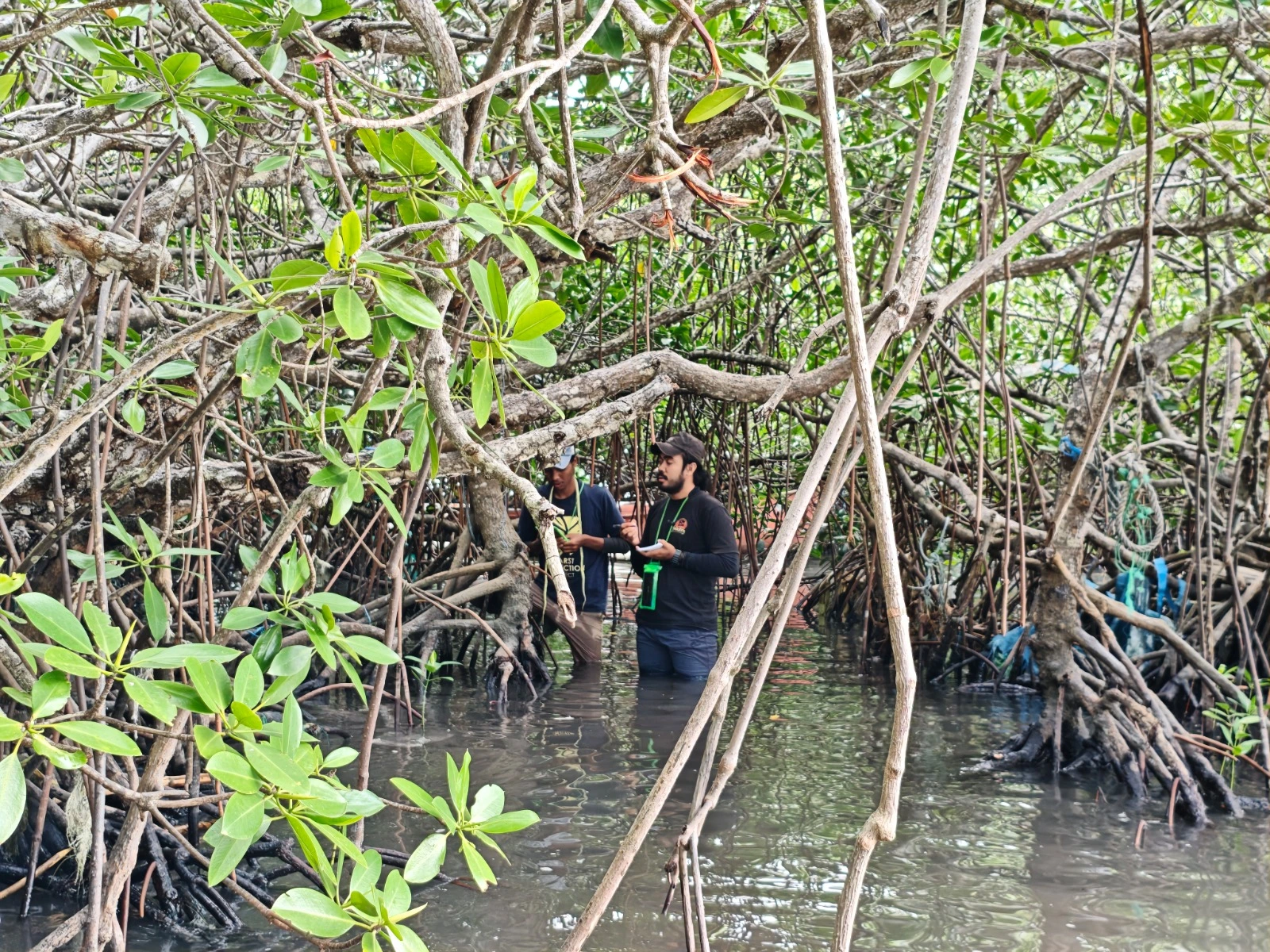
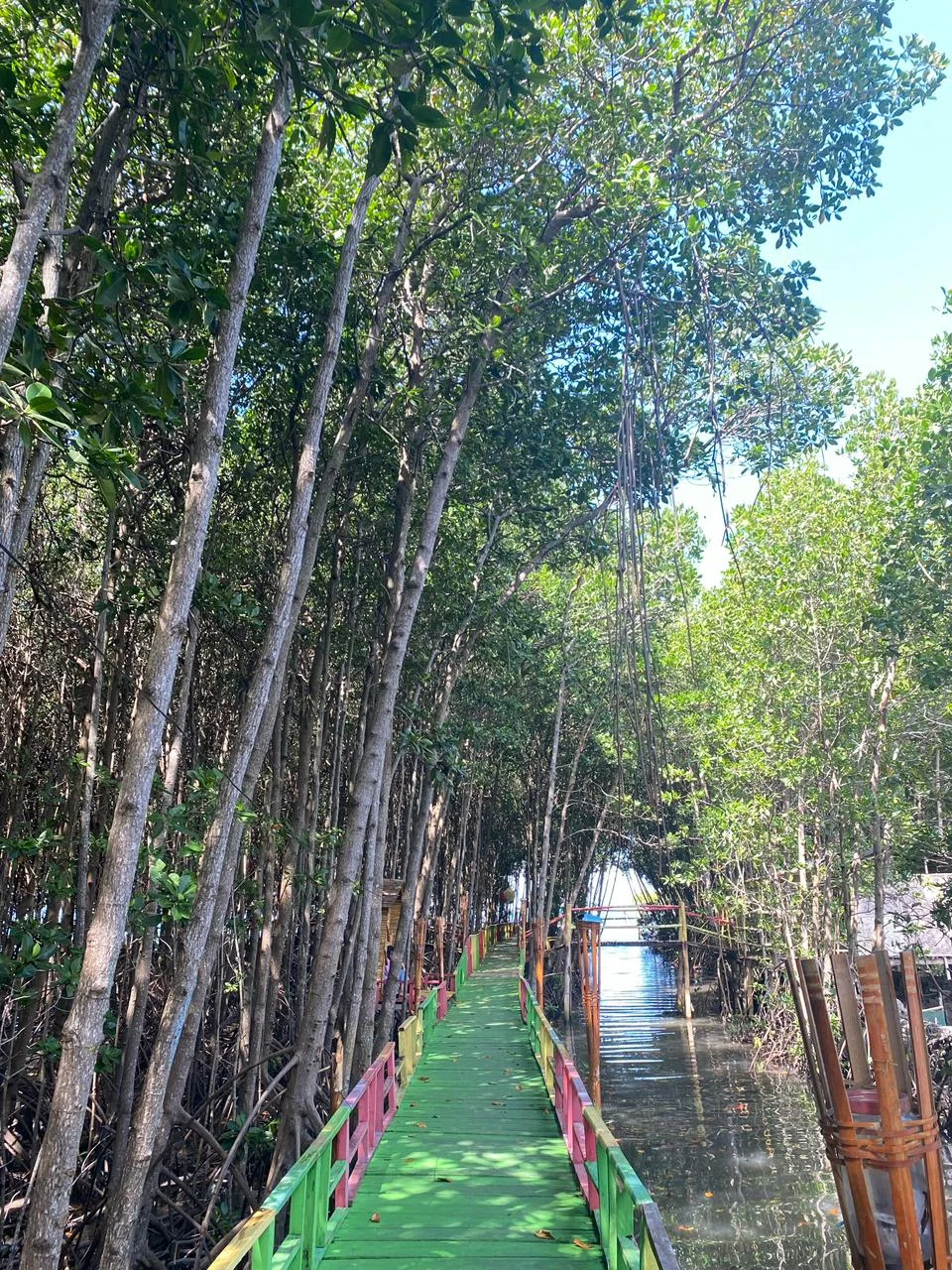
This research was conducted in the Gambesi mangrove forest, Gambesi urban village, South Ternate Subdistrict, Ternate City, North Maluku Province, Indonesia, geographically positioned along the southern coastline of Ternate Island. The study area was selected based on its representativeness of the remaining mangrove stands on Ternate Island and the urgency of documenting its carbon stock given ongoing degradation pressure. Fieldwork was carried out over June-September, 2025.
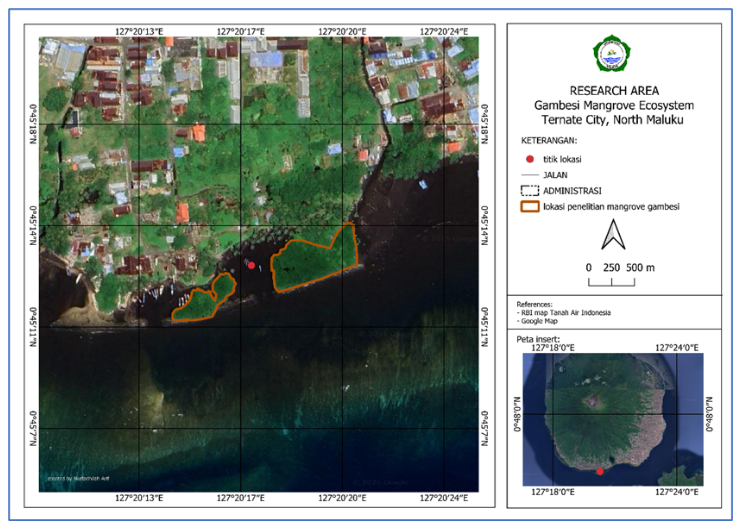
Figure 1. Detailed map of study site
Table 1. Plot coordinates in research area

2) Research Design and Sampling Method
This study employed a quantitative, field-survey-based descriptive approach. Sampling locations were determined using the purposive sampling method, in which plots were placed perpendicular to the coastline to capture zonation patterns from the seaward to landward mangrove zones. Along each transect, square observation plots measuring 10 m × 10 m. This research was established following standard mangrove vegetation analysis protocols using SNI 7724:2011 about Carbon Measurement and Stocks – Field measurements for forest carbon stock estimation (ground-based forest carbon accounting). A total of 5 plots were established, distributed to represent variation in stand density and species composition within the Gambesi mangrove area.
3) Data Collection
Within each plot, the following parameters were recorded for every individual tree: species identity, diameter at breast height (DBH) measured at 1.3 m above the highest prop root or ground level, and total weight of dead organic matter. For species with irregular stem form (e.g., Rhizophora spp. with prop roots), DBH was measured 30 cm above the highest root following standard mangrove forestry guidelines.
4) Biomass and Carbon Stock Calculation
Biomass
Above-ground biomass (AGB) for each tree was calculated using species-specific or genus-specific allometric equations and using carbon equation of dead organic matter (litter, dead wood and dead trees) that was developed for mangrove vegetation, such as the general equation proposed for mixed mangrove stands:
Table 2. Allometric Formula of some mangrove species
Where AGB is above-ground biomass (kg), ρ is the wood density of the species (g cm⁻³), ρ of Sonneratia Alba that used is 0.38 g cm⁻³; and DBH is diameter at breast height (cm).
AGB is also calculate using this equation of dead organic matter:
Where Bo is the weight of the organic material, expressed in kilograms (kg); Bks is the dry weight of the sample, expressed in kilograms (kg); Bbt is the total wet weight, expressed in kilograms (kg); Bbs is the wet weight of the sample, expressed in (kg).
Below-ground biomass (BGB) was calculated by measuring against soil biomass using this equation:
Bbp is belowground biomass (kg); NAP is the root shoot ratio value; Bap is the above ground biomass value (kg).
Table 3. The root shoot ratio value of forest types in Indonesia
Data Source: IPCC 2006 Guidelines for National Greenhouse Gas Inventories that attached in SNI 7724:2011
Carbon Stock Calculation
Carbon stock values were further converted to CO₂-equivalent (CO₂-eq) using the molecular weight ratio of CO₂ to C (44/12 = 3.67), in order to express the climate mitigation value of the stand in terms comparable to national greenhouse gas inventories. Carbon stock was subsequently calculated by applying a carbon conversion factor (C organic) of 0.47, following IPCC (2006) guidelines for biomass-to-carbon conversion.
Table 4. Carbon Stock Calculation for AGB and BGB
Where Cm is the carbon content of dead organic matter (kg); Bo is the total biomass/organic matter (kg); Ct is the soil carbon content (g/cm2); Kd is the depth of the soil sample/peat soil depth (g/cm3); ρ is bulk density (g/cm3); % C organic is the percentage value of carbon content, 0,47.
5) Data Analysis
Carbon stock data were analyzed descriptively per plot, per species, and per diameter class to identify the dominant contributors to total carbon storage. All numerical data were processed using Microsoft Excel to support interpretation of carbon stock variation across the study site. The resulting carbon stock estimates were then qualitatively linked to relevant SDG indicators to frame the discussion of local-to-global development relevance.
3. Result and Discussion
1) Vegetation Structure and Species Composition
Field observations identified two mangrove species (Rhizopora apiculata and Sonneratia alba) across 46 individual records within the Gambesi study area. The area is dominated by Sonneratia alba and Rhizopora Apiculata consistent with species reported in earlier assessments of mangrove vegetation on Ternate Island. with an average DBH of 14.76 cm, reflecting a relatively young stand structure.
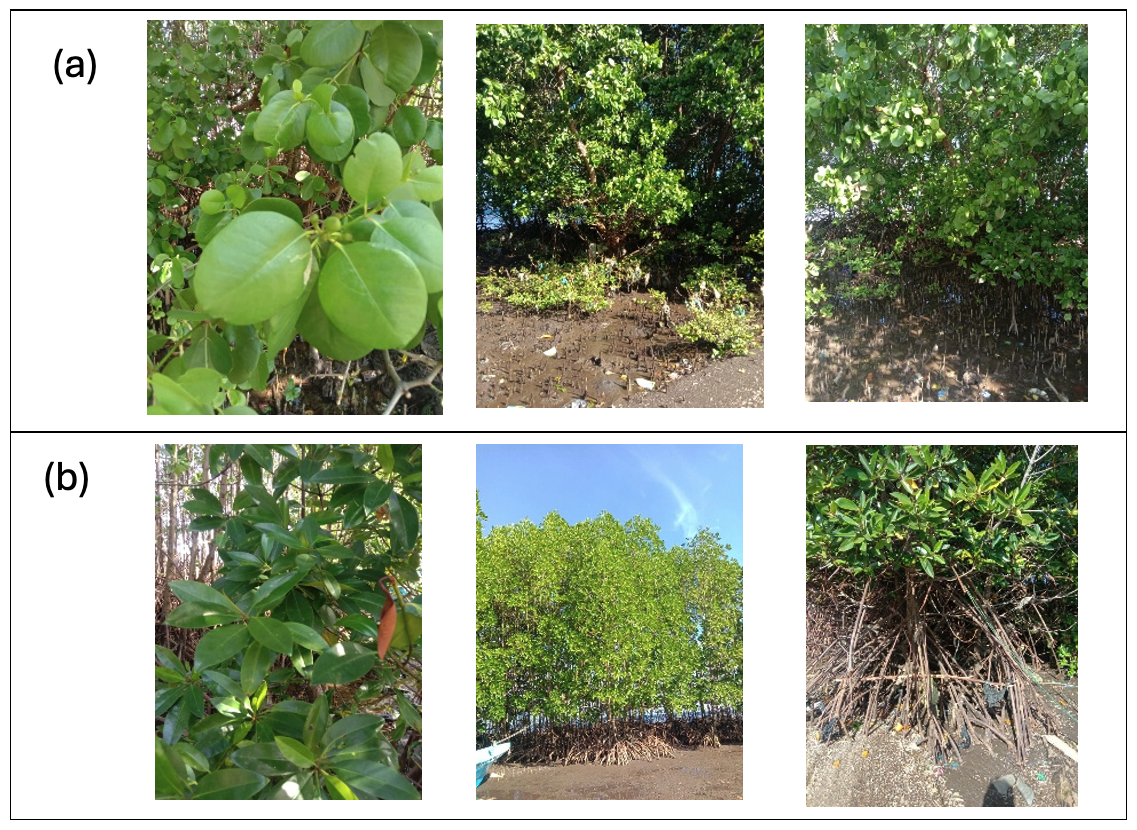 Figure
2. Species
composition of mangrove forest consists of leaf, stem, and root, (a)
Rhizopora
apiculata
(b) Sonneratia
alba
Table 5. Species composition in Gambesi Mangrove Ecosystem
2) Carbon Stock Estimation
Above-ground biomass
Assessment of the mangrove ecosystem in Gambesi revealed that Rhizopora Apiculata dominated the area. This indicates that the species stores the highest amount of carbon. As emphasized by Komiyama et al. (2005), carbon dynamics in mangrove environments are heavily influenced by tree biomass and stem diameter (DBH), where larger tree diameters exponentially increase biomass accumulation and carbon capture. As tree diameters expand, biomass accumulation and carbon sequestration increase exponentially. Consequently, stands with larger diameters accumulate and store organic material over significantly longer periods. Besides that, litters and understory plants (such as shrubs and other non-tree plants) also give a small influence to carbon stock in that area. Additionally, coastal tides deposit nutrient-rich sediments, enhancing carbon storage by capturing external organic debris within intricate root structures. This process enriches the underwater soil, supplying vital nutrients that actively fuel the expansion and health of surrounding plant life. By securing this organic material, the ecosystem creates a self-sustaining cycle where trapped carbon feeds the substrate, which in turn fosters denser vegetation capable of capturing even more carbon. Ultimately, this natural tidal mechanism transforms the habitat into a highly efficient carbon sink, reinforcing the coastal environment's overall stability and long-term capacity to mitigate atmospheric carbon (Yaqin et al., 2022).
Total calculated above-ground biomass (AGB) across all plots is 4265.26 kg and carbon stock is 200.47 ton/ha (CO₂-eq is 735.72 ton/ha). This value shows that the carbon stock in the Gambesi mangrove is still at a high density (Nasir et al.,2025). Table 6 summarizes the estimated carbon stock by component. The proportion varies with species composition and standing maturity. Measurement AGB using tree biomass and dead organic matter, which is plant litters. The highest carbon stock is in the plot 4. This plot contains Rhizopora Apiculata which stores 58.70 tons/ha Carbon. The species Rhizophora apiculata contribute the largest share of total carbon stock. This finding is consistent with the broader literature on mangrove blue carbon, which consistently identifies large-diameter Rhizophora stands as major carbon reservoirs in Indo-Pacific mangrove ecosystems (Donato et al, 2011). The lowest carbon stock is in the plot 1 that contains mostly Sonneratia alba which stores 16.99 tons/ha Carbon. The 1 plot is part of mangrove ecosystem that is near from estuary. Badly, the estuary has been contaminated by household waste and oils from the workshop. Systematically, the total mangrove biomass and carbon stock in Gambesi is at risk of decline due to ongoing human activity around the area. Meanwhile, coconut groves, water-spinach (kangkung) farmland, and settlement located near the area.
Table 6. Above-ground biomass and total carbon stock estimation value of Gambesi Mangrove Ecosystem
Below-ground biomass
Below-ground biomass (BGB) calculations indicated that the plot 4 yielded the highest productivity at 462.13 kg. It is because the calculation of BGB is still influenced by AGB value. On the contrary, the plot 1 recorded the lowest value, with a total biomass is only 133.76 kg. The total biomass is defined in Table 7. The superior carbon retention in Rhizophora apiculata is tied to its larger structural dimensions and intricate root architecture, which optimize particle entrapment and carbon storage. This dense root system allows for significantly higher carbon absorption compared to smaller species. Rhizophora apiculata also prioritizes resource allocation toward trunk and canopy development (Kaimuddin et al., 2023).
In the plantation forest sector of Gambesi, biomass values on BGB fluctuated between 133.76 and 462.13 kg, which the total biomass on BGB is 1578.15 kg. This study identified a correlation between tidal and Below-Ground Biomass Productivity (BGBP). Tides carry suspended sediments and organic matter from the ocean into the intertidal zone. In the intertidal zone, there is breakwater construction which can trap sediments in the mangrove roots. the sediment can store carbon matter (Erem et al., 2025).
Table 7. Below-Ground Biomass and total carbon stock estimation value of Gambesi Mangrove Ecosystem
3) Soil Organic Carbon
Plot 1 demonstrates elevated SOC compared to other plots, which is positioned within the river channel (Fig.1). Specifically, Plot 1 contains for a soil organic carbon content of 79.32 tons/ha, translating to a total CO₂-eq of 291.10 tons/ha. In comparison, Plot 2 records an SOC contents of approximately 78.50 tons/ha, Plot 3 contents of 76.57 tons/ha, Plot 4 contents of 78.55 tons/ha, and plot 5 contents of 78.24 tons/ha. This localized enrichment at Plot I is driven by a combination of environmental stability, organic matter supply, and microbial dynamics. Because Plot I Experiences less frequent tidal inundation, it maintains a stable environment that favors the accumulation of surface organic materials. This matter undergoes retarded decomposition within the anaerobic condition’s characteristic of dense, clayey mud substrates. As highlighted by Sari and Prayudyaningsih (2017), oxygen-depleted settings stimulate anaerobic microbial pathways, which accelerate organic matter retention and delay the emission of carbon dioxide back into the atmosphere.
Ultimately, the mangrove ecosystem demonstrates a far greater carbon mitigation capacity, storing 391.18 tons/ha of SOC (CO2-eq 278.15 tons/ha). The bulk of mangrove carbon is securely locked in below-ground pools, cementing their role as premier coastal carbon sinks.
Table 8. Soil Organic Carbon (SOC) of Gambesi mangrove ecosystem
4) Contribution to the Sustainable Development Goals (SDGs)
The carbon stock results obtained in this study provide a quantitative basis for linking local mangrove conservation in Gambesi to global sustainable development commitments; SDG 13 (Climate Action): The estimated carbon stock of CO₂-eq 1565.35 tons ha⁻¹ demonstrates the measurable climate mitigation value of the Gambesi mangrove forest. Maintaining and rehabilitating this ecosystem directly supports national greenhouse gas reduction commitments under Indonesia's Nationally Determined Contribution (NDC), particularly the forestry and land-use (FOLU) sector target (Indriyani et al., 2025). SDG 14 (Life Below Water): As a coastal ecosystem at the land–sea interface, the Gambesi mangrove forest supports marine biodiversity by providing nursery and feeding habitat for fish, crustaceans, and other coastal biota, while also buffering nearshore waters from land-based waste and sedimentation. SDG 15 (Life on Land): Conservation and rehabilitation of the remaining mangrove stand contribute to halting biodiversity loss and land degradation in the coastal zone of Ternate Island, in line with the SDG 15 target of protecting and restoring terrestrial and coastal ecosystems (UNDP, 2025).
Table 9. The link between this carbon research and SDGs
These linkages indicate that mangrove carbon stock assessment is not merely a scientific exercise but a direct, measurable contribution to multiple SDG targets simultaneously, reinforcing the value of integrating blue carbon data into local development and climate policy planning in Ternate City (Ilman et al., 2016).
4. Conclusion
This study estimated the carbon stock of the Gambesi mangrove forest, Ternate City, North Maluku Province, using field-based allometric methods. The results show that a total carbon stock of above-ground is 200.47 ton/ha (CO₂-eq is 735.72 ton/ha) and below-ground is 391.18 tons/ha of SOC (CO2-eq 1435.64 tons/ha). Rhizopora apiculata contributing the largest share of total carbon storage. These findings confirm that, despite ongoing degradation pressure, the Gambesi mangrove forest retains meaningful blue carbon value and continues to provide critical coastal protection and biodiversity functions. The study demonstrates that local-scale mangrove carbon assessment provides concrete, measurable evidence supporting the achievement of SDG 13 (Climate Action), SDG 14 (Life Below Water), and SDG 15 (Life on Land). Continued mangrove rehabilitation, community-based waste management, and formal protection status are recommended as priority actions to sustain and enhance the carbon sequestration capacity of the Gambesi mangrove ecosystem.
Future research is recommended to incorporate carbon stock measurement (above-ground and below ground) in all mangrove ecosystems in Ternate Island and measurement total soil organic carbon in the deeper soil profile. This research only coves only 5 plots in Gambesi mangrove ecosystem. The plot was chosen in landward dan middle zone, while the seaward zone has not yet measured due to the risk to meet some predators. It was recommended to use GIS method to calculate carbon stock of all the zone in mangrove ecosystems. It also suggests to future directions such as long-term/repeated monitoring, uncertainty or error-margin analysis for the carbon estimates, and socio-economic or blue-carbon-credit valuation studies. For the given mangrove typically dominant contribution to carbon stock, in order to produce a more comprehensive blue carbon inventory for this site.
5. Author Contributions
The first author (NA) designed the study, carried out the experiments, performed the statistical analysis, and wrote the manuscript text. Second author (SB) performed the map, prepared the figures, and helped to complete the statistical analysis. Third author (JM) supervised the project and critically revised the manuscript for important intellectual content. Fourth author (MHM) wrote the main manuscript text with the first author. All authors contributed to the interpretation of the results and approved the final version of the manuscript.
6. Competing Interests
The authors have no competing interests to declare.
7. Acknowledgements
The authors would like to thank the local government of South Ternate in Ternate Coty for facilitating fieldwork permits. The authors also thank the Forestry Study Program, Agriculture Faculty, Khairun University for providing laboratory to support this research. We are also grateful to our colleagues in this research for their hardworking and collaboration.
8. References
Choudhary, B., Dhar, V., & Pawase, A.S. (2024). Blue carbon and the role of mangroves in carbon sequestration: Its mechanisms, estimation, human impacts and conservation strategies for economic incentives. Journal of Sea Research, 199 (102504): 1-22. https://doi.org/10.1016/j.seares.2024.102504
Dharmawan, I. W. E., Suyarso, Ulumuddin, Y. I., Prayudha, B., & Pramudji. (2020). Panduan monitoring struktur komunitas mangrove di Indonesia. Pusat Penelitian Oseanografi, Lembaga Ilmu Pengetahuan Indonesia (LIPI).
Donato, D. C., Kauffman, J. B., Murdiyarso, D., Kurnianto, S., Stidham, M., & Kanninen, M. (2011). Mangroves among the most carbon-rich forests in the tropics. Nature Geoscience, 4(5), 293-297. https://doi.org/10.1038/ngeo1123
Erem, Wiratama, G. N. M., Widyasari, N. L., Made, I., Graha, S., Kadarisman, H. P., Komang, N., & Wulandari, P. (2025). The Blue Carbon Value in Mangrove Ecosystems Under Different Growth Conditions. Environmental Research, Engineering and Management. https://doi.org/10.5755/j01.erem.81.4.40210
Ilman, M., Dangkual, R., & Wibisono, I. T. C. (2016). Perbandingan keberhasilan rehabilitasi mangrove berbasis masyarakat dengan pendekatan ekologis dan konvensional. Jurnal Ilmu dan Teknologi Kelautan Tropis, 8(1), 115-128.
Indriyani, L., Kahirun, K., & Erif, L. O. M. (2025). Analisis Sekuestrasi Karbon dan Stok Karbon pada Hutan Mangrove di Desa Waworaha, Kecamatan Soropia, Kabupaten Konawe. Makila: Jurnal Penelitian Ilmu Kehutanan. https://doi.org/10.30598/makila.v19i2.21568
Kauffman, J. B., & Donato, D. C. (2012). Protocols for the measurement, monitoring and reporting of structure, biomass and carbon stocks in mangrove forests. Working Paper 86. CIFOR, Bogor, Indonesia.
Kaimuddin, M. I., Kusmana, C., & Setiawan, Y. (2023). Vegetation structure, biomass, and carbon of Mangrove Forests in Ambon Bay, Maluku, Indonesia. Jurnal Pengelolaan Sumberdaya Alam Dan Lingkungan. https://doi.org/10.29244/jpsl.13.4.710-722
Komiyama, A., Poungparn, S., & Kato, S. (2005). Common allometric equations for estimating the tree weight of mangroves. Journal of tropical ecology, 21(4), 471–477. https://doi.org/10.1017/S0266467405002476
Nasir, A., Herawaty, H., Ismail, I., & Syah, M. I. M. (2025). Revealing Carbon Patterns Across Mangrove Density Variations Using Sentinel-2 NDVI. Jurnal Wasian, 12(02), 18-26. https://doi.org/10.62142/rbh1zd16.
Ruslianto, Alviani, M., Maisuri, Irundu, D. (2019). Model Alometrik Biomassa Rhizophora Apiculata di Kabupaten Polewali Mandar, Provinsi Sulawesi Barat. Buletin Eboni. Vol.1 (1), 2019 Page 11 of 19
Rustam, E., Paembonan, Achmad, M.D., Marus, I., Baddu, S. (2022). Status dan spasial temporal hutan mangrove di Pulau Ternate. Jurnal Ilmu Kelautan Kepulauan: 5 (2); 656-667.
Sari, R., & Prayudyaningsih, R. (2017). Karakter isolat rhizobia dari tanah bekas tambang nikel dalam memanfaatkan oksigen untuk proses metabolismenya. Buletin Eboni, 14(2), 123–136. https://doi.org/10.20886/buleboni.5108
Song, S., Li, W., Meng, Y., Zhou, J., Gou, R., Zhang, C., Ye, S., Saintilan, N., Krauss, K. W., Crooks, S. M., & Lv, S. (2023). Mangrove reforestation provides greater blue carbon benefit than afforestation for mitigating global climate change. Nature Communications, 14(1). https://doi.org/10.1038/s41467-023-36477-1
SNI 7724:2011 about Carbon Measurement and Stocks – Field measurements for forest carbon stock estimation
Thomas, H., & Van Dam, B. (2025). Blue carbon reservoirs – main or side effect. https://doi.org/10.5194/oos2025-1527
Twilley, R., and Rovai, A. (2019). Mapping the world’s ‘blue carbon’ hot spots in coastal mangrove forests. https://theconversation.com/mapping-the-worlds-blue-carbon-hot-spots-in-coastal-mangrove-forests-105793
United Nations Development Programme (UNDP). (2025). Second Nationally Determined Contribution Republic of Indonesia. https://climatepromise.undp.org/what-we-do/where-we-work/indonesia
Yaqin, N., Rizkiyah, M., Putra, E. A., Suryanti, S., & Febrianto, S. (2022). Estimasi Serapan Karbon pada Kawasan Mangrove Tapak di Desa Tugurejo Semarang. Buletin Oseanografi Marina, 11(1), 19–29.
Zhang, J., Gan, S., Yang, P. (2024). A global assessment of mangrove soil organic carbon sources and implications for blue carbon credit. Nature Communications | (2024) 15:8994, hal 1-7. https://doi.org/10.1038/s41467-024-53413-z
Copyright (c) 2026 Jurnal Wasian

This work is licensed under a Creative Commons Attribution 4.0 International License.
Copyright and License
All articles published in Wasian Journal are the property of the authors. By submitting an article to Wasian Journal, authors agree to the following terms:
-
Copyright Ownership: The author(s) retain copyright and full publishing rights without restrictions. Authors grant the journal the right to publish the work first and to distribute it as open access under a Creative Commons Attribution 4.0 International License (CC BY 4.0).
-
Licensing: Articles published in Wasian Journal are licensed under a Creative Commons Attribution 4.0 International License (CC BY 4.0). This license allows others to share, copy, and redistribute the material in any medium or format, and adapt, remix, transform, and build upon the material for any purpose, even commercially, provided that proper credit is given to the original author(s) and the source of the material

This work is licensed under a Creative Commons Attribution 4.0 International License. -
Author's Rights: Authors are permitted and encouraged to post their work online (e.g., in institutional repositories or on their website) prior to and during the submission process, as it can lead to productive exchanges and greater citation of published work.
-
Third-Party Content: If your article contains material (e.g., images, tables, or figures) for which you do not hold copyright, you must obtain permission from the copyright holder to use the material in your article. This permission must include the right for you to grant the journal the rights described above.
-
Reprints and Distribution: Authors have the right to distribute the final published version of their work (e.g., post it to an institutional repository or publish it in a book), provided that the original publication in Wasian Journal is acknowledged.
For the reader you are free to:
- Share — copy and redistribute the material in any medium or format for any purpose, even commercially.
- Adapt — remix, transform, and build upon the material for any purpose, even commercially.
- The licensor cannot revoke these freedoms as long as you follow the license terms.
Under the following terms:
- Attribution — You must give appropriate credit , provide a link to the license, and indicate if changes were made . You may do so in any reasonable manner, but not in any way that suggests the licensor endorses you or your use.
- No additional restrictions — You may not apply legal terms or technological measures that legally restrict others from doing anything the license permits.
Notices:
You do not have to comply with the license for elements of the material in the public domain or where your use is permitted by an applicable exception or limitation .
No warranties are given. The license may not give you all of the permissions necessary for your intended use. For example, other rights such as publicity, privacy, or moral rightsmay limit how you use the material.
Similar Articles
- Naning Yuniarti, The Invigoration Techniques of Nyamplung (Calophyllum inophyllum L.) Seeds During the Storage , Jurnal Wasian: Vol. 7 No. 1 (2020): June
- relawan kuswandi, Julius Dwi Nugroho, Diameter Increment of Remnant Stands in Logged-Over Forest in Papua , Jurnal Wasian: Vol. 6 No. 2 (2019): December
- Yulianti Bramasto, Nurheni Wijayanto, Iskandar Z Siregar, I.G.K. Tapa Darma, The Variability of Seed Viability and Seed Vigour of Mindi (Melia azedarachlinn.) from Several Populations in The Community Forest of West Java , Jurnal Wasian: Vol. 3 No. 2 (2016): December
- Relawan Kuswandi, Timber Volume Estimation Model for Merchantable Tree Species in Sarmi Regency, Papua , Jurnal Wasian: Vol. 3 No. 2 (2016): December
- Baharinawati Wilhan Hastanti, S. Agung Sri Raharjo, Stakeholder Analysis of Implementation of Social Forestry Program at KPH Telawa, Central Java , Jurnal Wasian: Vol. 8 No. 1 (2021): June
- Arif Irawan, Hanif Nurul Hidayah, Shade Effect on Growth and Quality of Cempaka Wasian Seedling (Magnolia tsiampaca (Miq.) Dandy) in Nursery , Jurnal Wasian: Vol. 4 No. 1 (2017): June
- Yonky Indrajaya, Mohamad Siarudin, The Business Analysis of Acacia auriculiformis Agroforestry in Batulanteh Forest Management Unit, Sumbawa, West Nusa Tenggara , Jurnal Wasian: Vol. 8 No. 1 (2021): June
- Ni Putu Sri Asih, I Gusti Made Sudirga, I Gede - Tirta, The Diversity, Distribution and Conservation of Bali’s Medinilla in Eka Karya Bali Botanical Garden , Jurnal Wasian: Vol. 8 No. 2 (2021): December
- Sabaruddin B, Andy Kurniawan, Nurfadhilah Arif, Deforestation Trends and Drivers in Central Halmahera Regency , Jurnal Wasian: Vol. 11 No. 1 (2024): June
- Diah Irawati Dwi Arini, Julianus Kinho, Melkianus S Diwi, Margareta Christita, Jafred E Halawane, Muhammad F Fahmi, Yermias Kafiar, Wildlife Diversity for Ecotourism at Aqua Lestari Forest Park, North Minahasa , Jurnal Wasian: Vol. 5 No. 1 (2018): June
You may also start an advanced similarity search for this article.
Most read articles by the same author(s)
- Sabaruddin B, Andy Kurniawan, Nurfadhilah Arif, Deforestation Trends and Drivers in Central Halmahera Regency , Jurnal Wasian: Vol. 11 No. 1 (2024): June
- Jauhar Mukti, Hikmah hikmah, Hendra Kurniawan, Ahmad Sabri, Budi Arty, Yuslan Demma Semu, Evaluating the Success of Watershed Rehabilitation Efforts in Gowa Regency: A Case Study on Forest and Land Restoration , Jurnal Wasian: Vol. 10 No. 02 (2023): December