Ethnobotanical Analysis of Mangroves as Food Resources in East Lampung

 duryatunila2@gmail.com
Abstract
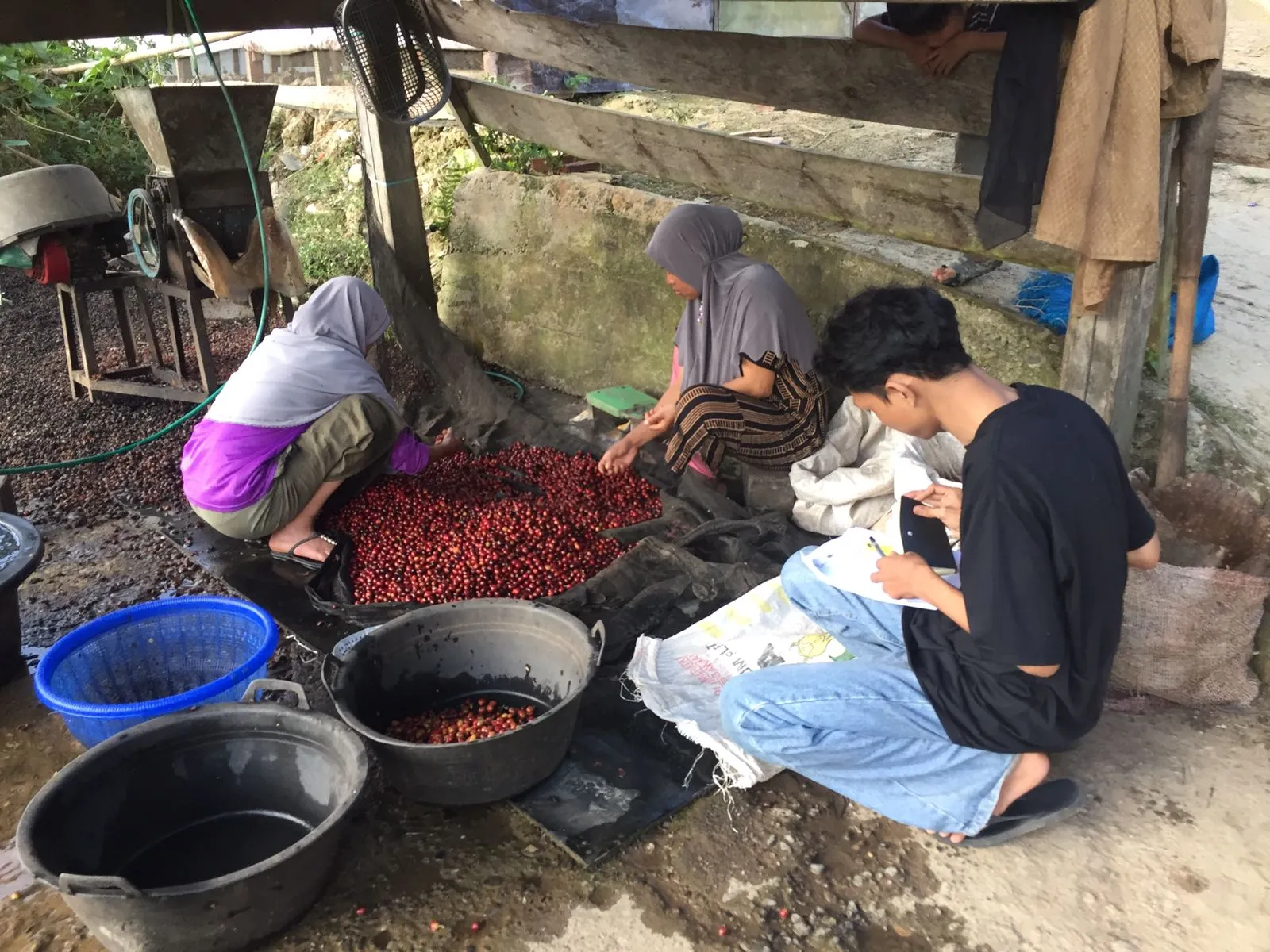
The world is experiencing a food crisis due to climate change, and mangroves as a blue ecosystem have a significant potential to mitigate this crisis. This research seeks to record the ethnobotanical practices of utilising mangroves, as a food source in East Lampung. We employed the snowball sampling method in Margasari village, Purwerejo village, and Karya Makmur village. In addition, we gathered data on mangrove species, parts of used, processing methods, products, and their properties, through interviews and observations. Also, we analysed the data using descriptive analysis to provide a comprehensive overview of the varieties of mangroves, their processing, and the resulting products. This research revealed that the communities employs five distinct varieties of mangroves as sustenance sources. Mangroves produce various food products from their four components: fruit, juvenile leaves, old leaves, and propagules. Notably, processed products, including pidada fruit (Sonneratia caseolaris), are anti-hypertensive, canker sores, and heartburn treatments. Jeruju leaves (Acanthus ilicifolius) are known to improve stamina, and seeds without the root of Rhizophora mucronata propagules act as anti-gastritis agents, improve blood circulation, and prevent anaemia. Although there are ten processed mangrove products, they are still considered traditional and are not as popular among the newer generation.
Copyright (c) 2024 Jurnal Wasian

This work is licensed under a Creative Commons Attribution-NonCommercial 4.0 International License.
Copyright and License
All articles published in Wasian Journal are the property of the authors. By submitting an article to Wasian Journal, authors agree to the following terms:
-
Copyright Ownership: The author(s) retain copyright and full publishing rights without restrictions. Authors grant the journal the right to publish the work first and to distribute it as open access under a Creative Commons Attribution 4.0 International License (CC BY 4.0).
-
Licensing: Articles published in Wasian Journal are licensed under a Creative Commons Attribution 4.0 International License (CC BY 4.0). This license allows others to share, copy, and redistribute the material in any medium or format, and adapt, remix, transform, and build upon the material for any purpose, even commercially, provided that proper credit is given to the original author(s) and the source of the material

This work is licensed under a Creative Commons Attribution 4.0 International License. -
Author's Rights: Authors are permitted and encouraged to post their work online (e.g., in institutional repositories or on their website) prior to and during the submission process, as it can lead to productive exchanges and greater citation of published work.
-
Third-Party Content: If your article contains material (e.g., images, tables, or figures) for which you do not hold copyright, you must obtain permission from the copyright holder to use the material in your article. This permission must include the right for you to grant the journal the rights described above.
-
Reprints and Distribution: Authors have the right to distribute the final published version of their work (e.g., post it to an institutional repository or publish it in a book), provided that the original publication in Wasian Journal is acknowledged.
For the reader you are free to:
- Share — copy and redistribute the material in any medium or format for any purpose, even commercially.
- Adapt — remix, transform, and build upon the material for any purpose, even commercially.
- The licensor cannot revoke these freedoms as long as you follow the license terms.
Under the following terms:
- Attribution — You must give appropriate credit , provide a link to the license, and indicate if changes were made . You may do so in any reasonable manner, but not in any way that suggests the licensor endorses you or your use.
- No additional restrictions — You may not apply legal terms or technological measures that legally restrict others from doing anything the license permits.
Notices:
You do not have to comply with the license for elements of the material in the public domain or where your use is permitted by an applicable exception or limitation .
No warranties are given. The license may not give you all of the permissions necessary for your intended use. For example, other rights such as publicity, privacy, or moral rightsmay limit how you use the material.
Similar Articles
- Ivan Permana Putra, The Potency of Some Wild Edible Mushrooms with Economic Value in Belitong Island, The Province of Bangka Belitung , Jurnal Wasian: Vol. 7 No. 2 (2020): December
- Dani Pamungkas, Siswadi Siswadi, The Effect of Tree Shade and Pruning Techniques on Screw Tree (Helicteres isora Linn.) Fruit Productivity in the Natural Habitat , Jurnal Wasian: Vol. 7 No. 2 (2020): December
- Agung Wahyu Nugroho, Heru Dwi Riyanto, Study of Light Intensity in Riparian Zone of Teak Production Forest in KHDTK Cemoro Modang , Jurnal Wasian: Vol. 7 No. 1 (2020): June
- Abdul Haris Mustari, Achmad Fajar Pasaribu, Habitat Characteristics and Population of Javan Langur (Trachypithecus Auratus E. Geoffroy Saint-Hilaire, 1812) In Leuweung Sancang Nature Reserve, Garut, West Java , Jurnal Wasian: Vol. 6 No. 2 (2019): December
- Freddy Jontara Hutapea, Relawan Kuswandi, Timber Volume Estimation Model for Commercial Tree Species in the Logging Area Concession of PT. Tunas Timber Lestari in Boven Digul, Papua , Jurnal Wasian: Vol. 6 No. 1 (2019): June
- Ridwan Fauzi, Muhamad Yusup Hidayat, Grace Serepina Saragih, Macroscopic Fungi Species in Kelimutu National Park, East Nusa Tenggara , Jurnal Wasian: Vol. 5 No. 2 (2018): December
- Baharinawati Wilhan Hastanti, Relawan Kuswandi, Julanda Noya, Development Strategy of Masoi (Cryptocarya massoia (Oken) Kosterm.) as Non-Timber Forest Products in Teluk Bintuni, West Papua With SWOT Analysis , Jurnal Wasian: Vol. 5 No. 1 (2018): June
- Sudiyono Sudiyono, Evaluation of Vegetation and Wildlife in Gunung Ambang Nature Reserve , Jurnal Wasian: Vol. 1 No. 2 (2014): December
You may also start an advanced similarity search for this article.