Perception and Motivation of Farmers in the Development of Natural Silk Business in Soppeng Regency Sulawesi Selatan

Abstract
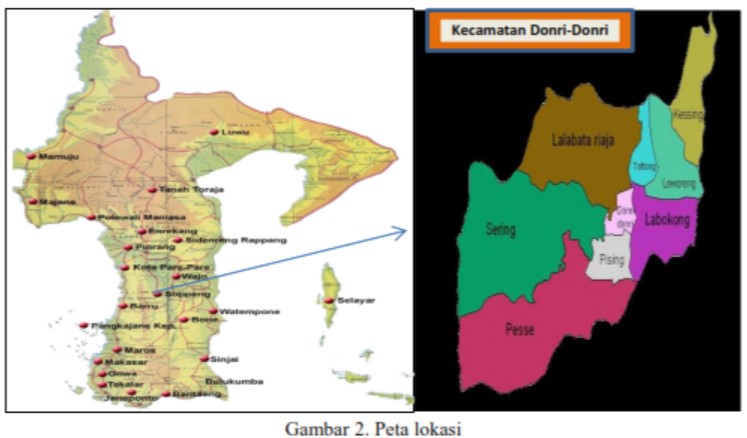
The development of natural silk has not been optimal because the handling of the problem tends to be general and not adjusted to the socio-economic characteristic of the community. In Soppeng Regency, natural silk is carried out by diverse socio-economic backgrounds of the community that can influence perceptions and motivations in the development of natural silk business. This study aimed to determine the perceptions and motivations in developing natural silk business which is expected to be a formulation material in the preparation of natural silk business policies. The study was conducted in Donri-Donri District as the center of natural silk development in Soppeng Regency. Data collection used survey method and interview. The sampling of respondents used a random sampling method for natural silk farmers. The results of the study indicate that in Soppeng District, the high farmer’s perception of natural silk business are related to socio-economic factors such as the length of residence in the village and gender. The motivation of farmers in natural silk business is generally because natural silk business is easy to implement, technological mastery, and easy to obtain information. Natural silk have big chance to be developed with quality improvement of silkworm seed and silkworm feed. High perception and motivation of community need to be accompanied by the availability of supporting factors so that this business can develop optimally.
Copyright (c) 2019 Jurnal Wasian

This work is licensed under a Creative Commons Attribution-NonCommercial 4.0 International License.
Copyright and License
All articles published in Wasian Journal are the property of the authors. By submitting an article to Wasian Journal, authors agree to the following terms:
-
Copyright Ownership: The author(s) retain copyright and full publishing rights without restrictions. Authors grant the journal the right to publish the work first and to distribute it as open access under a Creative Commons Attribution 4.0 International License (CC BY 4.0).
-
Licensing: Articles published in Wasian Journal are licensed under a Creative Commons Attribution 4.0 International License (CC BY 4.0). This license allows others to share, copy, and redistribute the material in any medium or format, and adapt, remix, transform, and build upon the material for any purpose, even commercially, provided that proper credit is given to the original author(s) and the source of the material

This work is licensed under a Creative Commons Attribution 4.0 International License. -
Author's Rights: Authors are permitted and encouraged to post their work online (e.g., in institutional repositories or on their website) prior to and during the submission process, as it can lead to productive exchanges and greater citation of published work.
-
Third-Party Content: If your article contains material (e.g., images, tables, or figures) for which you do not hold copyright, you must obtain permission from the copyright holder to use the material in your article. This permission must include the right for you to grant the journal the rights described above.
-
Reprints and Distribution: Authors have the right to distribute the final published version of their work (e.g., post it to an institutional repository or publish it in a book), provided that the original publication in Wasian Journal is acknowledged.
For the reader you are free to:
- Share — copy and redistribute the material in any medium or format for any purpose, even commercially.
- Adapt — remix, transform, and build upon the material for any purpose, even commercially.
- The licensor cannot revoke these freedoms as long as you follow the license terms.
Under the following terms:
- Attribution — You must give appropriate credit , provide a link to the license, and indicate if changes were made . You may do so in any reasonable manner, but not in any way that suggests the licensor endorses you or your use.
- No additional restrictions — You may not apply legal terms or technological measures that legally restrict others from doing anything the license permits.
Notices:
You do not have to comply with the license for elements of the material in the public domain or where your use is permitted by an applicable exception or limitation .
No warranties are given. The license may not give you all of the permissions necessary for your intended use. For example, other rights such as publicity, privacy, or moral rightsmay limit how you use the material.
Similar Articles
- Roslina Yahya, Dr. Hadija Sukri, S.P.,M.P, Dr.Ir. Nirawati., S.Hut.,M.hut.,IPP, Dr. Ira Nurhayati Djarot, Responses of Stomatal Characteristics to Environmental Factors in Fabaceae Trees of the Urban Forest in Maros Regency , Jurnal Wasian: Vol. 12 No. 01 (2025): June
- Rini Pratiwi, Makkarennu Makkarennu, Ridwan Ridwan, Understanding Traditional Walnut Management System in Forest Communities of Selayar Islands, Indonesia , Jurnal Wasian: Vol. 12 No. 01 (2025): June
- Irlan Irlan, Ulfa Adzkia, Suhartono Suhartono, Meliani Meliani, Alpri Sri Jenos, Teguh Bimantara, Chairil A, Individual Tree Segmentation in TropicalNatural Forest Based on Point CloudGenerated from UAV RGB Image , Jurnal Wasian: Vol. 12 No. 02 (2025): December
- Agustina Sumarni Ciputri Blolok, Wilhelmina Seran, Astin Elise Mau, Muhamad Soimin, Optimising Growing Media Composition and Seed Selection Strategies For the Conversation of the Endangered Sandalwood (Santalum album Linn.) , Jurnal Wasian: Vol. 11 No. 2 (2024): December
- Anugrahandini Nasir, Herawaty Herawaty, Ismail Ismail, Muh Izzul Muslimin Syah, Revealing Carbon Patterns Across Mangrove Density Variations Using Sentinel-2 NDVI , Jurnal Wasian: Vol. 12 No. 02 (2025): December
- Yonky Indrajaya, The Study of Faustmann Formula Application in Sustainable Natural Forest Management in Indonesia , Jurnal Wasian: Vol. 5 No. 1 (2018): June
- Diah Irawati Dwi Arini, Isdomo Yuliantoro, Perception of Local Community of Pinogu Toward Forest and Its Utilization , Jurnal Wasian: Vol. 6 No. 2 (2019): December
- Bertila Avila Delvion, Dwiko Budi Permadi, Hero Marhaento, Fostering Sustainabel Livelihood of the Saga Indigenous Community through Conservation Partnership in Kelimutu National Park, Nusa Tenggara Timur , Jurnal Wasian: Vol. 10 No. 02 (2023): December
- Eritrina Windyarini, Tri Maria Hasnah , Identification and Seedlings Growth Evaluation of Shorea Species-Producing Tengkawang , Jurnal Wasian: Vol. 2 No. 1 (2015): March
- Sabaruddin B, Andy Kurniawan, Nurfadhilah Arif, Deforestation Trends and Drivers in Central Halmahera Regency , Jurnal Wasian: Vol. 11 No. 1 (2024): June
You may also start an advanced similarity search for this article.
Most read articles by the same author(s)
- Wahyudi Isnan, Wahyudi Isnan, Hasnawir Hasnawir, Analysis of Characteristics and Typology of Mapili Watershed West Sulawesi Province , Jurnal Wasian: Vol. 5 No. 1 (2018): June