Socio Demographic Factors and Work Performance of Forest Workers in Cajuput Leaf Harvesting at RPH Nglipar, KPH Yogyakarta

Abstract
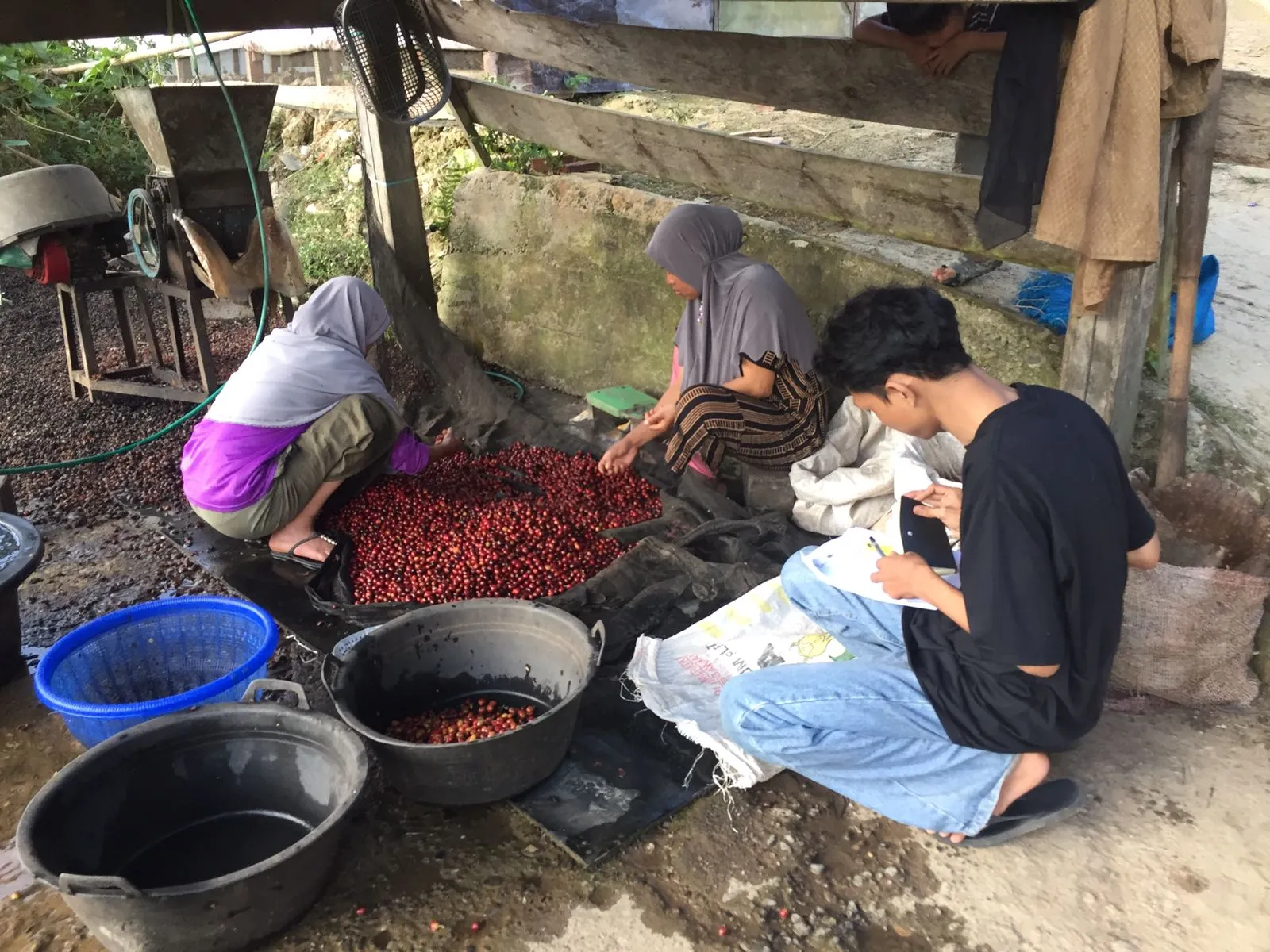
Cajuput leaf harvesting is a technical forest activity of non-timber forest products. The productivity of cajuput leaf harvesting is strongly influenced by aspects of human resource capacity and biophysical aspects. This study aims to identify the socio-demographic conditions of forest workers in cajuput leaves harvesting and to analyze the standards performance of harvesting in FMU Yogyakarta. A survey of 100 samples of workers were used to determine socio-demographic characteristics, while in-depth observations were made on 3 workers with different characteristics to determine work performance. The socio-demographic conditions of workers in the cajuput leaf harvesting are seen from eight characteristics, namely age, gender, education, number of dependents, livelihoods, and land ownership. Workers have an average age of 58 years old and are male. The level of education possessed by workers is dominated by graduating from elementary school (SD) by 64 %. The average number of dependents per worker household is 4 people, with the main livelihood being farmers. The average land ownership of workers in cajuput leaf harvesting is 0.17 ha. The work performance of harvesting for normal people in the FMU Yogyakarta is 72.23 kg / hour.
Copyright (c) 2020 Jurnal Wasian

This work is licensed under a Creative Commons Attribution-NonCommercial 4.0 International License.
Copyright and License
All articles published in Wasian Journal are the property of the authors. By submitting an article to Wasian Journal, authors agree to the following terms:
-
Copyright Ownership: The author(s) retain copyright and full publishing rights without restrictions. Authors grant the journal the right to publish the work first and to distribute it as open access under a Creative Commons Attribution 4.0 International License (CC BY 4.0).
-
Licensing: Articles published in Wasian Journal are licensed under a Creative Commons Attribution 4.0 International License (CC BY 4.0). This license allows others to share, copy, and redistribute the material in any medium or format, and adapt, remix, transform, and build upon the material for any purpose, even commercially, provided that proper credit is given to the original author(s) and the source of the material

This work is licensed under a Creative Commons Attribution 4.0 International License. -
Author's Rights: Authors are permitted and encouraged to post their work online (e.g., in institutional repositories or on their website) prior to and during the submission process, as it can lead to productive exchanges and greater citation of published work.
-
Third-Party Content: If your article contains material (e.g., images, tables, or figures) for which you do not hold copyright, you must obtain permission from the copyright holder to use the material in your article. This permission must include the right for you to grant the journal the rights described above.
-
Reprints and Distribution: Authors have the right to distribute the final published version of their work (e.g., post it to an institutional repository or publish it in a book), provided that the original publication in Wasian Journal is acknowledged.
For the reader you are free to:
- Share — copy and redistribute the material in any medium or format for any purpose, even commercially.
- Adapt — remix, transform, and build upon the material for any purpose, even commercially.
- The licensor cannot revoke these freedoms as long as you follow the license terms.
Under the following terms:
- Attribution — You must give appropriate credit , provide a link to the license, and indicate if changes were made . You may do so in any reasonable manner, but not in any way that suggests the licensor endorses you or your use.
- No additional restrictions — You may not apply legal terms or technological measures that legally restrict others from doing anything the license permits.
Notices:
You do not have to comply with the license for elements of the material in the public domain or where your use is permitted by an applicable exception or limitation .
No warranties are given. The license may not give you all of the permissions necessary for your intended use. For example, other rights such as publicity, privacy, or moral rightsmay limit how you use the material.
Similar Articles
- Yonky Indrajaya, Mohamad Siarudin, The Business Analysis of Acacia auriculiformis Agroforestry in Batulanteh Forest Management Unit, Sumbawa, West Nusa Tenggara , Jurnal Wasian: Vol. 8 No. 1 (2021): June
- Nurlita Indah Wahyuni, Abdul Wahid Hasyim, Soemarmo Soemarmo, Dynamic of the Land Use and Land Cover Change in Banyuwangi Regency From 1995-2019 , Jurnal Wasian: Vol. 8 No. 2 (2021): December
- Eva Fauziyah, Sanudin sanuddin, The Effectiveness of Private Forest Institutional and Policy in Banjarnegara and Banyumas Regency , Jurnal Wasian: Vol. 4 No. 2 (2017): December
- Lis Nurrani, Halidah, Supratman Tabba, Ethnic Influence Against Land Use Patterns and Its Contribution to Community Income in The Aketajawe Lolobata National Park (Pengaruh Etnis Terhadap Pola Pemanfaatan Lahan Dan Kontribusinya Bagi Pendapatan Masyarakat Di Taman Nasional Aketajawe Lolobata) , Jurnal Wasian: Vol. 2 No. 2 (2015): December
- Baharinawati Wilhan Hastanti, Relawan Kuswandi, Julanda Noya, Development Strategy of Masoi (Cryptocarya massoia (Oken) Kosterm.) as Non-Timber Forest Products in Teluk Bintuni, West Papua With SWOT Analysis , Jurnal Wasian: Vol. 5 No. 1 (2018): June
- Yulianti Bramasto, Nurheni Wijayanto, Iskandar Z Siregar, I.G.K. Tapa Darma, The Variability of Seed Viability and Seed Vigour of Mindi (Melia azedarachlinn.) from Several Populations in The Community Forest of West Java , Jurnal Wasian: Vol. 3 No. 2 (2016): December
- relawan kuswandi, Julius Dwi Nugroho, Diameter Increment of Remnant Stands in Logged-Over Forest in Papua , Jurnal Wasian: Vol. 6 No. 2 (2019): December
- Muhammad Abdul Qirom, Acep Akbar, The Volume Model of Tree Species Group in Peat Swamp Forest at Logging Concession Area of Tingang Karya Mandiri, Central Kalimantan , Jurnal Wasian: Vol. 7 No. 1 (2020): June
- Jauhar Mukti, Hikmah hikmah, Hendra Kurniawan, Ahmad Sabri, Budi Arty, Yuslan Demma Semu, Evaluating the Success of Watershed Rehabilitation Efforts in Gowa Regency: A Case Study on Forest and Land Restoration , Jurnal Wasian: Vol. 10 No. 02 (2023): December
- Diah Irawati Dwi Arini, Julianus Kinho , Diversity of Medicinal Plants on Coastal Forest in Tangkoko Natural Reserve , Jurnal Wasian: Vol. 2 No. 1 (2015): March
You may also start an advanced similarity search for this article.
Most read articles by the same author(s)
- Muhammad Iqbal Nur Madjid, Dwiko Budi Permadi, Wahyu Wardhana, Ratih Madya Septiana, Locals’ Claims of Rights and Access to Forest Resources in Three Forest Management Regimes in Gunungkidul Regency, Yogyakarta , Jurnal Wasian: Vol. 9 No. 1 (2022): June