Ethnobotanical Analysis of Mangroves as Food Resources in East Lampung

 duryatunila2@gmail.com
Abstract
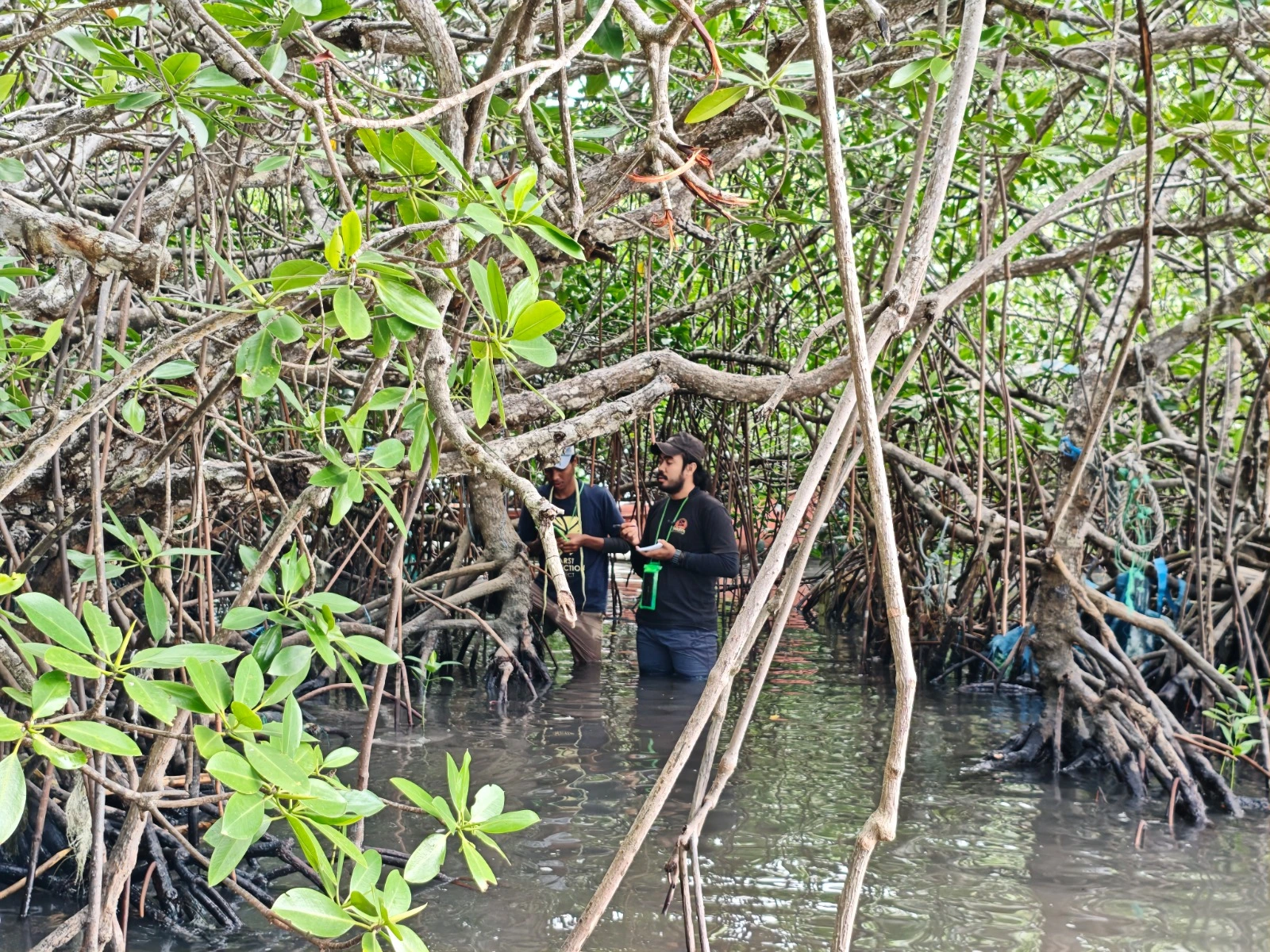
The world is experiencing a food crisis due to climate change, and mangroves as a blue ecosystem have a significant potential to mitigate this crisis. This research seeks to record the ethnobotanical practices of utilising mangroves, as a food source in East Lampung. We employed the snowball sampling method in Margasari village, Purwerejo village, and Karya Makmur village. In addition, we gathered data on mangrove species, parts of used, processing methods, products, and their properties, through interviews and observations. Also, we analysed the data using descriptive analysis to provide a comprehensive overview of the varieties of mangroves, their processing, and the resulting products. This research revealed that the communities employs five distinct varieties of mangroves as sustenance sources. Mangroves produce various food products from their four components: fruit, juvenile leaves, old leaves, and propagules. Notably, processed products, including pidada fruit (Sonneratia caseolaris), are anti-hypertensive, canker sores, and heartburn treatments. Jeruju leaves (Acanthus ilicifolius) are known to improve stamina, and seeds without the root of Rhizophora mucronata propagules act as anti-gastritis agents, improve blood circulation, and prevent anaemia. Although there are ten processed mangrove products, they are still considered traditional and are not as popular among the newer generation.
Hak Cipta (c) 2024 Jurnal Wasian

Artikel ini berlisensi Creative Commons Attribution-NonCommercial 4.0 International License.
Copyright and License
All articles published in Wasian Journal are the property of the authors. By submitting an article to Wasian Journal, authors agree to the following terms:
-
Copyright Ownership: The author(s) retain copyright and full publishing rights without restrictions. Authors grant the journal the right to publish the work first and to distribute it as open access under a Creative Commons Attribution 4.0 International License (CC BY 4.0).
-
Licensing: Articles published in Wasian Journal are licensed under a Creative Commons Attribution 4.0 International License (CC BY 4.0). This license allows others to share, copy, and redistribute the material in any medium or format, and adapt, remix, transform, and build upon the material for any purpose, even commercially, provided that proper credit is given to the original author(s) and the source of the material

This work is licensed under a Creative Commons Attribution 4.0 International License. -
Author's Rights: Authors are permitted and encouraged to post their work online (e.g., in institutional repositories or on their website) prior to and during the submission process, as it can lead to productive exchanges and greater citation of published work.
-
Third-Party Content: If your article contains material (e.g., images, tables, or figures) for which you do not hold copyright, you must obtain permission from the copyright holder to use the material in your article. This permission must include the right for you to grant the journal the rights described above.
-
Reprints and Distribution: Authors have the right to distribute the final published version of their work (e.g., post it to an institutional repository or publish it in a book), provided that the original publication in Wasian Journal is acknowledged.
For the reader you are free to:
- Share — copy and redistribute the material in any medium or format for any purpose, even commercially.
- Adapt — remix, transform, and build upon the material for any purpose, even commercially.
- The licensor cannot revoke these freedoms as long as you follow the license terms.
Under the following terms:
- Attribution — You must give appropriate credit , provide a link to the license, and indicate if changes were made . You may do so in any reasonable manner, but not in any way that suggests the licensor endorses you or your use.
- No additional restrictions — You may not apply legal terms or technological measures that legally restrict others from doing anything the license permits.
Notices:
You do not have to comply with the license for elements of the material in the public domain or where your use is permitted by an applicable exception or limitation .
No warranties are given. The license may not give you all of the permissions necessary for your intended use. For example, other rights such as publicity, privacy, or moral rightsmay limit how you use the material.
Artikel Serupa
- Anugrahandini Nasir, Herawaty Herawaty, Ismail Ismail, Muh Izzul Muslimin Syah, Revealing Carbon Patterns Across Mangrove Density Variations Using Sentinel-2 NDVI , Jurnal Wasian: Vol 12 No 02 (2025): December
- andika lalu lalu, Sitti Ramlah, Reinaldi Reinaldi, When Strong Institutions Meet Weak Economies: Lessons from Ecotourism Sustainability in Lombuyan Wildlife Sanctuary, Central Sulawesi , Jurnal Wasian: Vol 12 No 02 (2025): December
- I Wayan Sudiyanto, Wahyudi Wahyudi, Assessment and Spatial Mapping of Soil Degradation Status in Bontoharu District, Selayar Islands Regency: A Framework for Sustainable Land Management , Jurnal Wasian: Vol 12 No 01 (2025): June
- Muh. Faisal M Mappiasse, Andi Nurul Mukhlisa , Recognition and Analysis of Pest-Induced Damage in Mangrove Ecosystems: A Case Study in Maros Coastal Region , Jurnal Wasian: Vol 11 No 2 (2024): December
- Rini Pratiwi, Makkarennu Makkarennu, Ridwan Ridwan, Understanding Traditional Walnut Management System in Forest Communities of Selayar Islands, Indonesia , Jurnal Wasian: Vol 12 No 01 (2025): June
- Wahyullah Wahyullah, Yefane Samperuru, Impact of Land Use Change on Water Yield Using the SWAT Model in the Minraleng Sub-Watershed, Maros , Jurnal Wasian: Vol 13 No 01 (2026): June
- Andi Mawaddah Zakiyah, Rini Pratiwi, Astina Astina, Widyanti Utami A, Unequal Value Capture in Non-TimberForest Product Chains with Evidence fromPine Resin Processing in Rural Indonesia , Jurnal Wasian: Vol 13 No 01 (2026): June
- asjulia asjulia, Herawaty Herawaty, Dian Mitrnawaty Sultan, Putri Alifiah, Synergy of Ecotourism Strategy, Conservation Awareness, and Social Participation in Supporting Forest Conservation and Ecological Stability , Jurnal Wasian: Vol 13 No 01 (2026): June
- lusiana pardede, Dian Iswandaru, Yulia Rahma Fitriana, Arief Darmawan, Hari Kaskoyo, Christine Wulandari, Rahmat Safe'I, Susni Herwanti, Novriyanti Novriyanti, Indra Gumay Febryano, Insectivorous Birds Dominate Across Land-Use Gradient Revealing Unexpected Ecological Resilience in Tropical Forest-Coffee Landscapes , Jurnal Wasian: Vol 12 No 01 (2025): June
- Afief Rif'an, Fadjri Maarif, Delima Ayu Gustina Situmorang, Understanding Generation Z's Ecotourism Motivation and Perception in Central Sulawesi , Jurnal Wasian: Vol 11 No 2 (2024): December
Anda juga bisa Mulai pencarian similarity tingkat lanjut untuk artikel ini.