Diversity of Medicinal Plants on Coastal Forest in Tangkoko Natural Reserve

Abstract
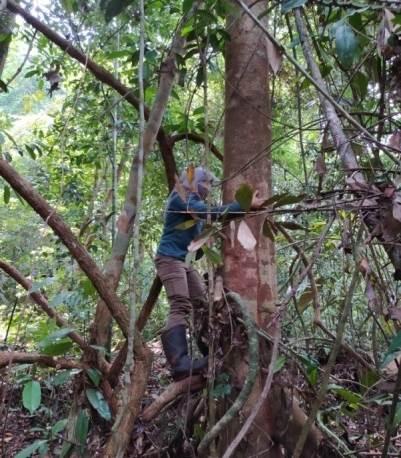
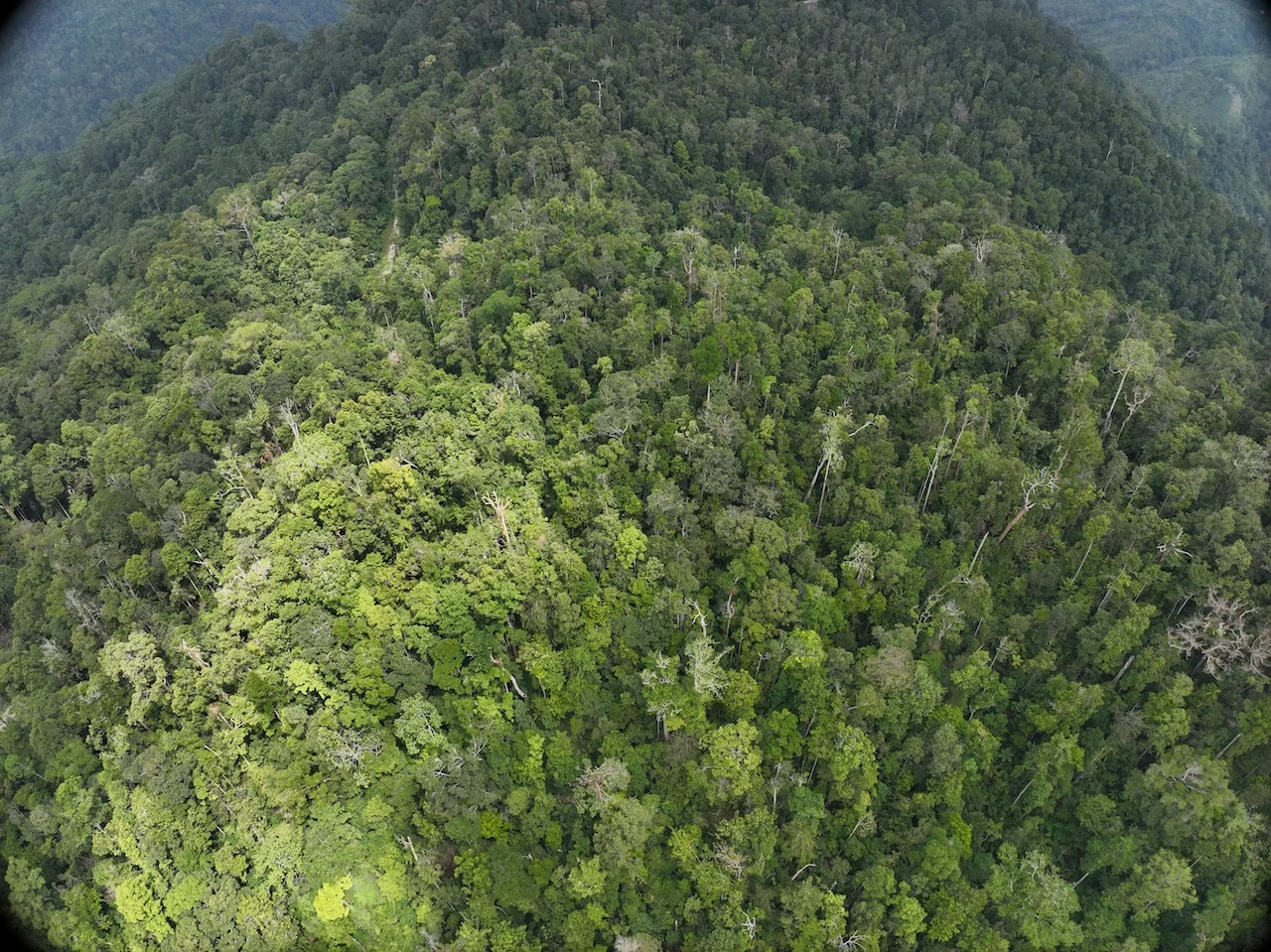
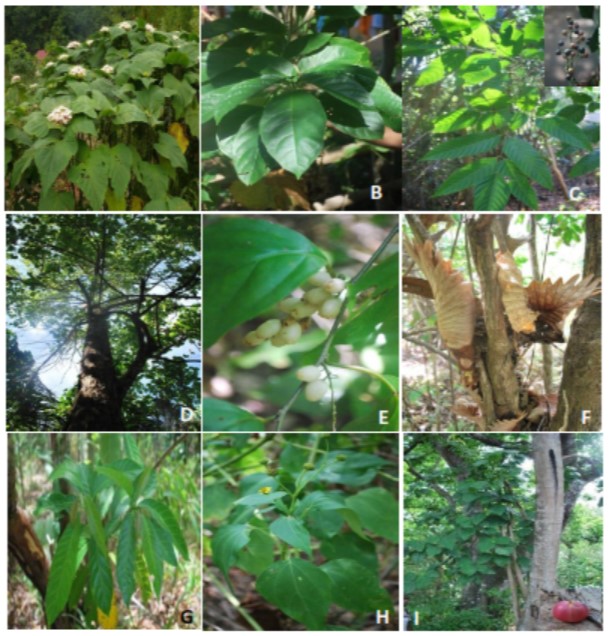
The purpose of this research was to determine the potential diversity of medicinal plants in the coastal forests of Tangkoko Nature Reserve. The research was conducted in August and September 2009. The data were obtained through deep interviews with people who use herbs from the Tangkoko coastal forest. Field observations carried out to see what kind of herbs that are known by a list of medicinal plant species interviews. Data were analyzed descriptively and presented in tabular form or image. The results showed there are at least 45 species from Tangkoko coastal forest used in traditional medicine in community village of Batu Putih. Forty-five plant species were grouped into 31 Family which types of Family Euphorbiaceae had the highest number of species are 6 types. Based on habitus, known 25 species classified as trees, 10 species of shrubs, 7 types of herb and 3 types included in the vines. The several types of medical plants are often used consist of Epipremium elegans Engl used for injury., Ear inflammation using Canarium asperum Benth, thrush using Adenostema sp., kidney using Arenga pinata Wurmb Merr, or Callophyllum inophyllum L.), and herb for the treatment of postpartum (Eltingera rosea BLBurtt & RMSm.).
Copyright (c) 2015 Jurnal Wasian

This work is licensed under a Creative Commons Attribution-NonCommercial 4.0 International License.
Copyright and License
All articles published in Wasian Journal are the property of the authors. By submitting an article to Wasian Journal, authors agree to the following terms:
-
Copyright Ownership: The author(s) retain copyright and full publishing rights without restrictions. Authors grant the journal the right to publish the work first and to distribute it as open access under a Creative Commons Attribution 4.0 International License (CC BY 4.0).
-
Licensing: Articles published in Wasian Journal are licensed under a Creative Commons Attribution 4.0 International License (CC BY 4.0). This license allows others to share, copy, and redistribute the material in any medium or format, and adapt, remix, transform, and build upon the material for any purpose, even commercially, provided that proper credit is given to the original author(s) and the source of the material

This work is licensed under a Creative Commons Attribution 4.0 International License. -
Author's Rights: Authors are permitted and encouraged to post their work online (e.g., in institutional repositories or on their website) prior to and during the submission process, as it can lead to productive exchanges and greater citation of published work.
-
Third-Party Content: If your article contains material (e.g., images, tables, or figures) for which you do not hold copyright, you must obtain permission from the copyright holder to use the material in your article. This permission must include the right for you to grant the journal the rights described above.
-
Reprints and Distribution: Authors have the right to distribute the final published version of their work (e.g., post it to an institutional repository or publish it in a book), provided that the original publication in Wasian Journal is acknowledged.
For the reader you are free to:
- Share — copy and redistribute the material in any medium or format for any purpose, even commercially.
- Adapt — remix, transform, and build upon the material for any purpose, even commercially.
- The licensor cannot revoke these freedoms as long as you follow the license terms.
Under the following terms:
- Attribution — You must give appropriate credit , provide a link to the license, and indicate if changes were made . You may do so in any reasonable manner, but not in any way that suggests the licensor endorses you or your use.
- No additional restrictions — You may not apply legal terms or technological measures that legally restrict others from doing anything the license permits.
Notices:
You do not have to comply with the license for elements of the material in the public domain or where your use is permitted by an applicable exception or limitation .
No warranties are given. The license may not give you all of the permissions necessary for your intended use. For example, other rights such as publicity, privacy, or moral rightsmay limit how you use the material.
相似文章
- The Effect of Tree Shade and Pruning Techniques on Screw Tree (Helicteres isora Linn.) Fruit Productivity in the Natural Habitat View PDF
- Revealing Carbon Patterns Across Mangrove Density Variations Using Sentinel-2 NDVI View PDF
- Perception of Local Community of Pinogu Toward Forest and Its Utilization View PDF
- The Potential of Vegetation Species Diversity for Ecotorourism Development at Nature Reserve of Panjalu Lake View PDF
- Study of Light Intensity in Riparian Zone of Teak Production Forest in KHDTK Cemoro Modang View PDF
- Ethnic Influence Against Land Use Patterns and Its Contribution to Community Income in The Aketajawe Lolobata National Park (Pengaruh Etnis Terhadap Pola Pemanfaatan Lahan Dan Kontribusinya Bagi Pendapatan Masyarakat Di Taman Nasional Aketajawe Lolobata)
您也可以开始高级相似性搜索此文章。
同一作者最受欢迎的文章
- Wildlife Diversity for Ecotourism at Aqua Lestari Forest Park, North Minahasa View PDF
- Prefered Feed of Anoa (Bubalus sp.) at Manado Forestry Research Institute Captivity View PDF
- Birds Species of Rallidae Family in Forestry and Environment Research and Development Institute of Manado View PDF
- Perception of Local Community of Pinogu Toward Forest and Its Utilization View PDF
- Identification of Sampiri Birds Colonies Roosting Tree Species in Karakelang Island Talaud Islands North Sulawesi View PDF