Evaluation of Vegetation and Wildlife in Gunung Ambang Nature Reserve

Abstract
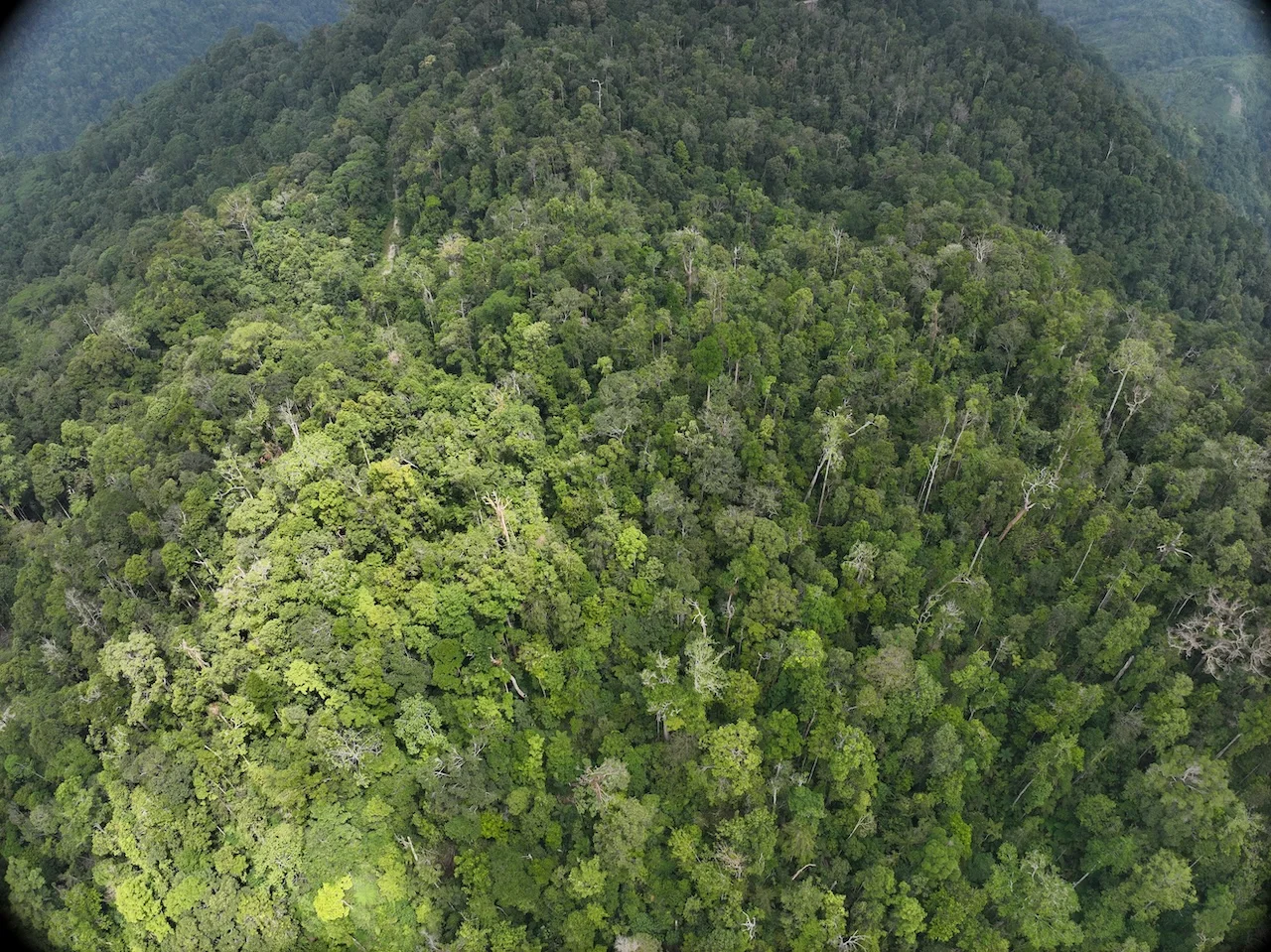
The objective of this research is to evaluate the ecosystem functions through vegetation and wildlife indicators. Methods used are vegetation analysis and direct indirect method to count wildlife . Results show that the dominant type of land coverage in Gunung Ambang Nature Reserve is open secondary forest, where shrubs, rattan, and epiphytes dominated. This might lead to vulnerability of the site toward disturbance. Furthermore, it was indicated that this area still contains local wildlife species such as Babyrousa babyrussa celebensis. Eventhough land degradation has become a significant issue, the status of Gunung Ambang as nature reserve has limited restoration attempts both vegetatively and mechanically.
Copyright (c) 2014 Jurnal Wasian

This work is licensed under a Creative Commons Attribution-NonCommercial 4.0 International License.
Copyright and License
All articles published in Wasian Journal are the property of the authors. By submitting an article to Wasian Journal, authors agree to the following terms:
-
Copyright Ownership: The author(s) retain copyright and full publishing rights without restrictions. Authors grant the journal the right to publish the work first and to distribute it as open access under a Creative Commons Attribution 4.0 International License (CC BY 4.0).
-
Licensing: Articles published in Wasian Journal are licensed under a Creative Commons Attribution 4.0 International License (CC BY 4.0). This license allows others to share, copy, and redistribute the material in any medium or format, and adapt, remix, transform, and build upon the material for any purpose, even commercially, provided that proper credit is given to the original author(s) and the source of the material

This work is licensed under a Creative Commons Attribution 4.0 International License. -
Author's Rights: Authors are permitted and encouraged to post their work online (e.g., in institutional repositories or on their website) prior to and during the submission process, as it can lead to productive exchanges and greater citation of published work.
-
Third-Party Content: If your article contains material (e.g., images, tables, or figures) for which you do not hold copyright, you must obtain permission from the copyright holder to use the material in your article. This permission must include the right for you to grant the journal the rights described above.
-
Reprints and Distribution: Authors have the right to distribute the final published version of their work (e.g., post it to an institutional repository or publish it in a book), provided that the original publication in Wasian Journal is acknowledged.
For the reader you are free to:
- Share — copy and redistribute the material in any medium or format for any purpose, even commercially.
- Adapt — remix, transform, and build upon the material for any purpose, even commercially.
- The licensor cannot revoke these freedoms as long as you follow the license terms.
Under the following terms:
- Attribution — You must give appropriate credit , provide a link to the license, and indicate if changes were made . You may do so in any reasonable manner, but not in any way that suggests the licensor endorses you or your use.
- No additional restrictions — You may not apply legal terms or technological measures that legally restrict others from doing anything the license permits.
Notices:
You do not have to comply with the license for elements of the material in the public domain or where your use is permitted by an applicable exception or limitation .
No warranties are given. The license may not give you all of the permissions necessary for your intended use. For example, other rights such as publicity, privacy, or moral rightsmay limit how you use the material.
Similar Articles
- Nurlita Indah Wahyuni, Yermias Kafiar, Species Composition and Structure of Secondary Forest at Nunuka, North Bolaang Mongondow , Jurnal Wasian: Vol. 4 No. 1 (2017): June
- Supratman Tabba, Nurlita Indah Wahyuni, Hendra Susanto Mokodompit, Composition and Structure of Tiwoho Mangrove Vegetation at Bunaken National Parkional Park (Komposisi Dan Struktur Vegetasi Mangrove Tiwoho di Kawasan Taman Nasional Bunaken) , Jurnal Wasian: Vol. 2 No. 2 (2015): December
- Andes Hamuraby Rozak, Destri Destri, Zaenal Mutaqien, Tree Biomass Estimation in Karst Forest of West Papua, Indonesia , Jurnal Wasian: Vol. 8 No. 2 (2021): December
- Ulfah Karmila Sari, Bina Swasta Sitepu, Mukhlisi Mukhlisi, Puji Mulyanto, Floristic Composition and Soil Characteristics in Muara Kaman Sedulang Nature Reserve, East Kalimantan , Jurnal Wasian: Vol. 8 No. 1 (2021): June
- Nurlita Indah Wahyuni , Hendra Susanto Mokodompit, Structure, Composition and Diversity of Tree Species at Inobonto Poigar I Production Forest, Forest Management Unit of Poigar, North Sulawesi , Jurnal Wasian: Vol. 3 No. 1 (2016): June
- Widyanti Utami A, Irlan Irlan, Nur Hilal A Syahrir, Rosmaeni Rosmaeni, Will Indonesia's Forests Survive Development Pressure? Machine Learning Predictions for Energy-Critical Tropical Watersheds , Jurnal Wasian: Vol. 12 No. 01 (2025): June
- Abdul Haris Mustari, Achmad Fajar Pasaribu, Habitat Characteristics and Population of Javan Langur (Trachypithecus Auratus E. Geoffroy Saint-Hilaire, 1812) In Leuweung Sancang Nature Reserve, Garut, West Java , Jurnal Wasian: Vol. 6 No. 2 (2019): December
- Supratman Tabba, Lis Nurrani, Distribution of Avifauna in Aketajawe Lolobata National Park Based on Zone and Land Cover Typology , Jurnal Wasian: Vol. 3 No. 1 (2016): June
- Sri Arfiani Rahim Sila, S.Hut., M.Hut, Andi Ridha Yayank Wijayanti, S.Hut., M.Hut, DR. hasanuddin Molo, MP, Community-based Strategies for Optimising Mangrove Forest Tourism Management in Balang Baru Village, Jeneponto Regency , Jurnal Wasian: Vol. 12 No. 02 (2025): December
- Diah Irawati Dwi Arini, Julianus Kinho, Melkianus S Diwi, Margareta Christita, Jafred E Halawane, Muhammad F Fahmi, Yermias Kafiar, Wildlife Diversity for Ecotourism at Aqua Lestari Forest Park, North Minahasa , Jurnal Wasian: Vol. 5 No. 1 (2018): June
You may also start an advanced similarity search for this article.