Conflict Mapping of Gunung Ciremai National Park in Cisantana Village, Cigugur, Kuningan, West Java

Abstract
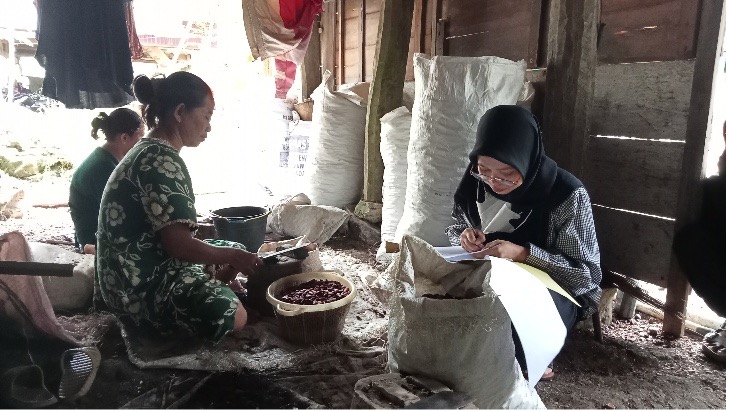
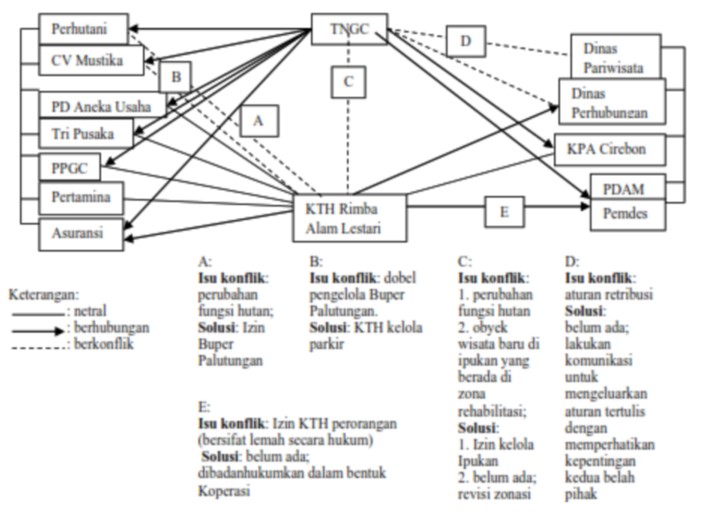
The purpose of this study is to conflict mapping, explain conflict style of stakeholder and choices of conflict resolution. This study was conducted in February 2017 in Cisantana Village, Kuningan Regency. Data were collected through participatory rural appraisal; interviews, field observation, documentation and focus group discussions. The study method was used Rapid Land Tenure Assessment (RaTA) and Dispute Style Analysis (AGATA). The results showed that the dominant conflict in TNGC was the change of forest status which affected the economic activities of the community around TNGC, that involved eight dominant actor. In a conflict, the stakeholder has a different style of dispute. The stakeholders was facilitated and mediated to propose a permit to manage Patulungan (parking management), and a permit to manage Ipukan (tourism guide). In this case, the role of outsiders who do not have a conflict relationship is needed in order to realize conflict resolution.
Copyright (c) 2020 Jurnal Wasian

This work is licensed under a Creative Commons Attribution-NonCommercial 4.0 International License.
Copyright and License
All articles published in Wasian Journal are the property of the authors. By submitting an article to Wasian Journal, authors agree to the following terms:
-
Copyright Ownership: The author(s) retain copyright and full publishing rights without restrictions. Authors grant the journal the right to publish the work first and to distribute it as open access under a Creative Commons Attribution 4.0 International License (CC BY 4.0).
-
Licensing: Articles published in Wasian Journal are licensed under a Creative Commons Attribution 4.0 International License (CC BY 4.0). This license allows others to share, copy, and redistribute the material in any medium or format, and adapt, remix, transform, and build upon the material for any purpose, even commercially, provided that proper credit is given to the original author(s) and the source of the material

This work is licensed under a Creative Commons Attribution 4.0 International License. -
Author's Rights: Authors are permitted and encouraged to post their work online (e.g., in institutional repositories or on their website) prior to and during the submission process, as it can lead to productive exchanges and greater citation of published work.
-
Third-Party Content: If your article contains material (e.g., images, tables, or figures) for which you do not hold copyright, you must obtain permission from the copyright holder to use the material in your article. This permission must include the right for you to grant the journal the rights described above.
-
Reprints and Distribution: Authors have the right to distribute the final published version of their work (e.g., post it to an institutional repository or publish it in a book), provided that the original publication in Wasian Journal is acknowledged.
For the reader you are free to:
- Share — copy and redistribute the material in any medium or format for any purpose, even commercially.
- Adapt — remix, transform, and build upon the material for any purpose, even commercially.
- The licensor cannot revoke these freedoms as long as you follow the license terms.
Under the following terms:
- Attribution — You must give appropriate credit , provide a link to the license, and indicate if changes were made . You may do so in any reasonable manner, but not in any way that suggests the licensor endorses you or your use.
- No additional restrictions — You may not apply legal terms or technological measures that legally restrict others from doing anything the license permits.
Notices:
You do not have to comply with the license for elements of the material in the public domain or where your use is permitted by an applicable exception or limitation .
No warranties are given. The license may not give you all of the permissions necessary for your intended use. For example, other rights such as publicity, privacy, or moral rightsmay limit how you use the material.
相似文章
- Development Strategy of Masoi (Cryptocarya massoia (Oken) Kosterm.) as Non-Timber Forest Products in Teluk Bintuni, West Papua With SWOT Analysis View PDF
- Analysis of Vulnerability Levels to the Flash Flood Based on Social Economic and Institutional Factors in Wasior, Teluk Wondama, West Papua View PDF
- Diversity of Medicinal Plants on Coastal Forest in Tangkoko Natural Reserve View PDF
- Analysis of Characteristics and Typology of Mapili Watershed West Sulawesi Province View PDF
- Perception of Local Community of Pinogu Toward Forest and Its Utilization View PDF
- Deforestation Trends and Drivers in Central Halmahera Regency View PDF
您也可以开始高级相似性搜索此文章。
同一作者最受欢迎的文章
- Processing and Added Value of Bamboo in Tasikmalaya, West Java View PDF
- The Effectiveness of Private Forest Institutional and Policy in Banjarnegara and Banyumas Regency View PDF