Ecotourism Management of Oelsonbai Forest in Circular Economy Perspective: Community Participation, Economic Value, and Sustainability Opportunities

 ridw010@brin.go.id
Abstract
The Oelsonbai Forest Area in Kupang City, East Nusa Tenggara, represents the only science-based forest tourism destination in the city. The management of this area holds significant potential for optimization through a circular economy approach to support ecosystem sustainability and improve local community welfare. This study aims to (1) analyze the level of community participation in the ecotourism management of Oelsonbai Forest, (2) estimate the economic value of the area using the Travel Cost Method (TCM), and (3) evaluate the implementation of circular economy principles in area governance. The study was conducted in May and November 2021 using a mixed methods approach, combining structured questionnaire surveys with 142 respondents, in-depth interviews with stakeholders, and field observations. Results indicate that 70.59% of community respondents exhibited low participation in area management. The estimated consumer surplus was approximately IDR 2,070,415 per visit. Using 1,344 recorded visits during 2011–2020, the aggregate recreational economic value was estimated at approximately IDR 2.78 billion. This estimate provides an economic reference for informing, but not independently determining, non-tax state revenue (PNBP)-based entrance-fee policy. Evaluation of circular economy practices revealed measurable gaps in waste and water management: 49% of respondents reported that waste sorting had not been implemented, while 0% of nursery irrigation demand was met from non-groundwater sources because irrigation relied entirely on groundwater. This study recommends strengthening community participation through empowerment as certified tour guides, establishing economically based retribution systems, and adopting closed-loop resource management. These findings contribute to the development of an urban forest ecotourism model integrated with circular economy principles as a foundation for sustainable forest area management.
1. Introduction
Pressure on global natural resources continues to increase alongside population growth, urbanization, and economic expansion that drive massive increases in material consumption. The linear economic model dominated by a take–make–dispose pattern has resulted in excessive exploitation of natural resources, increased waste production, and ecosystem degradation that is increasingly difficult to reverse (Kirchherr et al., 2017). Conventional development approaches oriented towards resource extraction without considering ecological carrying capacity are considered incapable of guaranteeing long-term environmental sustainability. Within this context, the circular economy has emerged as an alternative paradigm that emphasizes resource-use efficiency, waste reduction, material cycle extension, and the regeneration of natural systems through a closed-loop system approach (Ellen MacArthur, 2013). This paradigm is increasingly adopted across various development sectors because it is considered capable of simultaneously integrating economic, social, and environmental objectives.
In the tourism sector, the urgency of implementing a circular economy is becoming increasingly important, as tourism activities frequently generate ecological pressure in the form of increased waste generation, high energy and water consumption, landscape change, and degradation of the environmental quality of tourist destinations (Erdiaw-Kwasie et al., 2023; Rodríguez et al., 2020; UNWTO, 2022). In many developing countries, tourism sector growth that is not accompanied by adequate environmental governance instead increases the risk of ecosystem damage and conflicts over natural resource utilization (Baloch et al., 2023; Cui, 2025; Nathaniel & Adedoyin, 2022). Consequently, various studies have begun to emphasize the importance of transforming tourism governance toward a more sustainable and regenerative approach through the integration of circular economy principles into destination management (Tomassini & Cavagnaro, 2022).
Ecotourism represents one form of tourism with the greatest potential to internalize circular economy principles. The International Ecotourism Society defines ecotourism as responsible travel to natural areas that supports environmental conservation, improves the well-being of local communities, and involves interpretation and environmental education (Beeton, 2025). As part of sustainable tourism, ecotourism is not only oriented toward recreational and aesthetic value but also integrates conservation functions, community economic empowerment, and local cultural preservation (Stronza et al., 2019). In the context of a megadiverse country such as Indonesia, ecotourism holds a strategic position as an alternative approach to conservation area management capable of generating economic benefits while minimizing pressure on ecosystems (Birawa & Sukarna, 2016).
Numerous studies indicate that the success of ecotourism management is strongly influenced by the quality of natural resources, the institutional capacity of managers, and the level of local community participation in area management (Stronza et al., 2019; Wearing & Schweinsberg, 2018). Ecotourism destinations that successfully engage communities within the tourism value chain tend to exhibit higher levels of sustainability, as communities derive direct economic benefits from the existence of the conservation area. Conversely, weak community participation often results in a diminished sense of ownership toward the area, thereby triggering weak social support for conservation programs (Ramadoan et al., 2013). Consequently, the social dimension of ecotourism management constitutes a critical element determining the long-term effectiveness of area governance.
In recent years, the concept of the circular economy has begun to be integrated into ecotourism management practices. Several studies state that circular economy principles in ecotourism can be implemented through 3R-based (reduce, reuse, recycle) waste management, efficient energy and water use, the utilization of sustainable local products, and the reinvestment of tourism revenue to support ecosystem conservation (Hutsaliuk et al., 2021; Manniche et al., 2021; Strippoli et al., 2024; Wiryawan et al., 2025). A meta-synthesis study demonstrates that the integration of the circular economy into destination management is positively correlated with increased regional economic resilience, resource-use efficiency, and long-term visitor satisfaction (Motevali et al., 2022). In forest-based tourism areas, circular economy implementation can be realized through the utilization of organic waste as compost, rainwater harvesting systems, the use of renewable energy, and the sustainable optimization of local resources (Kurtagić, 2018; Pan et al., 2018). This approach is particularly important because forest tourism areas are fundamentally socio-ecological systems highly dependent on maintaining a balance between conservation functions and economic utilization.
Indonesia possesses substantial potential for the development of conservation-based ecotourism, supported by its high biodiversity and the presence of various conservation forest areas distributed across the country (Kementrian Pariwisata dan Ekonomi Kreatif, 2023). One area with unique characteristics is the Oelsonbai Forest Area in Kupang City, East Nusa Tenggara (NTT) Province. Covering 20.25 hectares, this area constitutes the only forest-based scientific tourism destination within the urban area of Kupang, functioning as a living laboratory for forestry research, ex-situ conservation, environmental education, and the development of conservation-based scientific tourism (Aryantie et al., 2023; BPKH, 2020). These characteristics render the Oelsonbai Forest Area not only ecologically important but also strategically significant as a space for environmental learning and the development of a sustainable urban forest management model.
The primary attractions of the Oelsonbai Forest Area include a Timor deer (Rusa timorensis) breeding facility, conservation of the critically endangered Roti Island snake-necked turtle (Chelodina mccordi), a sandalwood (Santalum album) nursery, and a birdwatching trail that has recorded 41 bird species from 23 families, of which approximately 23% are endemic to Timor (Aryantie et al., 2023; Hidayat, 2016; IUCN, 2018). This biodiversity potential offers substantial opportunities for the development of conservation-based educational tourism, particularly within the still relatively limited context of urban forest ecotourism in Indonesia (Ardiansyah et al., 2025; Sari et al., 2025). In addition to its conservation function, the area also holds potential to support local economic development through the expansion of nature tourism services, environmental education, and research activities. According to regulations (SNI 8513:2018, Ministry of Environment and Forestry Decree No. 7/2021), the management of KHDTK areas is not based on zoning. However, for specific research purposes, managers designate restricted areas, such as animal breeding enclosures, that are close to visitors. These areas are accessible only to researchers and interns, whereas general tourists can enjoy visiting open enclosures or display ponds.
Despite its high ecological and educational potential, the management of the Oelsonbai Forest Area continues to face various structural challenges. Previous studies indicate low involvement of surrounding communities in area governance, the underdeveloped nature of financing mechanisms based on the area's economic value, and limited implementation of circular economy principles in area operations, including waste management, water-use efficiency, and the productive utilization of organic waste (Aryantie et al., 2021). Deficiencies in cleanliness (waste management) were also reported in a previous study (Herningtyas et al., 2022). These conditions indicate a gap between the area's ecological potential and its management capacity to support long-term sustainability. Within the context of urban conservation areas, this challenge becomes increasingly complex given the high pressure from human activity and the limited ecological space available in urban regions.
Beyond governance aspects, the development of ecotourism areas also requires an understanding of the economic value of the environmental services the area generates. Economic valuation of natural tourism areas constitutes an important instrument in supporting the justification of conservation investment, the development of retribution policies, and the formulation of sustainability-based management strategies (Champ et al., 2017). One widely used approach is the Travel Cost Method (TCM), a revealed-preference method that estimates the economic value of an area based on the costs incurred by visitors to obtain a tourism experience (Freeman III et al., 2014). Within the context of conservation areas, economic value estimation through TCM can serve as an empirical basis for developing conservation financing policies and optimizing non-tax state revenue (PNBP/ Penerimaan Negara Bukan Pajak).
Research on the Oelsonbai Forest Area has thus far remained sectoral and partial in nature. Several studies have focused on biodiversity potential and birdwatching as tourist attractions (Aryantie et al., 2023; Hidayat, 2016), while other research has examined visitor characteristics and the area's scientific tourism potential (Aryantie et al., 2021; Herningtyas et al., 2022). However, no study has yet comprehensively integrated the social, economic, and environmental dimensions into a single analytical framework for circular-economy-based ecotourism management. Most prior studies have also failed to connect community participation, area economic valuation, and circular economy implementation as interlinked elements within the urban conservation area management system. The absence of this integrative approach has caused area management strategies to proceed fragmentarily, unable to produce an adaptive and sustainable governance model.
Based on these conditions, this study develops an integrative analytical framework connecting three primary dimensions of sustainable ecotourism management: the social dimension, through analysis of local community participation; the economic dimension, through estimation of the area's recreational economic value using the Travel Cost Method (TCM); and the environmental dimension, through evaluation of circular economy principal implementation in area operations. The integration of these three dimensions constitutes the primary contribution of this study in extending the urban forest ecotourism management approach, particularly in scientific conservation areas within semi-arid regions such as East Nusa Tenggara. Thus, this study offers not only an empirical contribution to the development of a circular-economy-based ecotourism management model but also strengthens a forest area governance approach that simultaneously integrates ecological, economic, and social aspects.
The urgency of this research is increasingly relevant within the context of achieving the Sustainable Development Goals (SDGs), particularly SDG 11 concerning sustainable cities and communities and SDG 15 concerning the protection of terrestrial ecosystems (United Nations, 2024). The development of a circular-economy-based ecotourism management model in urban forest areas is expected to serve as an alternative strategy for maintaining urban ecosystem sustainability while enhancing economic benefits for local communities. Accordingly, the findings of this study are expected to provide a theoretical contribution to the development of sustainable ecotourism and circular economy studies, while also providing an empirical basis for formulating more participatory, adaptive, and sustainable urban conservation area management policies.
2. Research Method
1) Research Location and Time
This study was conducted in the Oelsonbai Forest Area, Fatukoa Sub-district, Kupang City, East Nusa Tenggara Province (10°10′S, 123°37′E) (Figure 1). Covering 20.25 hectares, the area is in the northern part of Kupang City and functions as a forest area for education and training managed by the Ministry of Forestry. Data collection was conducted in two stages: the first in May 2021 (initial post-pandemic conditions) and the second in November 2021 (data verification and completion).
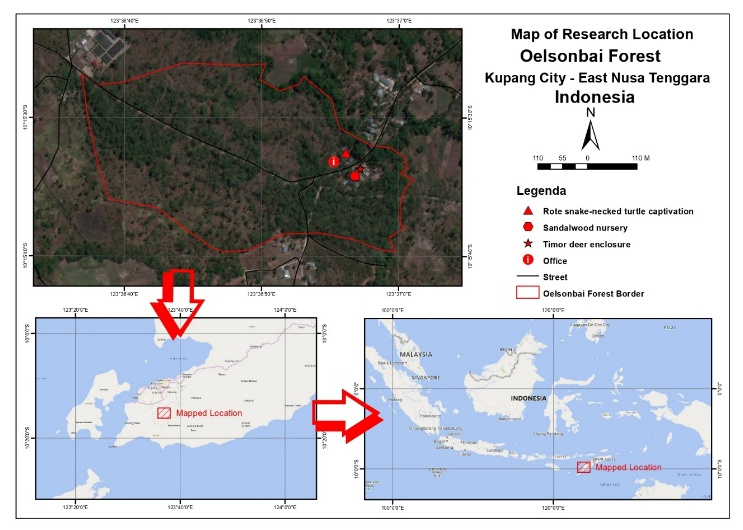
Figure 1. Research location.
2) Research Design and Approach
This study employed mixed methods of research design with a sequential explanatory approach (Creswell & Creswell, 2018). In the first stage, quantitative data was collected through a structured questionnaire survey, which were subsequently interpreted and elaborated using qualitative data obtained from in-depth interviews and field observations conducted in the second stage.
3) Data Collection
Sample and Respondents
This study involved two primary respondent groups. First, visitors to the Oelsonbai Forest Area (n = 142), selected using on-site accidental sampling for economic value analysis and facility evaluation. Because visitors were sampled at the destination, the visitor sample is subject to potential left truncation of the visit-frequency distribution (V ≥ 1) and endogenous stratification, whereby visitors with higher visitation frequency may have a greater probability of being sampled. Second, communities residing around the area (n = 34), selected using purposive sampling based on the proximity of their residence to the area boundary, for participation analysis.
Data Collection Instruments
Primary data were collected through: (a) a structured questionnaire covering questions on sociodemographic characteristics, travel costs, visit frequency, perceptions of the area, and evaluations of area facilities and management; (b) semi-structured interviews with area managers and relevant stakeholders; and (c) field observations of facility conditions and management practices. Secondary data were sourced from the Oelsonbai Forest Area 2020–2039 long-term management plan document (BPKH, 2020) and historical visitation data for 2011–2020. The historical visitation records were used to obtain the total number of recorded visits during the 2011–2020 valuation period. The observed total of 1,344 visits was subsequently used to estimate the aggregate recreational economic value (Table 1).
Table 1. Recorded visits to Oelsonbai Forest, 2011–2020

4) Data Analysis
Community Participation Analysis
Community participation was assessed using a structured questionnaire adapted from (Ramadoan et al., 2013). The questionnaire captured respondents’ involvement in activities and management discussions at Oelsonbai Forest, as well as the benefits they received. Participation in activities and discussions was measured using a five-point ordinal scale, from 1 (never involved) to 5 (very frequently involved). The responses were analyzed descriptively to characterize the level and pattern of community participation.
Economic Value Analysis (Travel Cost Method)
Estimation of the recreational economic value of Oelsonbai Forest employed the Individual Travel Cost Method (ITCM). Because the dependent variable represents a positive count of visits (V ≥ 1) obtained from on-site visitor sampling, a zero-truncated Poisson (ZTP) regression model was specified. The conditional expected number of visits was expressed as (Hellerstein, 1991):
E(Vi∣Xi,Vi≥1)=exp(β0+β1TCi+β2AGEi+β3INCi+β4EDUi+β5DURi+β6PERi) (1)
where is the number of visits by respondent , is travel cost, is age, is income, is education, is visit duration, and is visitor perception. The dependent variable was assumed to follow a zero-truncated Poisson distribution conditional on the explanatory variables.
The ZTP specification was selected after assessing the dispersion of the visit-frequency data against a Negative Binomial alternative. The likelihood-ratio test of the Negative Binomial dispersion parameter did not provide evidence of overdispersion; therefore, the Negative Binomial specification was not retained.
Travel cost represents the price of access to the recreation site and was defined according to the monetary travel expenditure reported by respondents. The treatment of travel time and any associated opportunity cost is reported explicitly to ensure transparency of the travel-cost construction (Parsons, 2017).
Because the survey did not collect travel costs or other price measures for substitute recreation sites, an explicit substitute-site price variable could not be included. This omission may introduce omitted-variable bias in the estimated travel-cost coefficient and may result in an upward bias in the estimated recreational welfare value if substitute-site costs are positively correlated with own-site travel costs (Parsons, 2017).
Given the on-site sampling design, the estimated visit-frequency model may also be affected by truncation and endogenous stratification. No retrospective correction was applied because the study did not collect the sampling-frame information required to identify the corresponding population distribution. Accordingly, the estimated travel-cost coefficient and derived welfare estimates are interpreted as sample-based estimates subject to these limitations.
Evaluation of Circular Economy Implementation
The evaluation was conducted using a standards-based audit matrix developed from the Community Service Standards for Natural Tourism Public Facilities (KLHK, 2017) and SNI 8513:2018 for the Management of Forest Areas with Special Purposes (KHDTK/ Kawasan Hutan dengan Tujuan Khusus) (BSN, 2018). The audit assessed waste management, water management, energy use, and organic-resource utilization. For each parameter, the applicable standard or clause, observed field condition, compliance status, and evidence source were recorded. Compliance was classified as compliant, partially compliant, or non-compliant based on the correspondence between observed conditions and the applicable standard.
3. Result and Discussion
1) Respondent Characteristics
Of the 142 visitor respondents, the majority belonged to the productive age group (18–35 years, 63.4%), were male (58.5%), and held a bachelor's degree (47.2%). Visitors were dominated by researchers and students, consistent with the scientific-tourism character of the destination. The observed visit-frequency distribution ranged from one to six visits, with 40.14% of respondents reporting one or two visits. The average visit duration was 2.4 hours, with an average travel distance of 8.7 km from place of residence. Meanwhile, of the 34 surrounding community respondents, 82.4% were male, aged 25–55 years, with the majority working as farmers or informal laborers.
2) Community Participation in Oelsonbai Forest Management
The results indicate limited community involvement in the management of Oelsonbai Forest (Table 2). Among the 34 respondents, 24 (70.59%) reported never having participated in discussions or meetings organized by the forest managers. Ten respondents (29.41%) reported some degree of participation, although none reported very frequent involvement. These findings suggest that opportunities for direct community involvement in forest management remained limited during the study period.
Table 2. Level of community participation surrounding the Oelsonbai Forest Area
This low level of participation reflects minimal integration of surrounding communities within the area management chain. Based on interview results, at least three primary contributing factors were identified: first, the limited formal mechanisms providing opportunities for community involvement in decision-making; second, the community's insufficient knowledge of the potential economic benefits obtainable from the area; and third, the absence of a structured empowerment program to convert local labor potential into productive capacity.
This finding is consistent with previous studies identifying low community participation in forest area management as a systemic challenge requiring institutional intervention rather than merely socialization efforts (Stronza et al., 2019). Based on interviews conducted, the Oelsonbai Forest Area managers themselves have identified the need for four additional operational staff, which could concretely be fulfilled through the recruitment and training of residents as certified tour guides in accordance with SNI 8513:2018 (BSN, 2018).
A relevant empowerment model could adapt to a co-management approach, in which communities are not merely objects of benefit reception but act as active partners in management (Wearing & Schweinsberg, 2018). Institutionally, the manager of KHDTK is required to involve the community in the management of the area (Ministry of Environment and Forestry Decree No. 7/2021, Article 448, Paragraph (2)) and may collaborate with the community (Article 455, Paragraph (3)). Cooperation agreements are subject to approval by an official from the Ministry of Forestry. Previous studies indicate that community engagement can take various forms. (Waskitho, 2022) involved residents in selecting agroforestry crops, specifically coffee, for cultivation within KHDTK Universitas Muhammadiyah Malang (UMM). Ariyanto et al. (2021) engaged residents in honeybee farming at KHDTK Universitas Negeri Surakarta (UNS) Gunung Bromo in Karanganyar. Pujihartati and Wijaya (2023) noted that the presence of KHDTK Gunung Bromo has an amplifying effect, attracting tourists and boosting the income of the surrounding community. Within the Oelsonbai context, empowerment could begin with training in nature interpretation and birdwatching guiding, given that the birdwatching trail represents a new ecotourism product requiring specialized human resource knowledge (Aryantie et al., 2023).
3) Economic Value of the Area: Travel Cost Method Estimation
The results of the TCM regression model estimation using 142 visitor respondents are presented in Table 3. The model was statistically significant overall (McFadden Pseudo-R² = 0.0790; LR test, p < 0.001)
Table 3. Estimation results of the travel cost model
Note: *** significant at α = 1%; ** significant at α = 5%; * significant at α = 10%; ns = not significant; n = 142; McFadden Pseudo-R² = 0.0790.
Four variables exhibited significant effects on visit frequency: travel cost (TC, p < 0.05), age (p < 0.10), duration of visit (p < 0.01), and visitor perception (p < 0.05). The negative travel cost coefficient (βTC = −4.830 × 10⁻⁷) is consistent with the law of demand. In the log-link count model, an increase in travel cost of IDR 1,000,000 is associated with a multiplicative factor of exp (−0.483) = 0.617 in expected visit frequency, corresponding to an estimated 38.3% decrease, ceteris paribus. The positive and significant duration-of-visit coefficient (β = 0.297) indicates that longer visits are associated with higher expected visit frequency, ceteris paribus.
Table 4. Estimated consumer surplus and recreational economic value of Oelsonbai Forest visitors, 2011–2020
The estimated consumer surplus was approximately IDR 2,070,415 per visit, based on the negative travel-cost coefficient obtained from the zero-truncated Poisson model. Using the 1,344 actual visits recorded during 2011–2020, the aggregate recreational economic value of Oelsonbai Forest was estimated at approximately IDR 2.78 billion. This estimate represents the recreational welfare value associated with visits to the site as revealed through the travel-cost model.
From a policy perspective, the estimated consumer surplus provides an economic reference for entrance-fee policy, but it should not be interpreted as a directly applicable tariff or as a stated willingness-to-pay value. Any entrance fee level should be assessed against the estimated welfare value, the applicable price base, site-management costs, conservation requirements, and visitor carrying capacity. Revenue generated from an entrance fee could potentially be reinvested in site operations, community empowerment, and infrastructure improvements, thereby supporting a value-retention cycle consistent with circular economy principles. Determining the fee also requires consideration of the Oelsonbai environmental carrying capacity. Aryantie et al. (2021) calculated visitor limits based on the reproductive periods of the Rote turtle and the Timor deer. Aryantie et al. (2021) also categorized visitors into general tourists (sightseers) and scientific visitors (researchers/ students). The effective carrying capacity (ECC) results indicate that the Rote turtle sites can accommodate 2–9 visitors per day, while the Timor deer sites can accommodate 3–20 visitors per day. However, both attractions are closed to the public during mating and reproductive seasons.
Visitor perception was negatively associated with visit frequency (β = −0.018, p < 0.05). This finding should be interpreted cautiously and does not support the inference that improving visitor satisfaction would necessarily increase repeat visits. Further investigation is required to identify the mechanisms underlying this negative association and to determine whether improvements in service quality and facilities would increase visitation frequency.
4) Evaluation of Circular Economy Implementation in Oelsonbai Forest
The implementation of circular economy principles in the Oelsonbai Forest Area was evaluated using a standards-based audit that compared observed management conditions with the Community Service Standards for Natural Tourism Public Facilities (SPM-FP) and SNI 8513:2018 for the KHDTK. The assessment focused on waste management, water management, energy use, and organic-resource utilization, with each parameter evaluated based on the applicable standard, observed field condition, compliance status, and available evidence. The results provide a structured baseline for identifying management gaps and opportunities for strengthening circular resource flows within the area.
Table 5. Standards-based audit of circular economy-related management practices at Oelsonbai Forest
Waste Management
Evaluation of waste management indicates conditions that remain far from the standards for sustainability-based natural tourism area management. Visitor perceptions indicated that waste-bin provision was inadequate: 68% of respondents perceived the number of available waste bins as insufficient, while 13% reported that no proper waste bins were available during their visit. More critically, 49% of respondents confirmed that waste sorting by type (organic, recyclable inorganic, and hazardous) had not been implemented. Based on field observations conducted in May and November 2021, collected waste was observed to be disposed of in a single area without sorting, directly contravening SPM-FP standard point 3.8, which requires separate containment, sorting, and transport of waste (KLHK, 2017).
From a circular economy perspective, this condition represents a significant loss of residual value. Organic waste generated from area activities, including animal feed residue, vegetation biomass, and visitor waste, holds potential for conversion into quality compost usable in the nursery and area greening efforts (Koul et al., 2022). The present study did not measure manure production, nutrient content, nursery fertilizer demand, or fertilizer prices; therefore, the potential fertilizer-saving effect of composting is identified as a management opportunity rather than quantified.
As many as 64% of respondents confirmed the absence of a composting area at the Oelsonbai Forest. Establishing a small-scale (area-level) composting facility represents a low-cost intervention with compounding benefits: reducing the volume of waste requiring transport, producing organic fertilizer for the nursery, and serving as an additional educational object for visitors, particularly the student group that constitutes the largest visitor segment.
Water Management
Water management conditions at the Oelsonbai Forest present a more positive profile compared to waste management, though substantial improvement is still required. As many as 62% of respondents gave a positive assessment of clean water availability, sourced from local groundwater. However, 68% of respondents considered the existing toilet facilities inadequate, while field observations confirmed the availability of only one toilet unit with manual handwashing facilities.
From an efficiency perspective, as required under SPM-FP point 3.6, the area has not implemented measurable water-saving measures: there are no water-efficient taps or automatic flush systems, no wastewater recycling system, and no rainwater harvesting system (KLHK, 2017). Yet Kupang, with an average annual rainfall of 1,000–1,250 mm concentrated during the rainy season (November–March), possesses rainwater harvesting potential that could reduce pressure on groundwater sources (Sani et al., 2026).
Within a circular economy framework, a rainwater harvesting system could be integrated as a component of the nursery irrigation system, which currently relies entirely on groundwater sources. A simple system using gutters and storage tanks on the roof of the management building could collect a significant volume of water during the rainy season, reducing operational costs and enhancing the area's resilience to climate variability.
Circular Economy Opportunities from the Breeding and Nursery Systems
The area's two primary assets, the Timor deer breeding facility and the endemic plant nursery, hold circular potential that remains underdeveloped. Deer manure is known to contain high levels of nitrogen, phosphorus, and potassium, making it a quality organic fertilizer that can be directly applied to the nursery (Moe & Wegge, 2008; Wang et al., 2019). Integrating this system positions breeding waste as an input for the nursery, representing a concrete implementation of the closed-loop principle within the circular economy.
On the nursery side, circular principles could be applied through: (1) the use of local organic compost-based growing media in place of commercial media; (2) the application of botanical pesticides derived from local plants to reduce dependence on chemical pesticides; and (3) a rainwater harvesting system for irrigation needs (Booth et al., 2022; Taufik et al., 2020). The combination of these three practices could significantly reduce nursery operational costs while enhancing the area's educational value as a living laboratory for sustainable agriculture.
5) Synthesis: An Integrated Circular-Economy-Based Management Model
Based on the findings above, this study proposes an integrated management model for the Oelsonbai Forest Area that combines the three analytical dimensions into a single, cohesive policy framework. This model is built upon three main pillars.
The first pillar is the strengthening of social capital through community empowerment. Surrounding communities need to be integrated into the ecotourism value chain through structured training as certified tour guides, nature interpretation facility managers, and producers of forest-based products (handicrafts and local culinary products). A transparent and equitable revenue-sharing mechanism needs to be developed to ensure that communities have real economic incentives to actively participate in area conservation.
The second pillar is the optimization of economic value through evidence-based retribution policy. The estimated consumer surplus of IDR 2,070,415 per visit provides an economic benchmark for evaluating alternative entrance-fee scenarios. A differentiated fee scheme could be considered, such as lower fees for student groups and premium fees for specialized research tourists, to optimize accessibility while maximizing area revenue.
The third pillar is operational transformation toward a circular system. A circular economy implementation roadmap should be developed in stages: short-term (0–1 year), including the installation of three-category waste-sorting facilities and construction of an area-scale composting unit; medium-term (1–3 years), including integration of a breeding-waste recycling system into the nursery and installation of a rainwater harvesting system; and long-term (3–5 years), including area eco-label certification and the development of a forest-conservation-based carbon sequestration program.
4. Conclusion
This study produces three complementary key findings that build a comprehensive understanding of ecotourism management in the Oelsonbai Forest Area. First, the level of community participation in area management remains very low (70.59% in the low category), caused by the absence of formal mechanisms for community involvement and the lack of economic incentives that would encourage active participation. This condition represents a significant untapped opportunity for building the area's social capital.
Second, economic valuation using the TCM yielded an estimated consumer surplus of approximately IDR 2,070,415 per visit. Based on 1,344 recorded visits during 2011–2020, the aggregate recreational economic value was estimated at approximately IDR 2.78 billion. This estimate provides an economic benchmark for evaluating entrance-fee options and potential reinvestment in site management and conservation.
Third, evaluation of circular economy implementation reveals substantial implementation gaps in waste management (absence of sorting and composting), water efficiency (absence of rainwater harvesting and wastewater recycling systems), and material flow integration within the area (breeding waste–nursery). These gaps simultaneously represent real opportunities to improve operational efficiency and the area's educational value.
Recommendations for future research include updating visitation data, particularly for the post-COVID-19 period, as this data would alter calculations regarding economic value. Research into the supply and demand regarding community participation is also necessary; while the study identified opportunities for working as tour guides, the feasibility of residents performing these roles requires further investigation. Finally, regarding the improvement of circular economy implementation, it is most appropriate to direct recommendations to the management of KHDTK Oelsonbai.
5. Author Contributions
Ridwan Fauzi conceptualized the study, developed the research methodology, conducted data analysis, interpreted the results, prepared the original manuscript draft, and led the manuscript revision process. Melania Hanny Aryantie contributed to conceptualization, field investigation, data curation, project administration, and manuscript review and editing. Kayat contributed to the research design, validation of analytical methods, interpretation of findings, and critical review of the manuscript. Marianus E. E. Naiaki participated in field investigation, data collection, resource provision, and validation of research findings. Marselina Ese Mado contributed to data collection, field investigation, resource support, and manuscript review.
6. Competing Interests
The authors declare that there is no conflict of interest in this study. The research was conducted independently, and the authors were not subjected to any coercion, pressure, or undue influence from funding providers, affiliated institutions, or any other parties in designing the study, collecting and analyzing data, interpreting the results, or preparing the manuscript. All scientific decisions were made solely by the authors in accordance with principles of academic integrity, objectivity, and ethical research practices.
7. Acknowledgements
This research was funded by the Ministry of Environment and Forestry of the Republic of Indonesia in 2021. The authors sincerely thank the Center for Forestry Education and Training (BP2LHK) Kupang for its institutional support and facilitation throughout the implementation of this research. The authors are also grateful to Grace Serepina Saragih, Edy Junaidi, and Iqbal Apriza for their valuable assistance during field data collection. Appreciation is extended to all research participants and stakeholders who generously shared their time and information, thereby contributing to the successful completion of this study.
8. References
Ardiansyah, D. R., Nissauqodry, S. V., Kaharuddin, & Utami, R. N. (2025). Biodiversity conservation and ecotourism in urban forests: a systematic review and bibliometric analysis. Biotropia, 33(1), 1–11. https://doi.org/10.11598/btb.2026.33.1.2573
Ariyanto, D. P., Agustina, A., & Widiyanto, W. (2021). Budidaya Lebah Klanceng sebagai Ekonomi Alternatif Masyarakat Sekitar KHDTK Gunung Bromo UNS. PRIMA: Journal of Community Empowering and Services, 5(1). https://doi.org/10.20961/prima.v5i1.45231
Aryantie, M. H., Fauzi, R., Saragih, G. S., Junaidi, E., Kayat, & Hidayat, O. (2023). Ecotourism in the city: A strategy to promote sustainability. IOP Conference Series: Earth and Environmental Science, 1177(1), 012006. https://doi.org/10.1088/1755-1315/1177/1/012006
Aryantie, M. H., Saragih, G. S., Junaidi, E., Fauzi, R., Kayat, Naiaki, M. E. E., & Mado, M. E. (2021). Pengembangan KHDTK Oelsonbai sebagai produk ekowisata berbasis lingkungan Kota Kupang dengan memanfaatkan teknologi.
Baloch, Q. B., Shah, S. N., Iqbal, N., Sheeraz, M., Asadullah, M., Mahar, S., & Khan, A. U. (2023). Impact of tourism development upon environmental sustainability: a suggested framework for sustainable ecotourism. Environmental Science and Pollution Research, 30(3), 5917–5930. https://doi.org/10.1007/s11356-022-22496-w
Beeton, S. (2025). What is Ecotourism? In Ecotourism. https://doi.org/10.1071/9780643100909.ch01
Birawa, C., & Sukarna, R. M. (2016). Zona Ekowisata Kawasan Konservasi Pesisir di Kecamatan Katingan Kuala, Kabupaten Katingan, Provinsi Kalimantan Tengah Melalui Pendekatan Ekologi Bentang Lahan. Jurnal Ilmu Kehutanan, 10(1), 19. https://doi.org/10.22146/jik.12628
Booth, J., Schenk, P. M., & Mirzaee, H. (2022). Microbial Biopesticides against Bacterial, Fungal and Oomycete Pathogens of Tomato, Cabbage and Chickpea. Applied Microbiology. https://doi.org/10.3390/applmicrobiol2010021
BPKH. (2020). Rencana pengelolaan jangka panjang KHDTK Litbang Kehutanan Oelsonbai periode 2020-2039. In Balai Pemantapan Kawasan Hutan Kupang, Kementerian Lingkungan Hidup dan Kehutanan.
BSN. (2018). SNI 8513:2018: Pengelolaan kawasan hutan dengan tujuan khusus (KHDTK).
Champ, P. A., Boyle, K. J., & Brown, T. C. (2017). The Economics of Non-Market Goods and Resources: A Primer on Nonmarket Valuation Second Edition. In Springer (Vol. 13).
Creswell, W. J., & Creswell, J. D. (2018). Research Design: Qualitative, Quantitative and Mixed Methods Approaches (5th ed.). SAGE Publications.
Cui, H. (2025). Tourism Development and Environmental Sustainability: A Study on the Dual Impact on Economic Growth in Developing Countries. Advances in Economics, Management and Political Sciences, 147(1), 184–191. https://doi.org/10.54254/2754-1169/2024.GA19197
Ellen MacArthur. (2013). Towards the circular economy, economic and business rationale for an accelerated transition. Ellen MacArthur Foundation: Cowes, UK. Journal of Industrial Ecology.
Erdiaw-Kwasie, M. O., Owusu-Ansah, K. K., Abunyewah, M., Alam, K., Hailemariam, A., Arhin, P., Zander, K. K., & Lassa, J. (2023). Circular economy, environmental quality and tourism receipts in Europe: A time series data analysis. PLOS ONE, 18(11), e0288098. https://doi.org/10.1371/journal.pone.0288098
Freeman, A. M., Herriges, J. A., & Kling, C. L. (2014). The measurement of environmental and resource values: Theory and methods (3rd ed.). Routledge. https://doi.org/10.4324/9781315780917
Hellerstein, D. M. (1991). Using Count Data Models in Travel Cost Analysis with Aggregate Data. American Journal of Agricultural Economics, 73(3). https://doi.org/10.2307/1242838
Herningtyas, W., Njurumana, G. N., Feriani, M. E. S., & Mugiono, I. (2022). Development Strategies of Oelsonbai Research Center Scientific Tourism in KHDTK Oelsonbai Kupang. Jurnal Sylva Lestari, 10(1). https://doi.org/10.23960/jsl.v10i1.522
Hidayat, O. (2016). Jenis-jenis tambahan avifauna hutan penelitian Oelsonbai. In Warta Cendana.
Hilmi Pujihartati, S., & Wijaya, M. (2023). Tourism Development Strategies in the KHDTK (Special Purpose Forest Area) Mount Bromo and Their Impact on the Welfare of Local Communities. E3S Web of Conferences, 444. https://doi.org/10.1051/e3sconf/202344403006
Hutsaliuk, O., Bondar, I., Sereda, N., Babych, O., & Shchoholieva, I. (2021). Organization and management of the development of ecological tourism in a circular economy. E3S Web of Conferences, 255. https://doi.org/10.1051/e3sconf/202125501026
IUCN. (2018). Chelodina mccordi: As-singkily, M., Eisemberg, C., Horne, B.D., Kuchling, G. & Rhodin, A.G.J. In IUCN Red List of Threatened Species. https://doi.org/10.2305/IUCN.UK.2019-1.RLTS.T123814489A123814575.en
Kementrian Pariwisata dan Ekonomi Kreatif. (2023). Laporan Kinerja Kementerian pariwisata dan ekonomi kreatif/ badan pariwisata dan ekonomi kreatif. Kementerian Pariwisata Dan Ekonomi Kreatif.
Kirchherr, J., Reike, D., & Hekkert, M. (2017). Conceptualizing the circular economy: An analysis of 114 definitions. In Resources, Conservation and Recycling. https://doi.org/10.1016/j.resconrec.2017.09.005
KLHK. (2017). Standar pelayanan masyarakat pada fasilitas publik pariwisata alam (SPM-FP).
Koul, B., Yakoob, M., & Shah, M. P. (2022). Agricultural waste management strategies for environmental sustainability. Environmental Research, 206, 112285. https://doi.org/10.1016/j.envres.2021.112285
Kurtagić, S. M. (2018). Circular Economy in Tourism in South East Europe. In Conference on Circular Economy in Tourism in South East Europe, 8 May 2018, Ljubljana, Slovenia. https://open.unido.org/api/documents/13165892/download/Paper Circular Economy in Tourism SEE.PDF
Manniche, J., Larsen, K. T., & Broegaard, R. B. (2021). The circular economy in tourism: transition perspectives for business and research. Scandinavian Journal of Hospitality and Tourism, 21(3), 247–264. https://doi.org/10.1080/15022250.2021.1921020
Moe, S. R., & Wegge, P. (2008). Effects of deposition of deer dung on nutrient redistribution and on soil and plant nutrients on intensively grazed grasslands in lowland Nepal. Ecological Research, 23(1), 227–234. https://doi.org/10.1007/s11284-007-0367-y
Motevali, A., Mobini Dehkordi, A., & Sadeghi, H. (2022). Meta-Synthesis of the Relationship Between Circular Economy and Entrepreneurial Ecotourism. Tourism Management Studies, 17(60), 145–175. https://doi.org/10.22054/TMS.2023.68378.2728
Nathaniel, S. P., & Adedoyin, F. F. (2022). Tourism development, natural resource abundance, and environmental sustainability: Another look at the ten most visited destinations. Journal of Public Affairs, 22(3). https://doi.org/10.1002/pa.2553
Pan, S. Y., Gao, M., Kim, H., Shah, K. J., Pei, S. L., & Chiang, P. C. (2018). Advances and challenges in sustainable tourism toward a green economy. Science of the Total Environment, 635, 452–469. https://doi.org/10.1016/j.scitotenv.2018.04.134
Parsons, G. R. (2017). Travel Cost Models (pp. 187–233). https://doi.org/10.1007/978-94-007-7104-8_6
Ramadoan, S., Muljono, P., & Pulungan, I. (2013). Peran PKSM dalam meningkatkan fungsi kelompok tani dan partisipasi masyarakat di Kabupaten Bima, NTB. Jurnal Penelitian Sosial Dan Ekonomi Kehutanan, 10(3), 199–210. https://doi.org/10.1016/S1366-5545(96)00001-4
Rodríguez, C., Florido, C., & Jacob, M. (2020). Circular Economy Contributions to the Tourism Sector: A Critical Literature Review. Sustainability, 12(11), 4338. https://doi.org/10.3390/su12114338
Sani, M. A. A., Krisnayanti, D. S., Bolla, M. E., & Klau, R. R. (2026). Non-structural flood disaster mitigation for addressing climate change in Kupang City. IOP Conference Series: Earth and Environmental Science, 1593(1), 012060. https://doi.org/10.1088/1755-1315/1593/1/012060
Sari, U. K., Mediawati, I., Nugroho, A. W., Yusnikusumah, T. R., Mukhlisi, M., Purba, S. F., Nisaa’, R. M., Sari, N., Puspanti, A., & Yassir, I. (2025). Exploring Natural Tourism in Indonesia’s New National Capital, Nusantara: Opportunities and Challenges for Sustainable Ecotourism Development. International Journal of Sustainable Development and Planning, 20(7), 3015–3025. https://doi.org/10.18280/ijsdp.200726
Strippoli, R., Gallucci, T., & Ingrao, C. (2024). Circular economy and sustainable development in the tourism sector – An overview of the truly-effective strategies and related benefits. Heliyon, 10(17), e36801. https://doi.org/10.1016/j.heliyon.2024.e36801
Stronza, A. L., Hunt, C. A., & Fitzgerald, L. A. (2019). Ecotourism for Conservation? Annual Review of Environment and Resources, 44(1), 229–253. https://doi.org/10.1146/annurev-environ-101718-033046
Taufik, M., Cahyadi, B., Tarigan, E. D. br, & Razali, M. (2020). Biopesticide for overcoming caterpillar pests on cabbage plant (Brassica oleracea L). Journal of Saintech Transfer, 3(1), 43–51. https://doi.org/10.32734/jst.v3i1.3946
Tomassini, L., & Cavagnaro, E. (2022). Circular economy, circular regenerative processes, agrowth and placemaking for tourism future. Journal of Tourism Futures, 8(3), 342–345. https://doi.org/10.1108/JTF-01-2022-0004
United Nations. (2024). The Sustainable Development Goals Report 2024. In United Nations.
UNWTO. (2022). G20 Bali Guidelines for Strengthening Communities and MSME as Tourism Transformation Agents: A People-centred Recovery. World Tourism Organization (UNWTO). https://doi.org/10.18111/9789284423828
Wang, Y. W., Li, L., & Wang, X. S. (2019). Effects of deer dung and microbial fertilizer on the bioavailability of pb and zn in vegetable soil. Journal of Ecology and Rural Environment. https://doi.org/10.19741/j.issn.1673-4831.2018.0040
Waskitho, N. T. (2022). Pemberdayaan masyarakat sekitar khdtk umm dalam konservasi kawasan hutan melalui sistem agroforestri. Budimas : jurnal pengabdian masyarakat, 3(2). https://doi.org/10.29040/budimas.v4i2.6052
Wearing, S., & Schweinsberg, S. (2018). Ecotourism. Routledge. https://doi.org/10.4324/9781315474939
Wiryawan, I. G. N. D., Kusdibyo, L., Rafdinal, W., & Septyandi, C. B. (2025). Implementing Circular Economy Model in Rural Eco-tourism: A Case Study from Bandung. Journal Integration of Social Studies and Business Development, 3(1), 99–109. https://doi.org/10.58229/jissbd.v3i1.322
الحقوق الفكرية (c) 2026 Jurnal Wasian

هذا العمل مرخص بموجب Creative Commons Attribution 4.0 International License.
Copyright and License
All articles published in Wasian Journal are the property of the authors. By submitting an article to Wasian Journal, authors agree to the following terms:
-
Copyright Ownership: The author(s) retain copyright and full publishing rights without restrictions. Authors grant the journal the right to publish the work first and to distribute it as open access under a Creative Commons Attribution 4.0 International License (CC BY 4.0).
-
Licensing: Articles published in Wasian Journal are licensed under a Creative Commons Attribution 4.0 International License (CC BY 4.0). This license allows others to share, copy, and redistribute the material in any medium or format, and adapt, remix, transform, and build upon the material for any purpose, even commercially, provided that proper credit is given to the original author(s) and the source of the material

This work is licensed under a Creative Commons Attribution 4.0 International License. -
Author's Rights: Authors are permitted and encouraged to post their work online (e.g., in institutional repositories or on their website) prior to and during the submission process, as it can lead to productive exchanges and greater citation of published work.
-
Third-Party Content: If your article contains material (e.g., images, tables, or figures) for which you do not hold copyright, you must obtain permission from the copyright holder to use the material in your article. This permission must include the right for you to grant the journal the rights described above.
-
Reprints and Distribution: Authors have the right to distribute the final published version of their work (e.g., post it to an institutional repository or publish it in a book), provided that the original publication in Wasian Journal is acknowledged.
For the reader you are free to:
- Share — copy and redistribute the material in any medium or format for any purpose, even commercially.
- Adapt — remix, transform, and build upon the material for any purpose, even commercially.
- The licensor cannot revoke these freedoms as long as you follow the license terms.
Under the following terms:
- Attribution — You must give appropriate credit , provide a link to the license, and indicate if changes were made . You may do so in any reasonable manner, but not in any way that suggests the licensor endorses you or your use.
- No additional restrictions — You may not apply legal terms or technological measures that legally restrict others from doing anything the license permits.
Notices:
You do not have to comply with the license for elements of the material in the public domain or where your use is permitted by an applicable exception or limitation .
No warranties are given. The license may not give you all of the permissions necessary for your intended use. For example, other rights such as publicity, privacy, or moral rightsmay limit how you use the material.
المؤلفات المشابهة
- Unequal Value Capture in Non-TimberForest Product Chains with Evidence fromPine Resin Processing in Rural Indonesia View PDF
- When Strong Institutions Meet Weak Economies: Lessons from Ecotourism Sustainability in Lombuyan Wildlife Sanctuary, Central Sulawesi View PDF
- Assessing Agroforestry Impact on Household Income: A Study of the Bu’u Bei Community Forest (HKm) in Tina Bani Village, Ende, Indonesia View PDF
- Synergy of Ecotourism Strategy, Conservation Awareness, and Social Participation in Supporting Forest Conservation and Ecological Stability View PDF
- Community-based Strategies for Optimising Mangrove Forest Tourism Management in Balang Baru Village, Jeneponto Regency View PDF
- Revealing Carbon Patterns Across Mangrove Density Variations Using Sentinel-2 NDVI View PDF
يمكنك أيضاً إبدأ بحثاً متقدماً عن المشابهات لهذا المؤلَّف.