Vegetation Characteristics of the Orangutan (Pongo pygmaeus morio) Habitat in the Riparian Forest of Menamang, East Kalimantan

Abstract
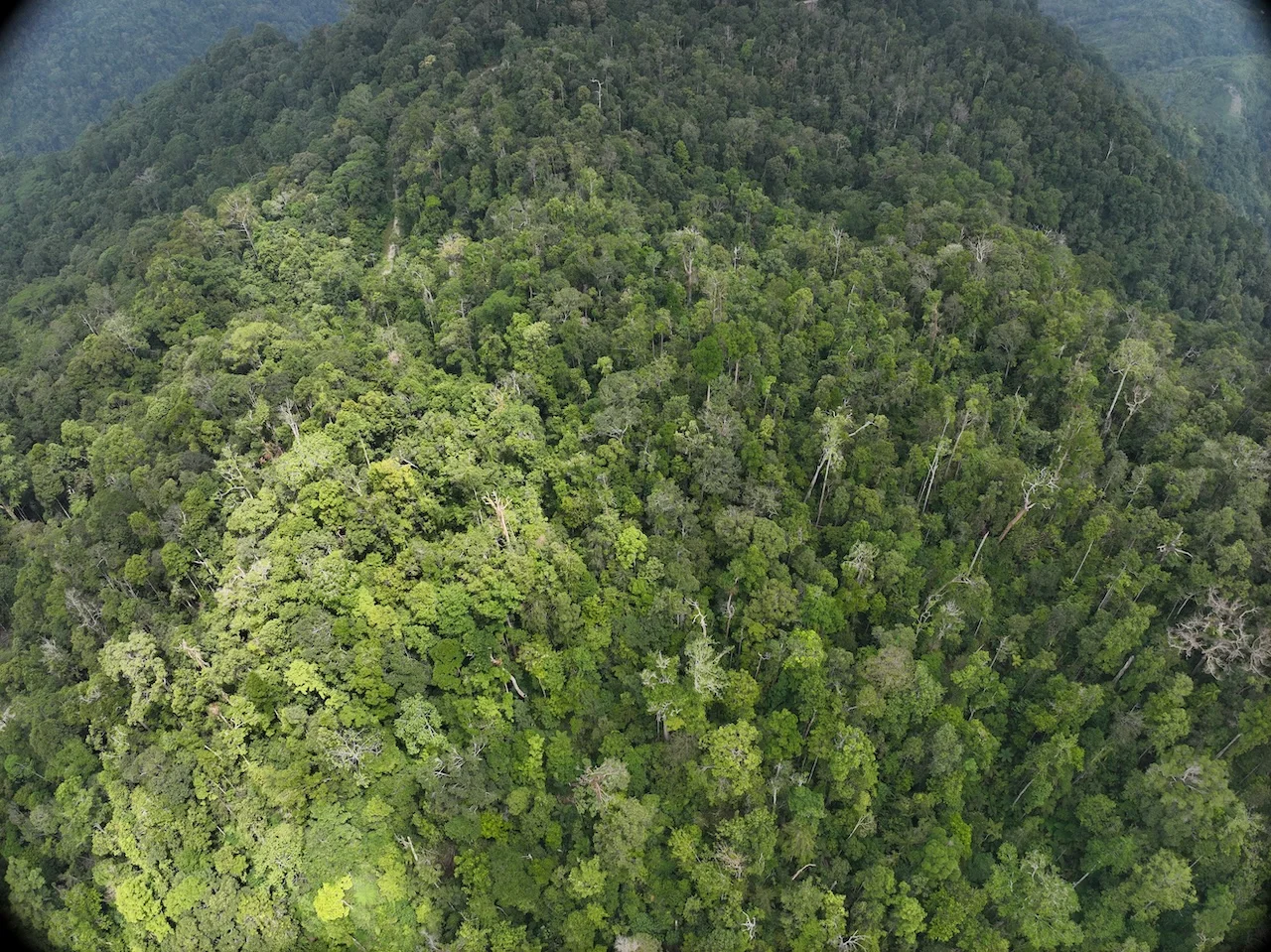
This study aimed to obtain information on vegetation characteristics of the orangutan’s habitat, including diversity, composition and structure, in the riparian forest of Menamang. Data was collected using a line-plot sampling method. The diversity index of trees and saplings was higher than seedlings. It was found that Lagestroemia speciosa showed the highest value of IVI at tree stage, accounted for 24.71 %. Fordia splendidissima then was dominant species at sapling stage with IVI of 29.94 %. Furthermore, Pterospermum diversifolium grew in abundance at seedling stage with IVI of 26.87 %. Overall, vegetation in the research location was consisted by relatively young trees characterized by the abundance of trees with diameter of ≥ 10 - 20 cm and height of < 15 m.
Copyright (c) 2017 Jurnal Wasian

This work is licensed under a Creative Commons Attribution-NonCommercial 4.0 International License.
Copyright and License
All articles published in Wasian Journal are the property of the authors. By submitting an article to Wasian Journal, authors agree to the following terms:
-
Copyright Ownership: The author(s) retain copyright and full publishing rights without restrictions. Authors grant the journal the right to publish the work first and to distribute it as open access under a Creative Commons Attribution 4.0 International License (CC BY 4.0).
-
Licensing: Articles published in Wasian Journal are licensed under a Creative Commons Attribution 4.0 International License (CC BY 4.0). This license allows others to share, copy, and redistribute the material in any medium or format, and adapt, remix, transform, and build upon the material for any purpose, even commercially, provided that proper credit is given to the original author(s) and the source of the material

This work is licensed under a Creative Commons Attribution 4.0 International License. -
Author's Rights: Authors are permitted and encouraged to post their work online (e.g., in institutional repositories or on their website) prior to and during the submission process, as it can lead to productive exchanges and greater citation of published work.
-
Third-Party Content: If your article contains material (e.g., images, tables, or figures) for which you do not hold copyright, you must obtain permission from the copyright holder to use the material in your article. This permission must include the right for you to grant the journal the rights described above.
-
Reprints and Distribution: Authors have the right to distribute the final published version of their work (e.g., post it to an institutional repository or publish it in a book), provided that the original publication in Wasian Journal is acknowledged.
For the reader you are free to:
- Share — copy and redistribute the material in any medium or format for any purpose, even commercially.
- Adapt — remix, transform, and build upon the material for any purpose, even commercially.
- The licensor cannot revoke these freedoms as long as you follow the license terms.
Under the following terms:
- Attribution — You must give appropriate credit , provide a link to the license, and indicate if changes were made . You may do so in any reasonable manner, but not in any way that suggests the licensor endorses you or your use.
- No additional restrictions — You may not apply legal terms or technological measures that legally restrict others from doing anything the license permits.
Notices:
You do not have to comply with the license for elements of the material in the public domain or where your use is permitted by an applicable exception or limitation .
No warranties are given. The license may not give you all of the permissions necessary for your intended use. For example, other rights such as publicity, privacy, or moral rightsmay limit how you use the material.
Similar Articles
- Dani Pamungkas, Siswadi Siswadi, The Effect of Tree Shade and Pruning Techniques on Screw Tree (Helicteres isora Linn.) Fruit Productivity in the Natural Habitat , Jurnal Wasian: Vol. 7 No. 2 (2020): December
- Bertila Avila Delvion, Dwiko Budi Permadi, Hero Marhaento, Fostering Sustainabel Livelihood of the Saga Indigenous Community through Conservation Partnership in Kelimutu National Park, Nusa Tenggara Timur , Jurnal Wasian: Vol. 10 No. 02 (2023): December
- Heri Suryanto, Albert Donatus Mangopang , Planting of Nectar Plants as Feed of Butterflies Imago in Bantimurung Bulusaraung National Park , Jurnal Wasian: Vol. 10 No. 02 (2023): December
- Faisal Danu Tuheteru, Asrianti Arif, Fauzi Rajab, Potential of Nickel (Ni) Phytoremediation of Adaptive Species on Revegetation Land, PT. Vale Indonesia (Tbk). Pomalaa Site Kolaka Regency , Jurnal Wasian: Vol. 4 No. 2 (2017): December
- Diah Irawati Dwi Arini, Yermias Kafiar, Prefered Feed of Anoa (Bubalus sp.) at Manado Forestry Research Institute Captivity , Jurnal Wasian: Vol. 1 No. 2 (2014): December
- Endah Suhaendah, Aji Winara, The Intensity Attack of Leaf Pest Graphium agamemnon L. and Its Parasitoid Potency on Monoculture and Agroforestry Manglid (Magnolia champaca) Patterns , Jurnal Wasian: Vol. 5 No. 1 (2018): June
- Hanif Nurul Hidayah, Illa Anggraeni, Identification of causes of red leaf spot on red jabon (anthocephalus macrophyllus roxb.) Havil) seeds in kima atas permanent nursery, forestry research institute of manado , Jurnal Wasian: Vol. 2 No. 2 (2015): December
- Retno Prayudyaningsih, Soil Mesofauna Response to Cover Crops and Mycorrhizal Inoculated Plantation on Limestone Quarry Revegetation , Jurnal Wasian: Vol. 3 No. 1 (2016): June
- Diah Irawati Dwi Arini, Birds Species of Rallidae Family in Forestry and Environment Research and Development Institute of Manado , Jurnal Wasian: Vol. 3 No. 1 (2016): June
- Endah Suhaendah, Benyamin Dendang, Weed Density and Dominant Weed Species in Malapari (Pongamia pinnata (L.) Pierre) Agroforestry , Jurnal Wasian: Vol. 6 No. 1 (2019): June
You may also start an advanced similarity search for this article.