Processing and Added Value of Bamboo in Tasikmalaya, West Java

Abstract
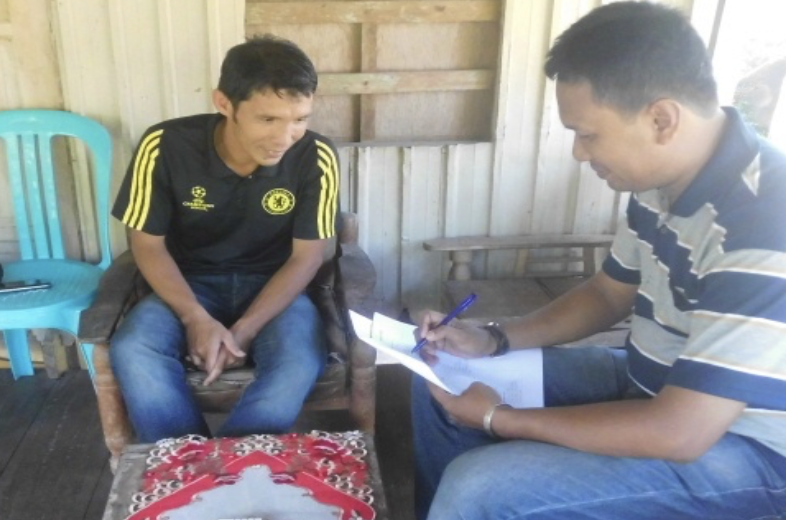
Bamboo is a multipurpose plant that has been used by the people for generations. This study aimed to describe the processing of bamboo and analyze its added value in Tasikmalaya Regency, West Java. Data was collected in April -December 2016 through interviews using questionnaires and field observations of bamboo craftsmen, and then were processed and analyzed quantitatively and descriptively. The community processed bamboo into woven products such as ayakan, boboko, haseupan, hihid, picnic basket, nyiru, pipiti, and parcel, as well as non-woven products such as piggy banks, key chains, glasses, wall clocks, lampshades, invitation boxes, bowl, cup, frame, teapot, letterbox, and tissue box. The average added value of woven products was IDR 131,197.21 or 9.11 % of the non-woven products, which was IDR 1,439,742.42. The average added value ratio of woven products is 0,83 and 0,90 for non-woven products. Bamboo woven business for household products is mostly done because the market has formed, stable, and has a wider scope even though it has lower added value. The market of non-woven products is smaller and specific even though it has a higher added value. A bamboo stem is only valued IDR 10,000 – 50,000, so it should be sold in processed products rather than the original form.
Copyright (c) 2020 Jurnal Wasian

This work is licensed under a Creative Commons Attribution-NonCommercial 4.0 International License.
Copyright and License
All articles published in Wasian Journal are the property of the authors. By submitting an article to Wasian Journal, authors agree to the following terms:
-
Copyright Ownership: The author(s) retain copyright and full publishing rights without restrictions. Authors grant the journal the right to publish the work first and to distribute it as open access under a Creative Commons Attribution 4.0 International License (CC BY 4.0).
-
Licensing: Articles published in Wasian Journal are licensed under a Creative Commons Attribution 4.0 International License (CC BY 4.0). This license allows others to share, copy, and redistribute the material in any medium or format, and adapt, remix, transform, and build upon the material for any purpose, even commercially, provided that proper credit is given to the original author(s) and the source of the material

This work is licensed under a Creative Commons Attribution 4.0 International License. -
Author's Rights: Authors are permitted and encouraged to post their work online (e.g., in institutional repositories or on their website) prior to and during the submission process, as it can lead to productive exchanges and greater citation of published work.
-
Third-Party Content: If your article contains material (e.g., images, tables, or figures) for which you do not hold copyright, you must obtain permission from the copyright holder to use the material in your article. This permission must include the right for you to grant the journal the rights described above.
-
Reprints and Distribution: Authors have the right to distribute the final published version of their work (e.g., post it to an institutional repository or publish it in a book), provided that the original publication in Wasian Journal is acknowledged.
For the reader you are free to:
- Share — copy and redistribute the material in any medium or format for any purpose, even commercially.
- Adapt — remix, transform, and build upon the material for any purpose, even commercially.
- The licensor cannot revoke these freedoms as long as you follow the license terms.
Under the following terms:
- Attribution — You must give appropriate credit , provide a link to the license, and indicate if changes were made . You may do so in any reasonable manner, but not in any way that suggests the licensor endorses you or your use.
- No additional restrictions — You may not apply legal terms or technological measures that legally restrict others from doing anything the license permits.
Notices:
You do not have to comply with the license for elements of the material in the public domain or where your use is permitted by an applicable exception or limitation .
No warranties are given. The license may not give you all of the permissions necessary for your intended use. For example, other rights such as publicity, privacy, or moral rightsmay limit how you use the material.
相似文章
- Andi Mawaddah Zakiyah, Rini Pratiwi, Astina Astina, Widyanti Utami A, Unequal Value Capture in Non-TimberForest Product Chains with Evidence fromPine Resin Processing in Rural Indonesia , Jurnal Wasian: 卷 13 期 01 (2026): June
- Rini Pratiwi, Makkarennu Makkarennu, Ridwan Ridwan, Understanding Traditional Walnut Management System in Forest Communities of Selayar Islands, Indonesia , Jurnal Wasian: 卷 12 期 01 (2025): June
- I Wayan Sudiyanto, Wahyudi Wahyudi, Assessment and Spatial Mapping of Soil Degradation Status in Bontoharu District, Selayar Islands Regency: A Framework for Sustainable Land Management , Jurnal Wasian: 卷 12 期 01 (2025): June
- Sri Arfiani Rahim Sila, Andi Ridha Yayank, Hasanuddin Molo, Community-based Strategies for Optimising Mangrove Forest Tourism Management in Balang Baru Village, Jeneponto Regency , Jurnal Wasian: 卷 12 期 02 (2025): December
- Aditya Hani Aditya , Eva Fauziyah Fauziyah, Tri Sulistyawati Widyaningsih Widyaningsih, Devy Priambodo Kuswantoro Devy , Potency and Agroforestry Patterns that Support Bamboo Sustainability in Sukaharja Village, Ciamis District , Jurnal Wasian: 卷 5 期 2 (2018): December
- Irlan Irlan, Ulfa Adzkia, Suhartono Suhartono, Meliani Meliani, Alpri Sri Jenos, Teguh Bimantara, Chairil A, Individual Tree Segmentation in TropicalNatural Forest Based on Point CloudGenerated from UAV RGB Image , Jurnal Wasian: 卷 12 期 02 (2025): December
- Asikin Muchtar, Nirwana Nirwana, Wahyullah Wahyullah, Mahmud Mahmud, Ummu Kultsum, Analysis of the Success and Vigour of Cashew Seedlings Through Direct Seed Planting (Anacardium occidentale L.) for Sustainable Land Management , Jurnal Wasian: 卷 11 期 2 (2024): December
- Anugrahandini Nasir, Herawaty Herawaty, Ismail Ismail, Muh Izzul Muslimin Syah, Revealing Carbon Patterns Across Mangrove Density Variations Using Sentinel-2 NDVI , Jurnal Wasian: 卷 12 期 02 (2025): December
- Devi Mustika Wati, Duryat Duryat, Melya Riniarti, Ethnobotanical Analysis of Mangroves as Food Resources in East Lampung , Jurnal Wasian: 卷 11 期 1 (2024): June
- Andika Lalu, Sitti Ramlah, Reinaldi Reinaldi, When Strong Institutions Meet Weak Economies: Lessons from Ecotourism Sustainability in Lombuyan Wildlife Sanctuary, Central Sulawesi , Jurnal Wasian: 卷 12 期 02 (2025): December
您也可以开始高级相似性搜索此文章。
同一作者最受欢迎的文章
- Aditya Hani Aditya , Eva Fauziyah Fauziyah, Tri Sulistyawati Widyaningsih Widyaningsih, Devy Priambodo Kuswantoro Devy , Potency and Agroforestry Patterns that Support Bamboo Sustainability in Sukaharja Village, Ciamis District , Jurnal Wasian: 卷 5 期 2 (2018): December
- Eva Fauziyah Eva , Sanudin sanuddin Sanudin, The Effectiveness of Private Forest Institutional and Policy in Banjarnegara and Banyumas Regency , Jurnal Wasian: 卷 4 期 2 (2017): December
- Maria Palmolina Maria , Eva Fauziyah Eva, Conflict Mapping of Gunung Ciremai National Park in Cisantana Village, Cigugur, Kuningan, West Java , Jurnal Wasian: 卷 7 期 2 (2020): December